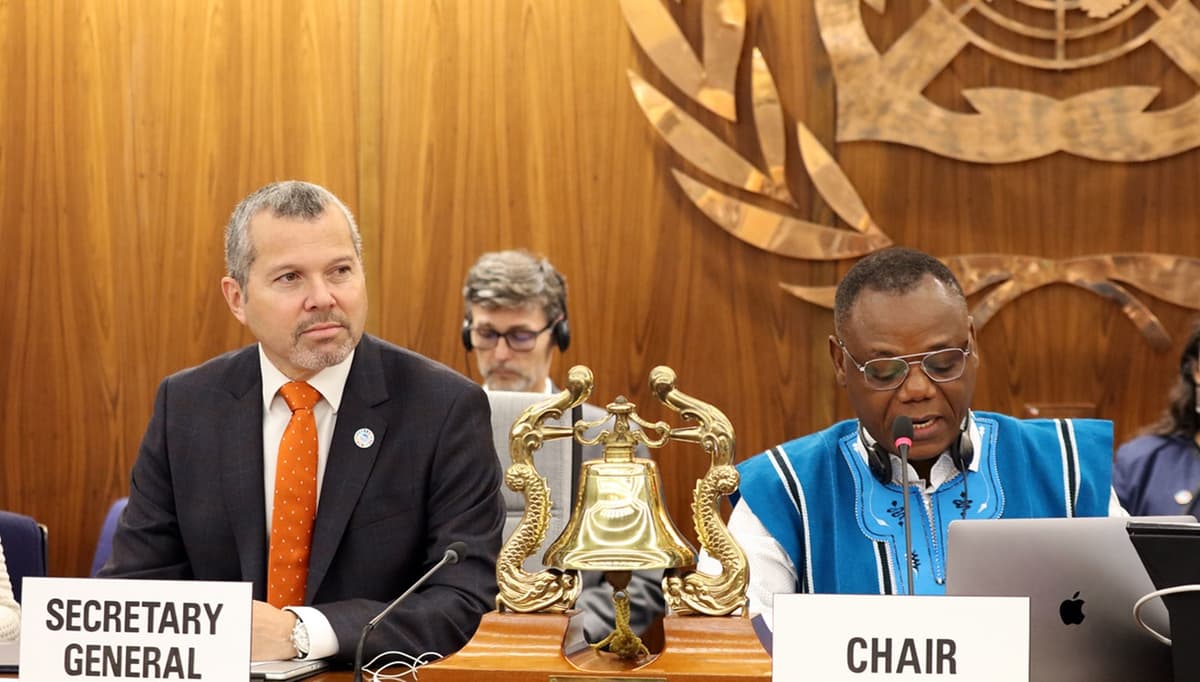
Elemental Forces Set to Collide in IMO NZF Battle
Why It Matters
The outcome will shape the maritime sector’s path to carbon‑neutral operations and determine whether global shipping faces a single, enforceable framework or a patchwork of conflicting regional rules.
Key Takeaways
- •IMO's Net Zero Framework faces US-led opposition at MEPC84
- •Major shipping groups, including BIMCO and ICS, back the NZF despite dissent
- •Saudi Arabia, UAE, Argentina, Russia, Cyprus, Greece align with US stance
- •Industry warns against fragmented regional carbon rules and double charging
- •Working group reports constructive talks among 62 countries on consensus
Pulse Analysis
The IMO’s Net Zero Framework has become a geopolitical flashpoint as the United States, under a climate‑skeptical administration, rallies allies such as Saudi Arabia, the UAE, Argentina, Russia, Cyprus and Greece to challenge the agreement. Their objections focus on perceived restrictions on LNG use and a proposed carbon fund, framing the debate as a clash between national energy interests and global climate commitments. This tension is amplified by activist groups planning high‑profile demonstrations at the IMO headquarters, underscoring the heightened public scrutiny of maritime emissions policy.
Despite the political headwinds, the shipping industry’s leading bodies—BIMCO, the International Chamber of Shipping, Cruise Lines International Association and others—have issued a joint statement endorsing a single, globally applied decarbonisation regime. They warn that divergent regional or national schemes would create double‑charging scenarios, eroding profitability and operational certainty for ship owners. The industry’s push for a uniform standard reflects a pragmatic desire to avoid a regulatory patchwork that could stall investment in cleaner technologies and increase compliance costs.
The stakes extend beyond regulatory text; they influence the future fuel mix for a sector responsible for roughly 3% of global CO₂ emissions. Stakeholders like ZESTAs advocate for a diversified technology portfolio—battery, wind, hydrogen—while cautioning against over‑reliance on LNG, which they deem a transitional fossil fuel. A consensus‑driven NZF could unlock financing mechanisms, such as a carbon fund, to accelerate the rollout of truly low‑carbon solutions. Conversely, a fragmented outcome risks locking in sub‑optimal fuels and delaying the maritime industry’s contribution to the Paris Agreement goals.
Elemental forces set to collide in IMO NZF battle
Comments
Want to join the conversation?
Loading comments...