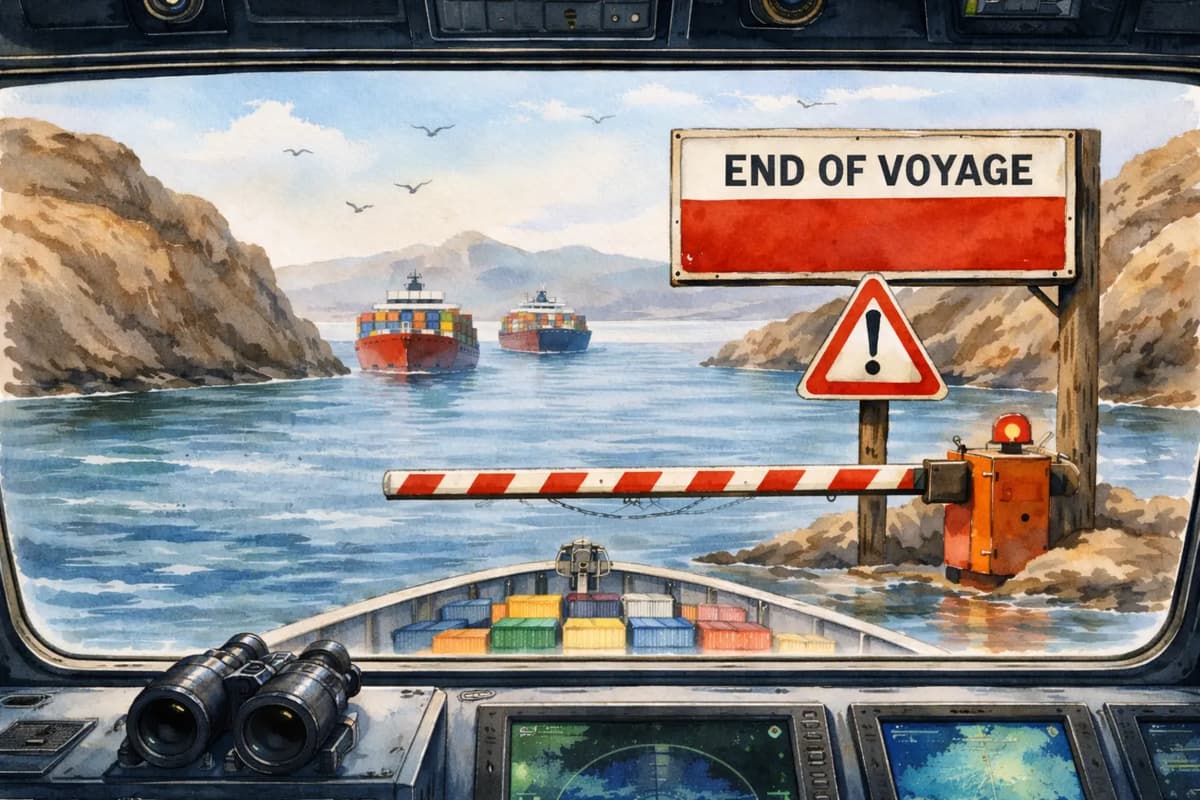
End of Voyage Is Not a Legal Doctrine in Maritime Law, so What Is the Legal Basis..??
•March 7, 2026
0
Why It Matters
The declaration shifts risk from carriers to shippers at a critical juncture in global trade, exposing cargo owners to operational and legal challenges. It also tests contractual language that has never been applied at this scale, potentially reshaping maritime liability norms.
Key Takeaways
- •End of Voyage is operational, not legal doctrine.
- •Authority derives from Bill of Lading clauses, not conventions.
- •2026 Gulf crisis forces region‑wide voyage terminations at scale.
- •Cargo owners assume risk once carrier abandons cargo.
- •Legal precedent unclear; future litigation may shape practice.
Pulse Analysis
The "End of Voyage" announcement is an operational tool, not a statutory concept. Under the carrier's Conditions of Carriage—specifically the Methods and Routes of Carriage and Matters Adversely Affecting Performance clauses—shipping lines can divert vessels, unload cargo at any safe port, and terminate their contractual obligations without prior notice. These provisions have existed for decades, embedded in the Bill of Lading, but they were traditionally invoked on a case‑by‑case basis rather than as a coordinated, public declaration across an entire trade corridor.
What makes the 2026 situation unique is the simultaneous, region‑wide activation of these clauses due to the closure of the Strait of Hormuz. The Gulf handles a disproportionate share of containerized trade, and modern digital platforms now broadcast carrier decisions instantly to stakeholders worldwide. This transparency forces shippers to confront the operational fallout—re‑routing, storage costs, and potential demurrage—far earlier than in past conflicts such as the Gulf War or the Iran‑Iraq tanker war, where disruptions were managed more discretely.
For cargo owners, the practical implication is clear: once a carrier invokes an "End of Voyage" clause, responsibility for onward movement, insurance coverage, and any associated expenses transfers to the shipper. The lack of judicial precedent means challenges to the carrier’s decision will likely hinge on the precise wording of the Bill of Lading and the demonstrable safety or commercial necessity of the diversion. Engaging maritime counsel promptly, reviewing contractual terms, and preparing for possible litigation are essential steps to mitigate risk and protect commercial interests.
End of Voyage is not a legal doctrine in Maritime Law, so what is the legal basis..??
0
Comments
Want to join the conversation?
Loading comments...