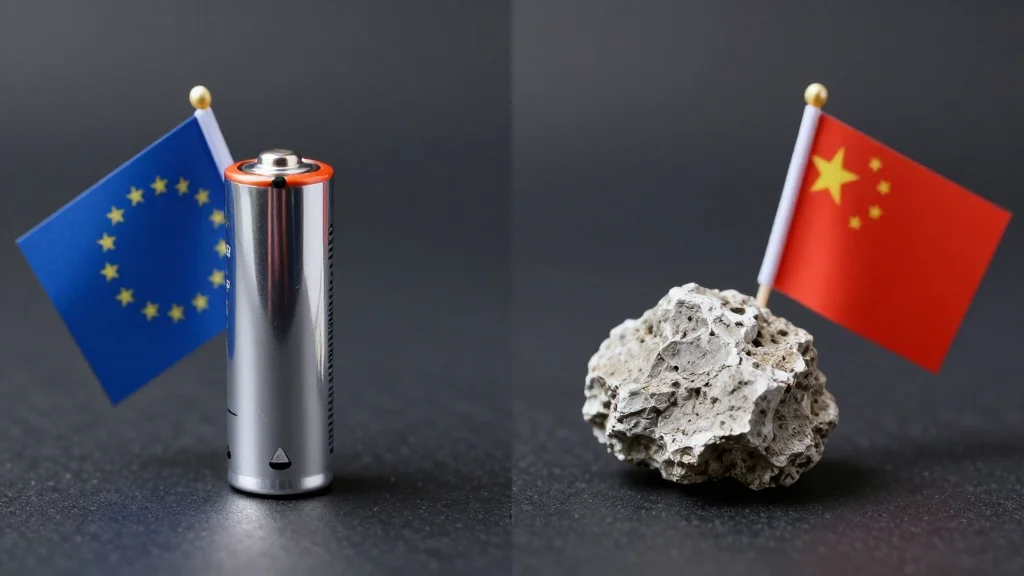
EU and China Adopt Divergent EV Battery Policies, Shaping Global Supply Chains

Why It Matters
The policy divergence between the EU and China will dictate where critical battery components are sourced, processed, and assembled. For automakers, the choice of supply‑chain partner could affect cost structures, compliance with carbon‑footprint regulations, and exposure to trade restrictions. For investors, the split signals where capital will flow—into European R&D and standards‑driven projects or into China’s large‑scale production complexes. Moreover, the split may shape geopolitical dynamics around critical minerals. Europe’s reliance on imports could intensify competition for lithium and cobalt, while China’s domestic control may reinforce its leverage in global trade negotiations. Understanding these trajectories is essential for stakeholders across the automotive, mining, and financial sectors.
Key Takeaways
- •2024 global EV sales exceeded 17 million units, a 25% YoY increase.
- •China accounted for over 11 million EVs in 2024, roughly 60% of global sales.
- •EU’s EV battery policy focuses on subsidies, tax incentives, and standards.
- •China’s strategy emphasizes scale, state financing, and domestic raw‑material control.
- •Europe’s share of global EV sales fell to about 20% in 2024, down from ~33% a decade earlier.
Pulse Analysis
The EU’s policy mix reflects a broader ambition to align the battery sector with the bloc’s Green Deal and circular‑economy goals. By tying subsidies to sustainability metrics and mandating strict performance standards, Europe hopes to foster a high‑value, low‑carbon supply chain. However, this approach may lengthen time‑to‑market for new cell technologies and increase reliance on overseas miners, potentially exposing manufacturers to supply shocks.
China’s model, by contrast, leverages state‑driven capital deployment to achieve economies of scale quickly. The country’s ability to coordinate mining, refining, and cell production under a single policy umbrella has already driven unit‑cost reductions that challenge European manufacturers. Yet this concentration of power raises concerns about market access for foreign firms and could trigger retaliatory measures from trade partners seeking to diversify away from China’s dominance.
Looking ahead, the tension between these two paradigms will likely intensify as battery demand accelerates. Companies that can navigate both regulatory environments—by securing diversified raw‑material sources while meeting EU sustainability standards—will gain a competitive edge. Policymakers on both sides may need to consider hybrid approaches, such as joint R&D initiatives or cross‑border supply‑chain agreements, to mitigate the risk of a fragmented global market.
EU and China Adopt Divergent EV Battery Policies, Shaping Global Supply Chains
Comments
Want to join the conversation?
Loading comments...