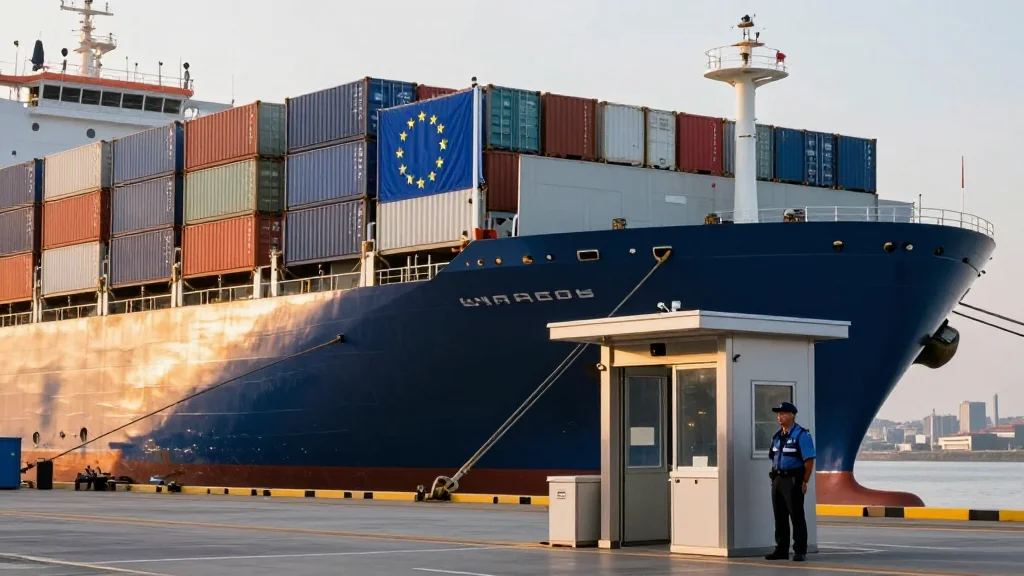
EU: European Parliament and Council Reach Agreement on the EU Customs Reform
Why It Matters
By centralising risk analysis and data collection, the reform raises compliance standards and costs for online sellers, reshaping EU import‑export dynamics and forcing global supply chains to adapt.
Key Takeaways
- •EU Customs Authority headquartered in Lille coordinates Union‑wide risk analysis
- •EU Customs Data Hub consolidates 111 national IT systems into one platform
- •“Trust and Check” status grants procedural shortcuts for high‑transparency traders
- •Low‑value consignment relief ends; €3 (~$3.30) flat duty starts July 2026
- •Union handling fee per item to fund data‑hub operations, amount TBD
Pulse Analysis
The EU’s new customs framework marks a decisive shift from a fragmented, declaration‑centric model to a unified, data‑driven system. By establishing the EU Customs Authority, the Union gains a single body to conduct risk assessments, issue control recommendations, and coordinate crisis‑response across all member states. The accompanying EU Customs Data Hub will replace the patchwork of over a hundred national customs IT platforms, offering real‑time data exchange that enhances visibility and enables more consistent, risk‑focused enforcement. This digital backbone is designed to keep pace with the growing volume of cross‑border trade while reducing administrative duplication.
For businesses, especially e‑commerce operators, the reform introduces several cost‑and‑process changes. The long‑standing exemption for parcels under €150 (≈$165) is being phased out, with a temporary €3 (~$3.30) flat duty applied to all IOSS shipments from July 2026, later replaced by standard MFN duties once the Data Hub is live. A new Union handling fee per item will fund the hub’s infrastructure, though the exact amount is pending a delegated act. Companies that achieve the new “Trust and Check” status—granting customs authorities access to their compliance systems—will enjoy reduced physical checks and the ability to self‑release goods, creating a strong incentive to upgrade internal data capabilities.
Strategically, multinational firms must accelerate digital transformation to meet the upcoming mandatory data‑hub requirements by March 2034. Investing in integrated customs software, aligning product classification data, and securing trusted‑trader credentials will not only ensure compliance but also provide a competitive edge as customs processes become faster and more predictable. Moreover, the harmonised penalty framework signals tighter enforcement, making proactive risk management essential. Companies that adapt early can mitigate disruption, lower duty‑related expenses, and maintain smoother market access across the EU’s 27 member states.
EU: European Parliament and Council reach agreement on the EU customs reform
Comments
Want to join the conversation?
Loading comments...