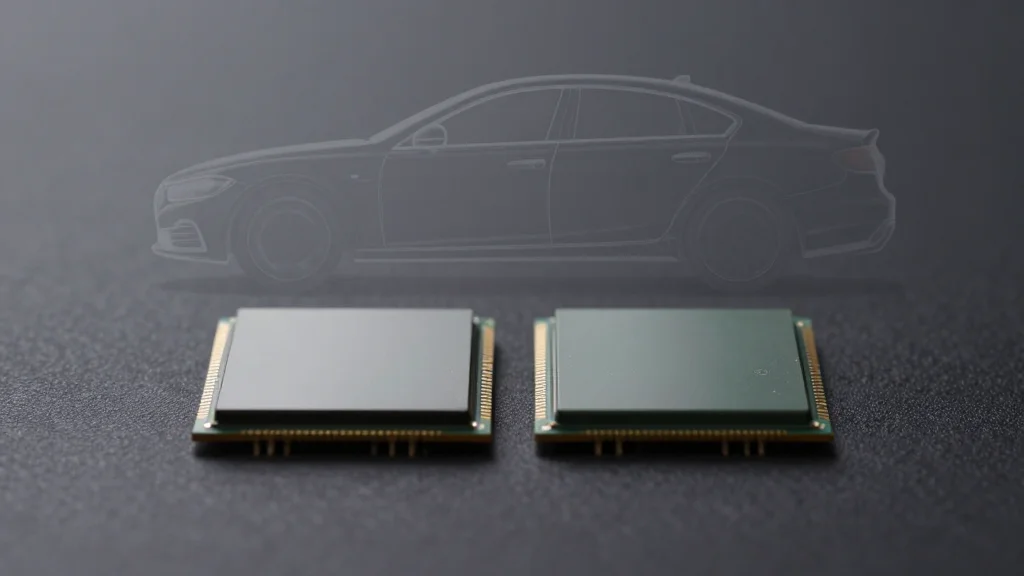
EU to Force Dual-Source Chip Rules on Carmakers, Mulls Sanctions Waiver for Nexperia

Companies Mentioned
Why It Matters
Requiring dual sourcing forces automakers to spread risk across multiple suppliers, reducing the chance that a single geopolitical dispute can halt production. For the EU, the move signals a shift toward strategic autonomy in a sector that has become a linchpin of modern manufacturing. The temporary sanction lift, while short‑lived, highlights the tension between geopolitical objectives and industrial realities. It underscores how quickly supply‑chain disruptions can translate into policy reversals, and it may set a precedent for future crisis‑driven exemptions in other high‑tech domains.
Key Takeaways
- •EU draft law to mandate at least two chip suppliers for carmakers, targeting VW, Stellantis, Renault.
- •Proposal to temporarily lift sanctions on Nexperia, a Chinese‑owned chipmaker, to ease auto‑grade chip shortages.
- •Thomas Regnier, EU tech sovereignty spokesperson, emphasized the law reflects current geopolitical realities.
- •China’s export restrictions on Nexperia in early 2026 triggered immediate production slowdowns in Europe.
- •Wingtech Technology shares rose after reports of partial export relaxation, indicating market optimism.
Pulse Analysis
The EU’s dual‑source mandate is a clear escalation in its semiconductor policy, moving from advisory guidelines to enforceable requirements. Historically, Europe has struggled with fragmented chip supply chains, relying heavily on Asian foundries. By embedding resilience into procurement contracts, the Commission is attempting to internalize risk management that many OEMs previously handled informally. This could spur a wave of new supplier contracts, potentially benefitting EU‑based fabless firms and encouraging joint ventures that diversify the supplier base.
However, the temporary sanction waiver for Nexperia reveals the limits of policy when immediate production needs clash with strategic goals. The move may be interpreted by Chinese authorities as a concession, potentially emboldening future export controls. For European automakers, the short‑term relief buys time but does not solve the underlying dependency on Chinese‑linked technology. The real test will be whether the EU can accelerate domestic fab projects fast enough to replace the capacity that Nexperia currently provides.
In the longer view, these actions could reshape the competitive dynamics of the global automotive semiconductor market. Suppliers that can meet the EU’s new dual‑source criteria may gain privileged access to the continent’s sizable auto market, while firms unable to diversify risk could see their European sales contracts curtailed. The policy also sends a signal to other regions that regulatory pressure can be a lever for supply‑chain restructuring, potentially prompting similar measures in the United States or Japan.
EU to Force Dual-Source Chip Rules on Carmakers, Mulls Sanctions Waiver for Nexperia
Comments
Want to join the conversation?
Loading comments...