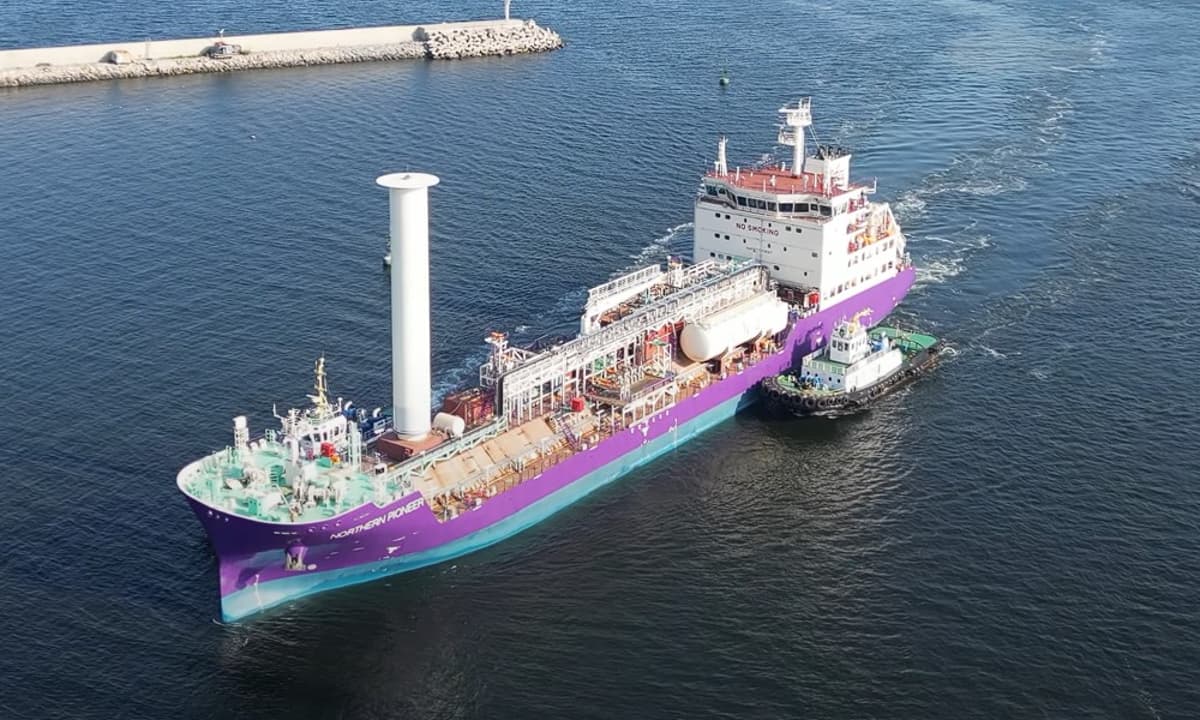
Europe Needs Fleet of 65 CO2 Carriers by 2050 to Meet Carbon Storage Goals
Why It Matters
The infrastructure gap threatens Europe’s ability to meet its carbon‑storage targets, creating a multi‑billion‑dollar market for transport assets and shaping the continent’s decarbonisation pathway.
Key Takeaways
- •65 CO₂ carriers and 33 ports required by 2050
- •Shipping volume will rise to 79 mtpa despite lower market share
- •22 vessels needed by 2030, scaling to 65 by 2050
- •LPG transport tech already proven, ready for CO₂ scaling
Pulse Analysis
Europe’s carbon‑capture ambitions are no longer limited by technology but by logistics. The Xodus CCUS Enabling Infrastructure Study maps a future where captured CO₂ moves from heavy‑industry emitters to offshore reservoirs via a hybrid network of pipelines, ships, and inland carriers. While pipelines will dominate high‑volume corridors, maritime transport offers the flexibility to connect cross‑border sites and regions where pipelines are uneconomic, effectively turning the North Sea into a carbon‑shipping lane. This dual‑mode approach mirrors the mature LPG sector, where decades of experience provide a ready‑made blueprint for safe, high‑throughput CO₂ movement.
The study’s numbers underscore the scale of the challenge. By 2030, Europe will need roughly 22 specialised vessels, each capable of carrying 15,000 tonnes, to handle the early wave of CO₂ shipments. That fleet must more than triple to 65 ships by 2050 as captured volumes climb to 320 mtpa. Simultaneously, about 60 ports—most notably Rotterdam, Humberside and Liverpool Bay—must be upgraded or built to serve as gathering, export and reception hubs. Inland transport will rely on road tankers, rail cars and river barges, leveraging proven LPG logistics to bridge the gap between emitters and ports.
For investors and policymakers, the report signals a clear commercial opportunity. The required capital outlay for vessels, port retrofits and pipeline extensions runs into the tens of billions of dollars, creating a new asset class within the broader decarbonisation market. Early‑stage financing, coordinated regulatory frameworks and public‑private partnerships will be essential to lock in supply chains before demand spikes. Moreover, establishing a resilient, cost‑effective CO₂ transport network will not only help the EU meet its 2050 climate goals but also position the region as a global leader in carbon‑removal infrastructure, attracting export‑oriented projects and technology licensing abroad.
Europe needs fleet of 65 CO2 carriers by 2050 to meet carbon storage goals
Comments
Want to join the conversation?
Loading comments...