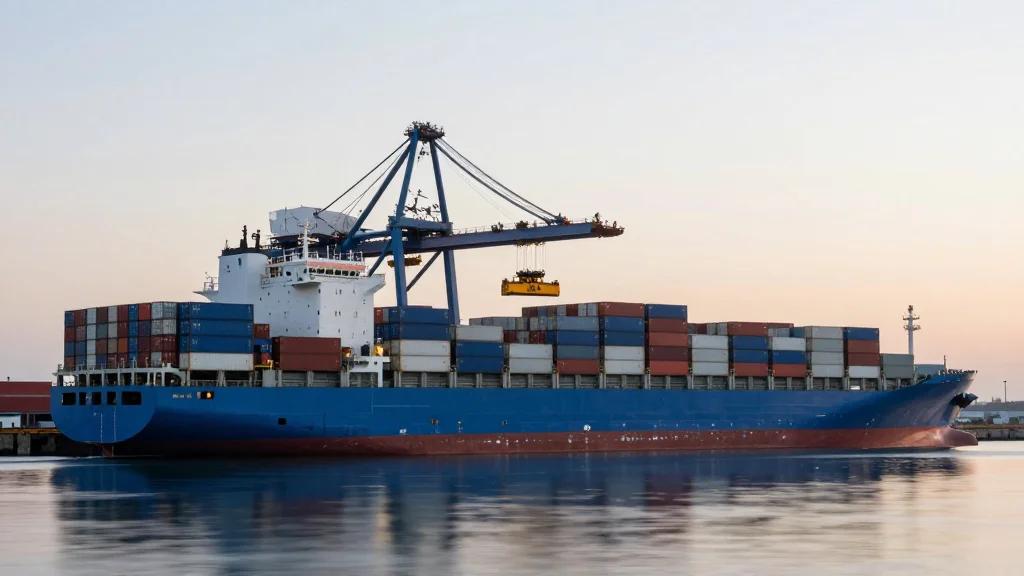
Europe’s Container Surplus Drains, Tightening Global Flows

Why It Matters
The contraction of European container stock reverberates through global trade, as Europe serves as a key transshipment hub linking Asia, the Middle East and the Americas. A sustained shortage of empty equipment raises freight costs, lengthens supply‑chain lead times and forces manufacturers to hold larger inventories, eroding just‑in‑time efficiencies. Moreover, the shift underscores how geopolitical disruptions—such as the Red Sea crisis—can reshape equipment flows for months, prompting carriers to adopt more resilient, albeit slower, routing strategies. For logistics providers and freight forwarders, the evolving dynamics demand tighter coordination with carriers and more granular visibility into container positioning. Companies that can anticipate the longer cycle times and secure containers in advance will gain a competitive edge, while those that rely on spot market availability may face price volatility and service disruptions.
Key Takeaways
- •Carriers are accelerating empty‑container repositioning from Europe to Asia, draining a surplus reported earlier in 2026.
- •Yard utilisation at Rotterdam and Antwerp remains high at 75‑85%, but active availability is constrained.
- •Transit times on Asia‑Europe routes have lengthened by 10‑15 days due to reliance on Cape routing.
- •Extended cycles reduce container rotations per year, effectively shrinking usable capacity.
- •Exporters face longer lead times and higher cost uncertainty as equipment tightens from both directions.
Pulse Analysis
The current European container drain reflects a classic supply‑demand correction amplified by external shocks. When the Red Sea corridor became unreliable, carriers rerouted via the Cape, a decision that added days to each voyage but preserved cargo integrity. That operational choice has a cascading effect: longer voyages mean fewer rotations, which in turn depresses the effective fleet size even though the physical count of containers remains unchanged. Historically, such latency in the container cycle has led to price spikes in the spot market, as seen after the 2021 Suez blockage.
Looking ahead, the market may experience a two‑phase adjustment. In the short term, carriers will likely continue to prioritize outbound flows to Asia to capture higher freight rates, keeping European depots lean. Over the medium term, as port congestion eases and inland bottlenecks are addressed—potentially through digital yard management tools—the return flow could accelerate, restoring a more balanced inventory. Companies that invest in real‑time container tracking and predictive analytics will be better positioned to navigate this volatility.
Strategically, the episode underscores the importance of diversifying routing options and building flexibility into container‑sourcing contracts. Firms that lock in long‑term container leases or develop partnerships with equipment pools can mitigate the impact of sudden cycle extensions. Meanwhile, policymakers in Europe may need to consider incentives for faster inland clearance to shorten dwell times, thereby enhancing the overall resilience of the global container network.
Europe’s Container Surplus Drains, Tightening Global Flows
Comments
Want to join the conversation?
Loading comments...