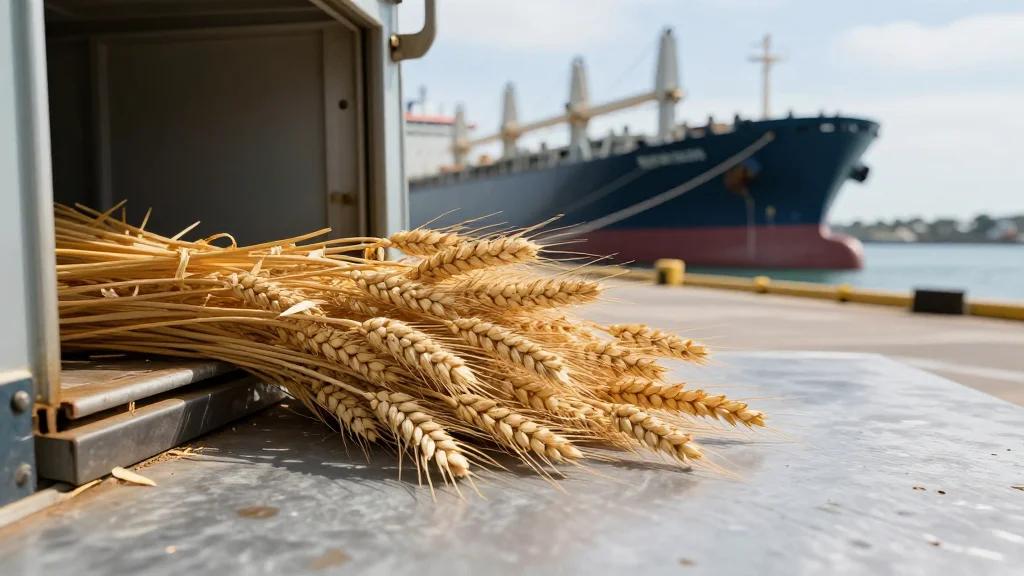
Feedgrain Focus: Boat to Brisbane Likely as Northern Wheat Climbs
Why It Matters
The shipment eases Brisbane’s feed‑grain shortfall, but higher wheat and fertilizer costs tighten margins for Australian livestock producers and may shift export flows toward domestic markets.
Key Takeaways
- •30,000 t wheat cargo likely to Brisbane amid Queensland deficit.
- •Delivered wheat price ~A$460/t (≈US$300/t) plus A$125/t freight.
- •Dry conditions lift ASW1 wheat to A$425‑440/t (≈US$280‑290/t).
- •Urea trades at A$1,500/t (≈US$990/t), offering growers cash‑flow.
- •Buyer activity on Clear Grain Exchange up 60% in three weeks.
Pulse Analysis
Australia’s wheat market is entering a rare domestic‑export crossover as a sizable cargo heads to Brisbane. The 30,000‑tonne shipment, priced around A$460 per tonne (roughly US$300), reflects a strategic response to a feed‑grain deficit that has tightened supply for poultry and pig operations in southern Queensland. Freight differentials – about A$125 per tonne (US$80) from Kwinana to Brisbane – further improve the economics for Western Australian exporters, prompting them to favor the local market over overseas contracts that are vulnerable to currency volatility linked to the Iran‑US conflict.
The price surge is not isolated to wheat; drying conditions across the Darling Downs and New England have driven ASW1 wheat to A$425‑440 per tonne (US$280‑290), while barley and sorghum have also seen premium levels. Such moves are reshaping the traditional north‑south grain flow, with central New South Wales becoming a key source for both wheat and barley destined for Queensland. Simultaneously, fertilizer markets are reacting – urea now trades at A$1,500 per tonne (US$990), giving growers a lucrative cash‑flow alternative amid uncertain winter planting decisions. This dual pressure on grain and input costs is forcing livestock producers to reassess feed budgeting and may accelerate the adoption of alternative protein sources.
Buyer activity on platforms like the Clear Grain Exchange underscores the heightened urgency: weekly participants have risen from an average of 17 to over 25 in the past three weeks, a 60% jump. The increased engagement signals that regional buyers are proactively securing supplies before further price escalations. For the broader Australian agricultural sector, these dynamics highlight how climate‑driven supply constraints, currency fluctuations, and logistical considerations converge to reshape domestic commodity markets, influencing both short‑term pricing and longer‑term strategic positioning.
Feedgrain Focus: Boat to Brisbane likely as northern wheat climbs
Comments
Want to join the conversation?
Loading comments...