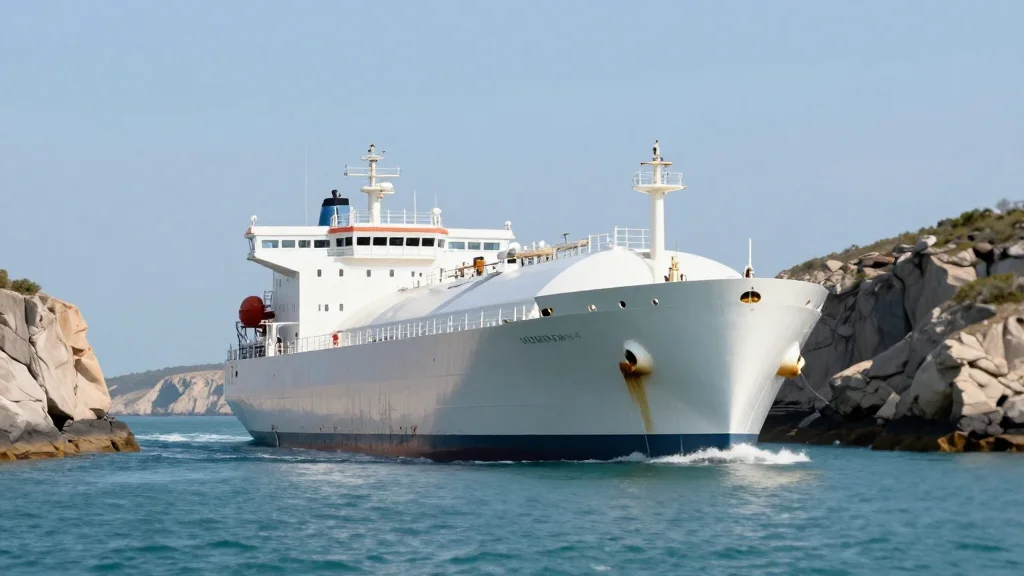
First LNG Shipment Since Iran War Began Appears to Exit Hormuz
Why It Matters
Resuming LNG flow through Hormuz eases supply constraints, stabilizing global gas markets and reducing price volatility. It also demonstrates that commercial shipping can navigate geopolitical risks, influencing future trade routes.
Key Takeaways
- •Mubaraz loaded at Abu Dhabi's Das Island in early March
- •Ship turned off transponder near Hormuz, reappeared off India
- •Hormuz blockage halted ~20% of global LNG shipments
- •China terminal listed as destination, indicating Asian demand
Pulse Analysis
The Strait of Hormuz, a narrow passage linking the Persian Gulf to the open ocean, handles a disproportionate share of the world’s energy cargoes. Since the escalation of hostilities between Iran and the United States in early 2026, both sides have imposed naval blockades, effectively choking off roughly 20% of global liquefied natural gas (LNG) supply. The resulting scarcity pushed spot LNG prices to multi‑year highs, prompting buyers to scramble for alternative routes and stockpiles. Analysts have warned that prolonged closure could accelerate a shift toward longer‑haul shipments from the United States and Australia, reshaping trade patterns for years to come.
Against this backdrop, the Mubaraz’s apparent transit marks a rare breach of the blockade. Loaded at Abu Dhabi National Oil Company’s Das Island facility, the tanker vanished from satellite AIS feeds on March 31—a common tactic to avoid detection in contested waters. It re‑emerged off the Indian coast on April 27, now heading toward a terminal in China. The maneuver underscores how ship owners balance the risk of interdiction against the premium prices offered for timely deliveries, and it highlights the growing reliance on stealth navigation technologies and signal‑jamming countermeasures.
The broader implications are twofold. First, a successful passage could encourage other carriers to test the waterway, gradually restoring a portion of the constrained LNG flow and tempering price spikes. Second, it signals to markets that geopolitical friction, while severe, may not permanently cripple a critical chokepoint. Energy traders will watch closely for subsequent voyages, as each confirmed transit will refine risk assessments and influence contract pricing for the remainder of 2026 and beyond.
First LNG shipment since Iran war began appears to exit Hormuz
Comments
Want to join the conversation?
Loading comments...