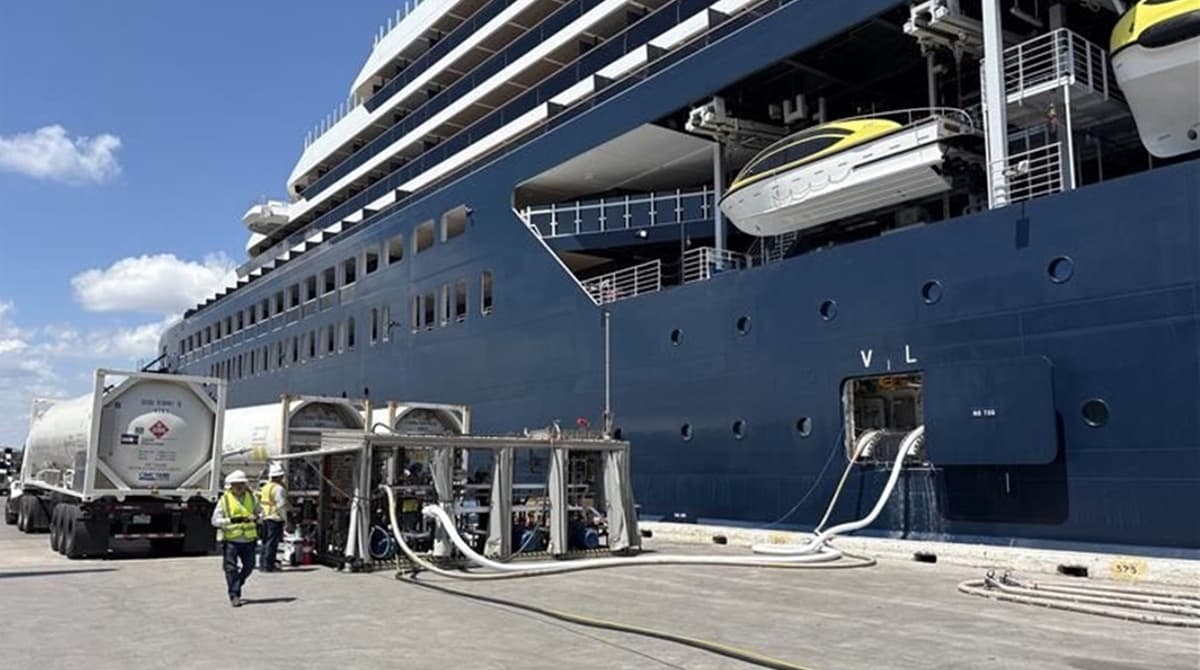
First LNG Shore-to-Ship Bunkering Operation at South Florida Port
Why It Matters
The bunkering showcases LNG’s growing role in decarbonizing maritime transport, positioning Port Everglades as a leading U.S. hub for next‑generation fuels and encouraging broader industry adoption.
Key Takeaways
- •First U.S. shore‑to‑ship LNG bunkering at Port Everglades
- •Ritz‑Carlton Yacht Ilma received LNG on March 26, 2026
- •Sawgrass LNG partnered with Coast Guard and local agencies
- •LNG adoption accelerates low‑carbon marine fuel market
Pulse Analysis
The inaugural shore‑to‑ship LNG bunkering at Port Everglades marks a turning point for U.S. maritime fuel infrastructure. Historically, U.S. ports have relied on heavy fuel oil, but rising environmental regulations and investor pressure are driving a shift toward cleaner alternatives. By delivering liquefied natural gas directly from shore to a luxury yacht, Sawgrass LNG & Power proved that the necessary logistics—cryogenic storage, high‑pressure transfer, and safety protocols—can be executed safely in a busy commercial hub. This success is likely to encourage other terminals to invest in LNG berths, especially as the International Maritime Organization tightens emissions standards.
Beyond the technical achievement, the operation underscores a strategic alignment between port authorities, fuel suppliers, and vessel owners seeking to reduce carbon footprints. Port Everglades, a gateway for cruise ships and cargo vessels, now has a tangible proof point to market its low‑carbon fuel capabilities to global operators. The involvement of the U.S. Coast Guard and local law‑enforcement agencies also signals regulatory confidence, which can streamline permitting for future projects. As more cruise lines and container carriers evaluate alternative fuels, the presence of a reliable LNG supply chain could become a decisive factor in route planning and fleet modernization.
Looking ahead, the South Florida LNG ecosystem could expand to include larger scale bunkering for commercial vessels, integration with renewable hydrogen or ammonia projects, and partnerships with offshore wind developers seeking flexible fuel options. Analysts project that U.S. LNG bunkering capacity could grow by double‑digit gigawatt‑hours annually through 2030, driven by both domestic demand and the need to service trans‑Atlantic ships. The Ilma bunkering event therefore serves as both a proof of concept and a catalyst for broader investment, positioning the region to capture a growing share of the global low‑carbon maritime market.
First LNG shore-to-ship bunkering operation at South Florida port
Comments
Want to join the conversation?
Loading comments...