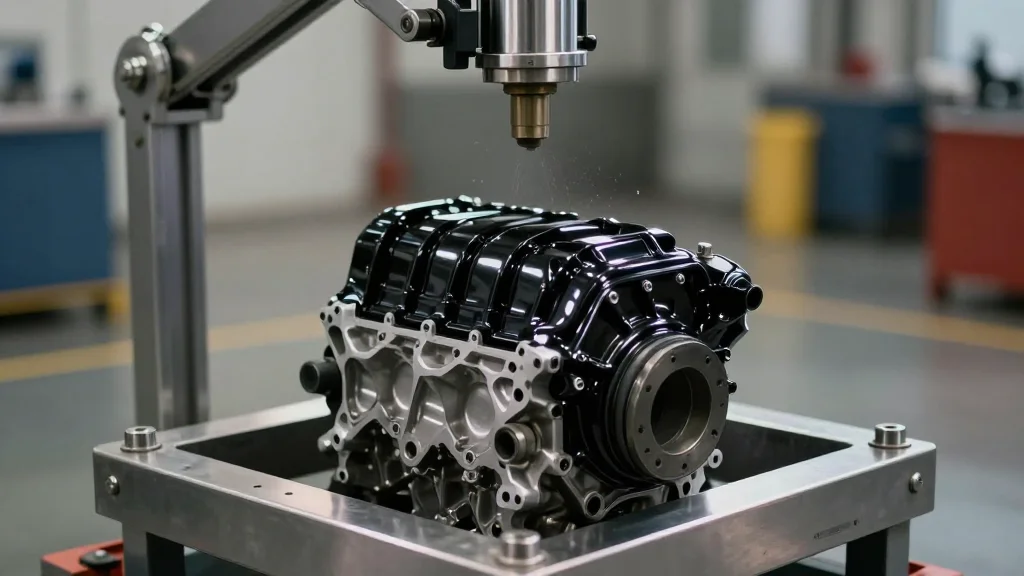
Ford Launches Shipping Equipment Design and Test Center to Boost Part Protection

Companies Mentioned

J.D. Power
Why It Matters
The Shipping Equipment Design and Test Center tackles a hidden but costly weakness in automotive manufacturing: part damage during transit. By engineering packaging that can survive real‑world shocks, Ford aims to lower warranty claims, improve JD Power quality scores and keep its ambitious EV rollout on schedule. The initiative also highlights a broader industry shift toward supply‑chain resilience, where logistics engineering becomes as strategic as vehicle design. For suppliers, the center sets a new expectation for proof‑of‑concept testing before parts leave the factory floor. If Ford’s model proves cost‑effective, it could drive a wave of similar facilities across the sector, tightening the entire automotive supply chain and reducing the environmental and financial waste associated with damaged components.
Key Takeaways
- •Ford opens a Shipping Equipment Design and Test Center in Dearborn to simulate transport hazards.
- •Team led by Todd Chesna tests packaging for engines, transmissions and panels against potholes, crane drops and rail impacts.
- •Bill Strong emphasizes the link between delivery quality and three‑month in‑service performance.
- •Ford leads U.S. recalls with 34 open cases as of May 5, 2026, aiming to improve quality scores.
- •Center supports upcoming EV launch on the Universal Electric Vehicle platform, targeting zero‑damage part delivery.
Pulse Analysis
Ford’s decision to institutionalize shipping‑equipment testing reflects a maturing view of logistics as a core competitive advantage rather than a cost center. Historically, automakers have relied on ad‑hoc packaging solutions, accepting a baseline level of damage as inevitable. By investing in a dedicated test lab, Ford is betting that the marginal cost of rigorous simulation will be outweighed by savings from reduced warranty repairs, fewer production stoppages and higher brand perception.
The move also dovetails with Ford’s broader $20 billion restructuring, which includes electrification, software integration and a shift toward higher‑margin vehicles. As EV components become more expensive and sensitive, the financial penalty for a single damaged battery pack can eclipse that of a traditional engine. Ford’s proactive stance could force Tier‑1 suppliers to adopt stricter packaging standards, potentially reshaping the upstream supply chain and creating a new market for specialized shipping‑equipment vendors.
Finally, the center may serve as a proving ground for data‑driven logistics. If Ford captures detailed telemetry on shock events and correlates them with part failure rates, it could feed predictive models into its broader supply‑chain management system. Such integration would enable real‑time adjustments to routing, carrier selection and packaging design, further tightening margins and reinforcing Ford’s promise of quality and reliability in a rapidly electrifying market.
Ford Launches Shipping Equipment Design and Test Center to Boost Part Protection
Comments
Want to join the conversation?
Loading comments...