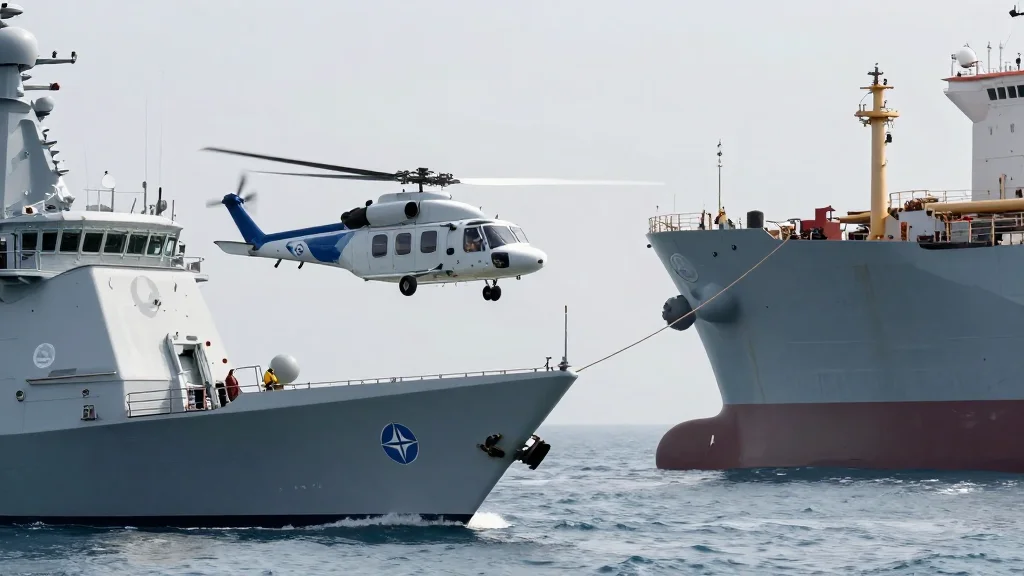
France Intercepts Sanctioned Russian Tanker in Atlantic
Why It Matters
The interception demonstrates escalating enforcement of sanctions on Russia’s illicit oil transport network, tightening a key revenue stream for Moscow and signaling heightened maritime security vigilance across Europe.
Key Takeaways
- •France boarded the sanctioned tanker Tagor 400 nm west of Brittany
- •Operation backed by the UK, part of EU shadow‑fleet crackdown
- •Vessel flagged under false flag, documentation irregularities confirmed
- •Interception aims to cut financing for Russia’s war in Ukraine
- •Britain proposes harsher penalties for sabotage of subsea cables
Pulse Analysis
The Tagor incident underscores how European authorities are intensifying pressure on Russia’s shadow fleet—a loosely organized group of vessels that disguise ownership and flag state to skirt sanctions. Since the invasion of Ukraine, the EU and its allies have expanded sanction lists to include tankers that move crude and refined products from Russian ports. By targeting a ship operating far from national waters, France signals that the reach of enforcement is no longer confined to territorial seas, raising the operational risk for operators who rely on opaque registries.
French naval teams, coordinated with the United Kingdom, boarded the tanker after intelligence flagged irregularities in its flag and paperwork. The boarding, conducted under international maritime law, allowed prosecutors to verify the vessel’s true nationality and seize it for further investigation. Officials emphasized that such ships not only fund the Russian war effort but also pose environmental hazards, given their potential for oil spills and non‑compliance with safety standards. The action aligns with recent UK measures granting its navy broader powers to interdict suspected sanction‑evasion vessels, reinforcing a unified front against illicit maritime activity.
Beyond oil transport, the episode dovetails with Britain’s proposal to toughen penalties for damage to subsea internet cables—a growing concern as hostile states target critical digital infrastructure. By modernising century‑old legislation and considering a dedicated British‑flagged cable‑repair vessel, the UK aims to deter sabotage that could cripple global communications. Together, these steps illustrate a shifting security paradigm where maritime law enforcement, cyber‑infrastructure protection, and sanctions policy intersect, compelling shipping firms to reassess compliance and risk management strategies.
France intercepts sanctioned Russian tanker in Atlantic
Comments
Want to join the conversation?
Loading comments...