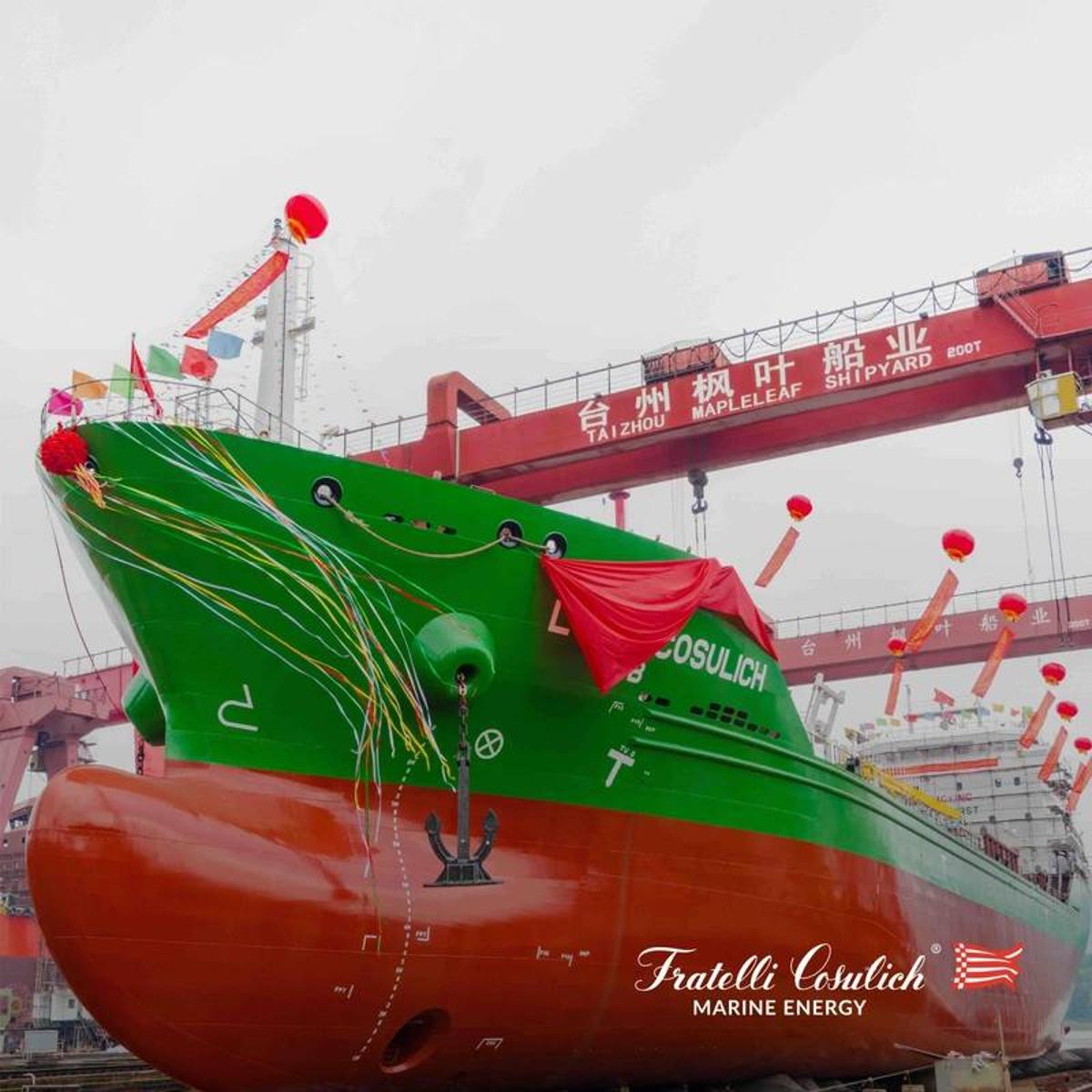
Fratelli Cosulich Launches Newest Methanol Vessel
Why It Matters
The launch expands a dedicated methanol‑capable fleet, giving shipowners a low‑carbon fuel option that aligns with tightening emissions regulations and growing demand for greener shipping solutions.
Key Takeaways
- •Lucia Cosulich is the second methanol‑ready IMO II vessel in a four‑ship series
- •Built at Taizhou Maple Leaf Shipyard, China, with phenolic epoxy tank coating
- •Designed for future fuel integration, supporting both current and emerging fuels
- •Part of Fratelli Cosulich’s plan to meet net‑zero maritime targets
- •Enhances flexible bunkering options for operators seeking low‑carbon solutions
Pulse Analysis
Methanol is emerging as a viable alternative to heavy fuel oil, offering up to 90% lower sulfur emissions and a smaller carbon footprint when produced from renewable sources. International bodies such as the IMO are tightening limits on greenhouse‑gas output, prompting shipowners to explore fuels that can meet both current compliance and future decarbonisation pathways. The chemistry of methanol allows it to be stored and handled with existing infrastructure, making it an attractive bridge fuel as the industry transitions toward ammonia and hydrogen.
Fratelli Cosulich’s decision to build a dedicated methanol‑ready fleet reflects a strategic bet on this bridge‑fuel market. By engineering the Lucia Cosulich with phenolic epoxy‑coated cargo tanks and modular fuel‑system architecture, the company ensures the vessel can switch seamlessly between conventional marine diesel and methanol, or even future low‑carbon fuels. This flexibility reduces the risk of stranded assets and offers charterers a competitive edge in ports that are expanding methanol bunkering capabilities, particularly in Asia and Europe.
The launch of Lucia Cosulich signals broader market momentum toward diversified fuel portfolios. As more shipyards adopt methanol‑compatible designs and regulators incentivise low‑emission operations, operators are likely to prioritize vessels that can adapt without costly retrofits. Fratelli Cosulich’s four‑ship program positions it to capture early‑mover advantage, potentially influencing bunkering networks to expand methanol supply chains. In the longer term, the fleet’s modularity could ease the shift to zero‑carbon fuels, reinforcing the company’s role in the maritime energy transition.
Fratelli Cosulich Launches Newest Methanol Vessel
Comments
Want to join the conversation?
Loading comments...