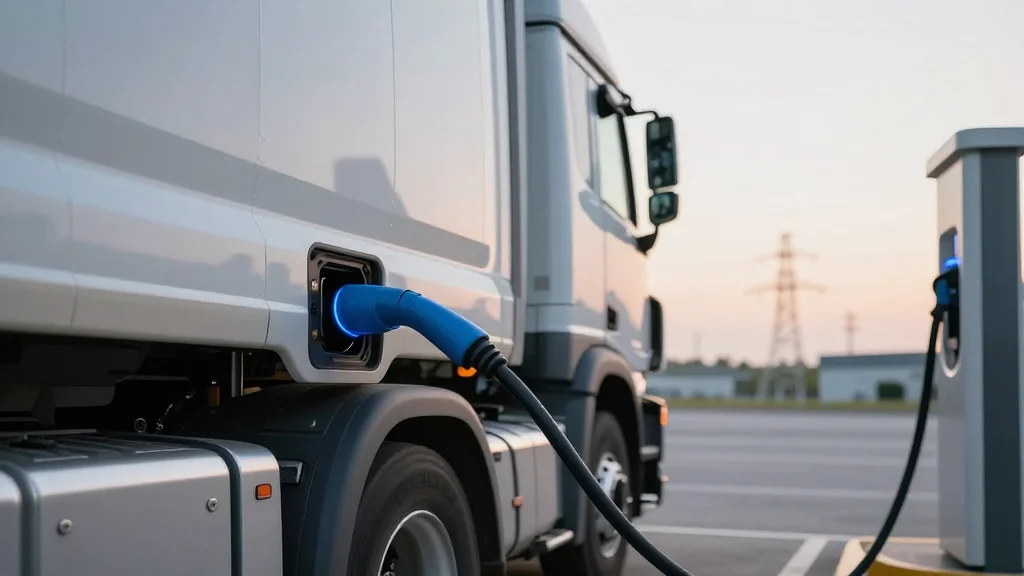
From Regulatory Shifts to On-Site Power: The New Economics of Heavy-Duty EV Infrastructure
Companies Mentioned
Why It Matters
Zeem’s model reduces capital barriers, accelerates EV fleet rollout, and turns trucks into grid‑support assets, reshaping logistics economics and utility relationships.
Key Takeaways
- •CARB enforcement keeps California fleets electrifying despite federal rollbacks
- •Tesla Semi achieves over 400 miles, boosting heavy‑duty EV credibility
- •Zeem’s 2.5‑MW skidded chargers avoid costly ground excavation
- •Predictive “8,760 map” lets fleets negotiate lower utility rates
- •Fleet batteries serve as distributed energy resources for peak shaving
Pulse Analysis
The 2024 U.S. presidential election introduced a wave of uncertainty for commercial‑vehicle electrification, as the new administration rolled back several federal clean‑fleet incentives. In California, however, the California Air Resources Board (CARB) has doubled down on its aggressive decarbonization targets, creating a regulatory oasis that continues to compel fleets to adopt zero‑emission trucks. This divergence forces operators outside the Golden State to rely on improving vehicle performance rather than mandates, while California’s steadfast policy keeps the market momentum alive and sets a benchmark for nationwide adoption.
At the heart of that momentum is the Tesla Semi, now delivering more than 400 miles on a single charge and prompting traditional OEMs to accelerate their own EV programs. Zeem Solutions leverages this hardware progress with its 2.5‑megawatt skidded charging modules, which can be installed in parking lots without expensive trenching or building‑code setbacks. The company’s “8,760 map” predicts hourly load profiles, allowing fleets to schedule night‑time charging and negotiate utility rates that reflect actual usage rather than peak‑demand penalties.
Beyond charging, Zeem envisions heavy‑duty trucks as distributed energy resources. A depot of ten 565‑kWh Volvo trucks can supply roughly 5.5 MWh of grid‑ready power, enabling peak‑shaving for refrigerated cargo operations and even emergency grid support. By bundling vehicle acquisition, charger installation and long‑term service into a single contract, Zeem lowers capital barriers and creates a new business model where logistics firms become both transport providers and flexible power assets. This integrated approach could accelerate the transition to an electrified freight network while delivering tangible cost savings for operators and utilities alike.
From regulatory shifts to on-site power: The new economics of heavy-duty EV infrastructure
Comments
Want to join the conversation?
Loading comments...