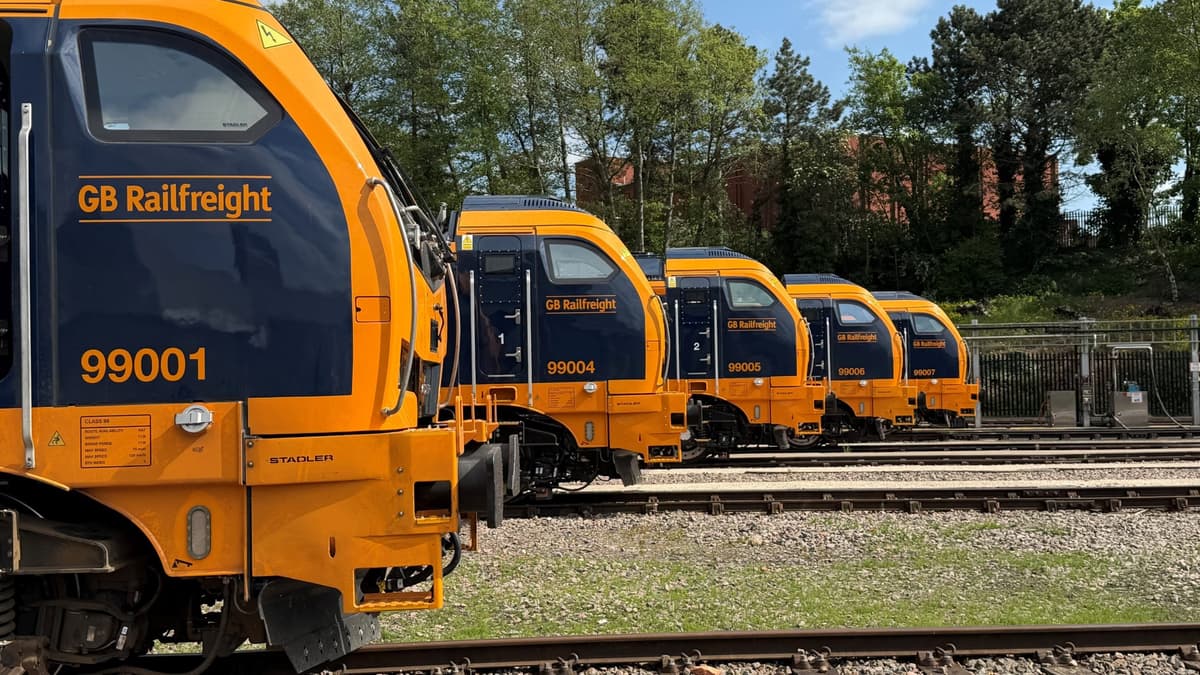
GBRf’s Class 99 Locomotives, Nearing Commercial Launch
Companies Mentioned
Why It Matters
The approval fast‑tracks UK freight rail’s shift to lower‑carbon operations and gives GBRf a competitive edge by removing locomotive changes on mixed‑mode routes.
Key Takeaways
- •Interim compatibility approval lets Class 99 run on UK network now
- •First six locomotives delivered, enabling driver‑training before summer launch
- •Bimodal design combines overhead electric power with Stage V diesel engine
- •Expected emissions drop versus traditional diesel freight locomotives
- •Supports GBRf’s goal to decarbonise UK rail freight by 2030
Pulse Analysis
The United Kingdom’s freight rail sector is under mounting pressure to cut carbon emissions while maintaining the reliability that shippers demand. GB Railfreight (GBRf), the country’s largest freight operator, has taken a decisive step forward with its Class 99 bimodal locomotives. Developed by Swiss‑based Stadler Rail and tailored for British infrastructure, the fleet received an interim declaration of compatibility from Network Rail in early May 2026, clearing the final regulatory hurdle for trial runs on the national network. The approval, coupled with the delivery of the first six units, positions GBRf to begin driver‑training programmes ahead of a commercial launch slated for summer 2026.
Class 99’s dual‑mode architecture blends overhead electric traction with a Stage V‑compliant diesel engine, allowing seamless operation across both electrified mainlines and the extensive non‑electrified routes that still dominate the UK rail map. By drawing power from the 25 kV AC catenary where available, the locomotives can achieve up to 30 percent lower fuel consumption and a comparable reduction in CO₂ emissions relative to conventional diesel‑only units. The electric mode also delivers higher torque at low speeds, improving haulage performance on heavy freight trains while reducing wear on track and brakes.
Beyond the environmental upside, the Class 99 platform offers GBRf a clear commercial advantage. Eliminating the need to change locomotives at electrification boundaries shortens transit times and lowers crew costs, enhancing service competitiveness against road haulage. The initial contract for 30 units, signed in 2022 with leasing partner Beacon, signals confidence in the technology and opens the door for other UK operators to consider similar upgrades. As the fleet scales up, the broader rail freight ecosystem stands to benefit from a more resilient, lower‑carbon network that aligns with the UK’s 2050 net‑zero rail strategy.
GBRf’s Class 99 locomotives, nearing commercial launch
Comments
Want to join the conversation?
Loading comments...