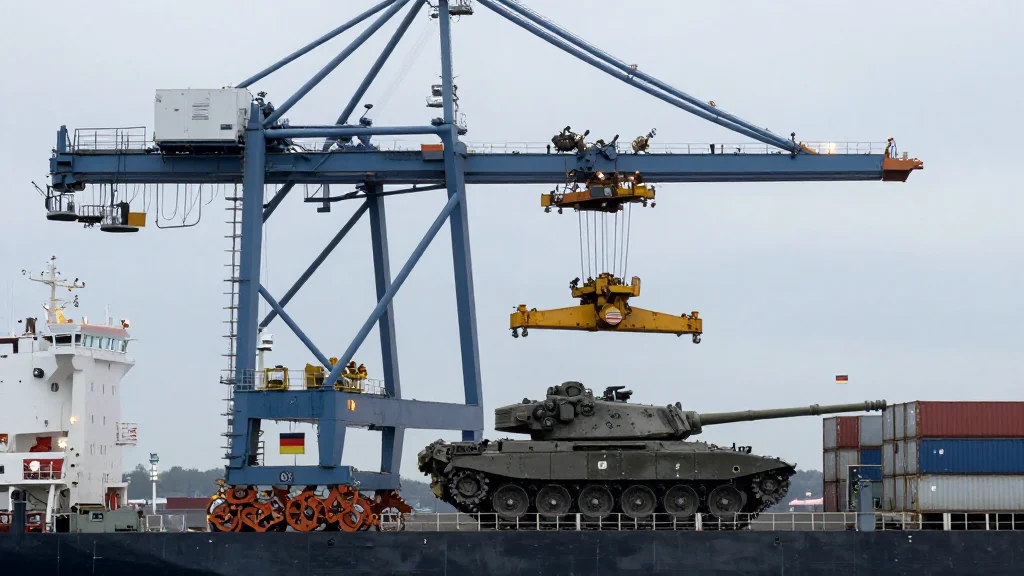
Germany Invests $1.6 Billion to Convert Bremerhaven Port for Military Logistics

Companies Mentioned
Why It Matters
The Bremerhaven upgrade underscores a growing trend of integrating civilian logistics assets into national defense strategies, a shift that could reshape European supply chain dynamics. By converting a commercial hub into a dual‑use facility, Germany aims to reduce mobilization time for heavy equipment, thereby strengthening deterrence while preserving economic throughput. If the model proves effective, other EU nations may pursue similar conversions, prompting a re‑evaluation of port capacity planning, investment priorities, and regulatory frameworks governing civilian‑military infrastructure sharing. The initiative also raises questions about the resilience of supply chains under dual‑use pressure, especially during periods of heightened geopolitical tension.
Key Takeaways
- •Germany allocates €1.35 bn ($1.6 bn) to upgrade Bremerhaven port for military use.
- •Reinforced docks will enable loading of 60‑ton Leopard tanks and other heavy equipment.
- •Project is part of the 2026 federal budget aimed at bolstering European war‑time logistics.
- •Upgrade could affect automotive export schedules from Europe’s largest car port.
- •Construction slated for 2027‑2030, with NATO integration tests planned before full operation.
Pulse Analysis
Germany’s decision to retrofit Bremerhaven reflects a strategic pivot toward logistics resilience that goes beyond traditional defense spending. Historically, European militaries have relied on dedicated military bases and rail corridors for equipment movement. By leveraging an existing commercial hub, Berlin reduces the need for parallel infrastructure, cuts long‑term capital costs, and taps into the port’s established supply‑chain expertise.
The move also signals a recognition that future conflicts may require rapid, sea‑borne deployment of heavy armor, a capability that many civilian ports lack. As NATO pushes for greater interoperability, a dual‑use port like Bremerhaven offers a ready‑made node that can be activated with minimal delay. However, the approach carries risk: civilian operators may face capacity constraints during peak export periods, and the integration of military security protocols could increase operational complexity.
Looking ahead, the Bremerhaven upgrade could catalyze a wave of similar projects across the EU, especially in nations with large maritime gateways such as Rotterdam and Marseille. If coordinated effectively, a network of dual‑use ports could dramatically shorten supply‑chain lead times for defense materiel, enhancing collective security while preserving commercial throughput. The key challenge will be balancing the competing demands of trade and defense without compromising either, a test that will shape Europe’s logistical posture for years to come.
Germany Invests $1.6 Billion to Convert Bremerhaven Port for Military Logistics
Comments
Want to join the conversation?
Loading comments...