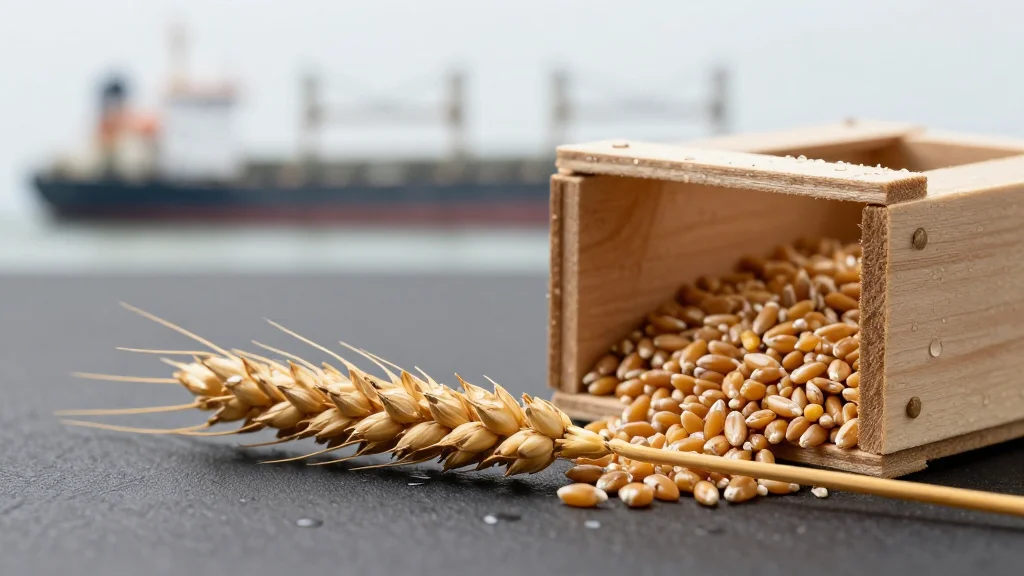
Govt's Wheat Procurement to Drop 69% Due to Delayed Arrivals
Why It Matters
The sharp procurement drop tightens domestic supply, pressuring prices and prompting the government to balance food security with export earnings. It signals heightened volatility for India’s staple‑grain market and may influence future MSP adjustments.
Key Takeaways
- •Procurement down to 1.53 Mt, 69% drop YoY.
- •Unseasonal rains delayed harvest, reduced grain quality.
- •MSP at ₹2,585 (~$31) per quintal, below market price.
- •Government cleared 250k Mt wheat and 500k Mt products for export.
- •Early‑season buying slowdown pressures food‑grain market.
Pulse Analysis
India’s wheat procurement cycle, traditionally anchored by the Food Corporation of India (FCI), is confronting an unprecedented shortfall. The 2026‑27 marketing year saw only 1.53 million tonnes purchased, a 69% decline from the previous year’s 5 million tonnes. The primary driver is a delayed harvest caused by unseasonal monsoon showers that pushed grain arrivals into later months, compromising both volume and visual quality. This disruption underscores the vulnerability of a system that relies heavily on early‑season buying to lock in supply at the minimum support price (MSP).
The MSP of ₹2,585 per quintal—roughly $31—remains above current mandi rates of ₹2,300‑2,400 (about $28). While the price floor protects farmers, the gap between MSP and market rates narrows when procurement volumes shrink, potentially squeezing farmer margins and prompting speculative buying. In response, the Centre has green‑lit the export of 250,000 metric tonnes of wheat and an additional 500,000 MT of wheat‑derived products, aiming to offset domestic surplus concerns while capitalising on global demand. These approvals reflect a delicate balancing act: safeguarding food security at home while leveraging export revenues.
Looking ahead, the episode highlights the need for more resilient agricultural planning. Climate‑induced timing shifts may become more frequent, urging policymakers to diversify procurement windows, enhance storage capacity, and consider dynamic MSP mechanisms tied to real‑time market signals. For traders and agribusinesses, the current environment offers both risk and opportunity—tightened domestic supply could lift prices, yet export channels remain open for surplus quality grain. Stakeholders will watch closely how the government calibrates support measures to stabilise the wheat market without compromising long‑term food self‑sufficiency.
Govt's wheat procurement to drop 69% due to delayed arrivals
Comments
Want to join the conversation?
Loading comments...