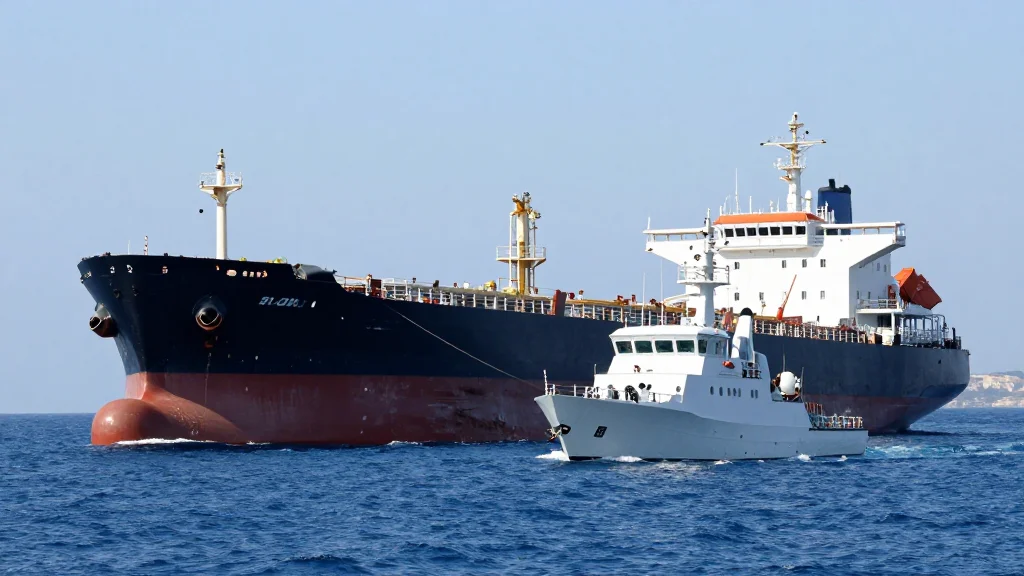
Greek Owner Agrees Deal with US to Get Blocked VLCC Out of Hormuz
Why It Matters
The episode illustrates how U.S. regulatory power can disrupt or enable critical oil‑product flows, affecting shipping schedules and energy market stability. It also signals potential shifts in geopolitical risk assessments for carriers operating in the Hormuz corridor.
Key Takeaways
- •US granted clearance for 300,000‑dwt VLCC after Hormuz blockade
- •Agios Fanourios I resumes voyage toward Vietnam, arrival expected 30 May
- •Incident highlights geopolitical risk for Eastern Mediterranean carriers
- •Clearance may signal softening of U.S. restrictions in Strait
- •Vessel’s movement underscores importance of Hormuz for global oil logistics
Pulse Analysis
The Strait of Hormuz remains one of the world’s most contested maritime chokepoints, funneling roughly a fifth of global oil shipments. When the United States imposes a blockade, even large crude carriers such as Very Large Crude Carriers (VLCCs) can be detained, causing ripple effects across freight markets and commodity pricing. The recent clearance for the Agios Fanourios I, a 300,000‑dwt Greek‑owned vessel, demonstrates how diplomatic negotiations and strategic considerations can swiftly alter a ship’s fate, restoring a critical link between the Middle East and Asian refineries.
For the Greek shipping sector, which controls a sizable share of the global tanker fleet, the incident underscores the necessity of robust risk‑management frameworks. Operators must monitor geopolitical developments in real time, maintain open channels with U.S. maritime authorities, and diversify routing options where feasible. The ability to secure a waiver for the Agios Fanourios I not only salvages a lucrative voyage to Vietnam but also reinforces confidence among charterers that Greek owners can navigate complex regulatory environments without sacrificing cargo value.
Looking ahead, the episode may hint at a calibrated U.S. approach to Hormuz, balancing enforcement with the need to keep oil markets fluid. If similar clearances become more frequent, carriers could anticipate a modest reduction in insurance premiums and voyage delays linked to Hormuz‑related uncertainty. Conversely, any abrupt policy reversal would reignite concerns over supply chain resilience, prompting shippers to consider alternative routes such as the Cape of Good Hope. Stakeholders should therefore watch diplomatic signals closely, as they will shape freight rates, charter negotiations, and the broader dynamics of the global energy trade.
Greek owner agrees deal with US to get blocked VLCC out of Hormuz
Comments
Want to join the conversation?
Loading comments...