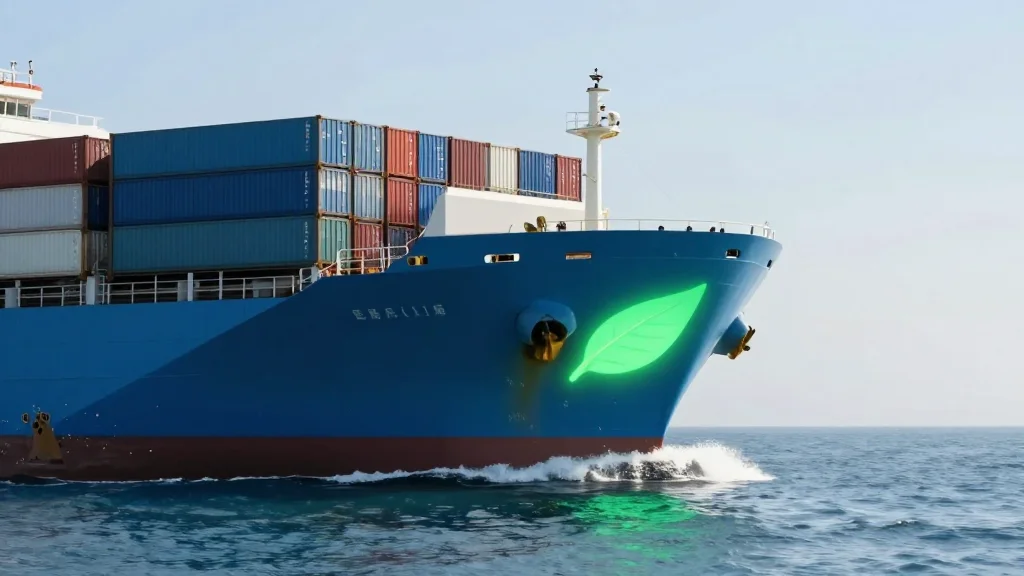
Hapag‑Lloyd and Scan Global Logistics Deploy Book‑and‑Claim Ocean‑Freight Decarbonisation Solution

Companies Mentioned
Why It Matters
The partnership tackles a critical gap in corporate climate strategies: credible, near‑term reductions in Scope 3 emissions from ocean freight. By offering a verified, flexible credit mechanism, Hapag‑Lloyd and Scan Global Logistics give multinational buyers a tool that aligns with ESG reporting standards while the industry works toward large‑scale low‑carbon fuel adoption. This could accelerate investment in maritime bio‑fuels and encourage other carriers to develop similar schemes, potentially reshaping the carbon‑credit landscape for shipping. For supply‑chain leaders, the ability to claim emissions reductions without altering routing or vessel choice simplifies procurement decisions and reduces the risk of supply‑chain disruption. As investors and regulators tighten scrutiny on indirect emissions, such mechanisms become essential for companies seeking to meet net‑zero pledges, making the partnership a strategic asset for both logistics providers and their corporate customers.
Key Takeaways
- •Hapag‑Lloyd and Scan Global Logistics integrate Ship Green into Scan’s freight portfolio.
- •Book‑and‑Claim model uses mass‑balance principle to certify bio‑fuel‑based emission cuts.
- •Customers can claim verified reductions in ocean‑freight Scope 3 emissions without changing routes.
- •Partnership provides a bridge until low‑carbon fuels achieve broader commercial scale.
- •Creates a new source of maritime carbon credits, potentially influencing fuel markets.
Pulse Analysis
The Hapag‑Lloyd/Scan Global Logistics deal marks a pragmatic shift from aspirational decarbonisation to actionable credit‑based solutions. Historically, maritime emissions have been addressed through fuel‑efficiency measures and, more recently, through the adoption of alternative fuels. However, the pace of fuel infrastructure rollout has lagged behind corporate climate timelines, leaving a compliance gap for Scope 3 reporting. By leveraging a mass‑balance Book‑and‑Claim system, the partnership sidesteps the need for vessel‑specific fuel swaps, delivering immediate ESG value while preserving operational flexibility.
From a market perspective, the move could catalyse a nascent carbon‑credit market specific to shipping. If other carriers adopt comparable schemes, a standardized pool of maritime credits may emerge, driving price discovery and liquidity. This would mirror the evolution of renewable energy certificates in power markets, where verification and tradability have spurred investment in clean generation. Moreover, the visibility of bio‑fuel volumes tied to credit issuance may incentivise shipowners to secure larger contracts with bio‑fuel producers, accelerating economies of scale and potentially lowering the cost curve for sustainable marine fuels.
Looking ahead, the partnership’s success will hinge on transparent reporting and third‑party verification. Corporates will demand robust data to substantiate ESG claims, and any perception of double‑counting could undermine confidence. If Hapag‑Lloyd and Scan can deliver credible, auditable impact metrics, they will set a benchmark that could become a de‑facto standard for maritime emissions accounting, reshaping procurement criteria across global supply chains.
Hapag‑Lloyd and Scan Global Logistics Deploy Book‑and‑Claim Ocean‑Freight Decarbonisation Solution
Comments
Want to join the conversation?
Loading comments...