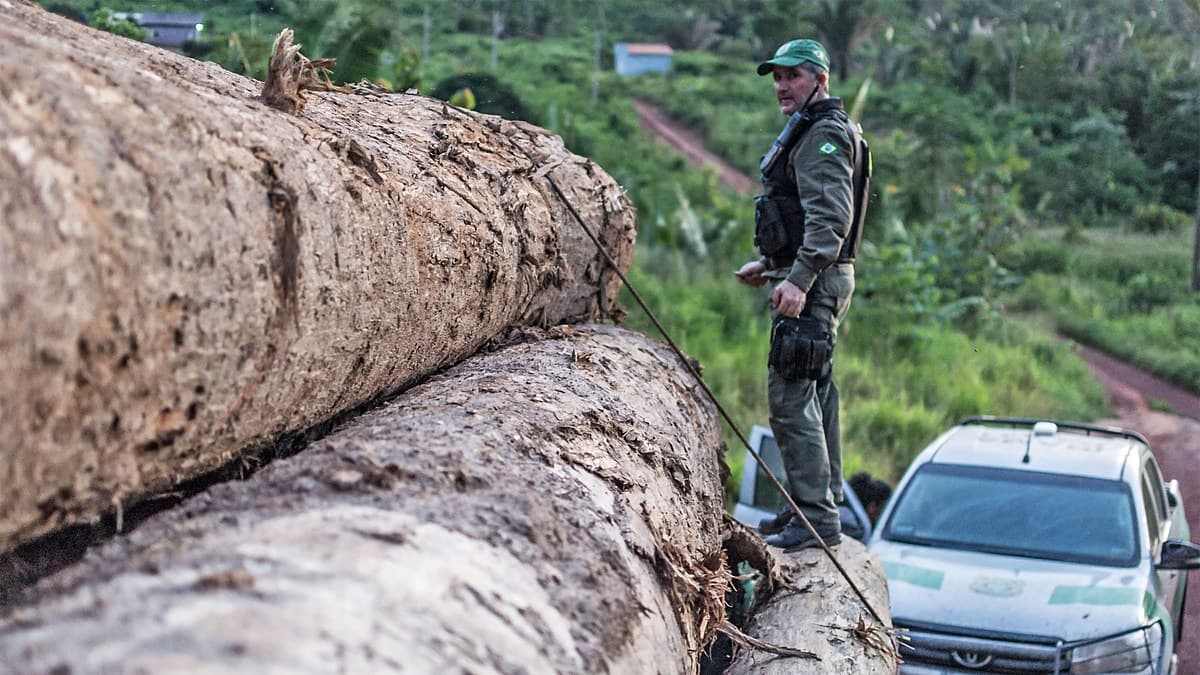
Hidden Owners Fuel Billions in Illegal Timber Trade, Report Finds
Why It Matters
Hidden beneficial owners enable massive illicit profits and undermine climate commitments, threatening supply‑chain integrity and public revenue in key export markets. Addressing ownership opacity is essential for effective deforestation controls and financing sustainable forestry.
Key Takeaways
- •Cameroon loses $289 million annually to timber trade mispricing
- •Brazil’s illegal timber gap peaked at $1.17 billion in 2022
- •Hidden ownership hampers enforcement of EU deforestation regulations
- •Soy and beef from illegal land contributed $14 billion in 2022
- •Satellite data shows 48% of Mato Grosso soy lacks permits
Pulse Analysis
Illegal logging has become a financial engine that fuels deforestation across the globe, with estimates from the UN Environment Programme placing the illicit market at $152 billion annually. The recent Financial Transparency Coalition report adds granularity, showing how concealed ownership structures in Brazil and Cameroon enable trade‑price manipulation and tax evasion. By obscuring the true beneficiaries, these schemes not only erode government revenues but also lock in carbon emissions from cleared forest, undermining climate goals and sustainable development agendas.
In Brazil, the discrepancy between reported timber exports and partner import data surged to $1.17 billion in 2022, while the 2024 export figure includes $1.28 billion of timber harvested from illegal lands. Cameroon’s average annual mispricing of $289 million reflects a similar pattern, compounded by a lack of public beneficial‑owner registries despite recent duty hikes and species bans. The opacity hampers the EU Deforestation Regulation, slated for December 2026, because authorities cannot trace the true source of timber entering European markets. Consequently, corporations and importing nations face heightened compliance risk and reputational exposure.
The report’s policy recommendations focus on transparency: public beneficial‑ownership databases, a global asset registry for forests and concessions, and automated satellite‑triggered sanctions. Implementing these measures could redirect billions of illicit dollars into the estimated $216 billion annual forestry financing gap, supporting reforestation, community land rights, and low‑carbon supply chains. As investors and consumers demand traceable, climate‑friendly products, closing the ownership veil will become a competitive advantage for firms that can prove compliance with emerging deforestation standards.
Hidden Owners Fuel Billions in Illegal Timber Trade, Report Finds
Comments
Want to join the conversation?
Loading comments...