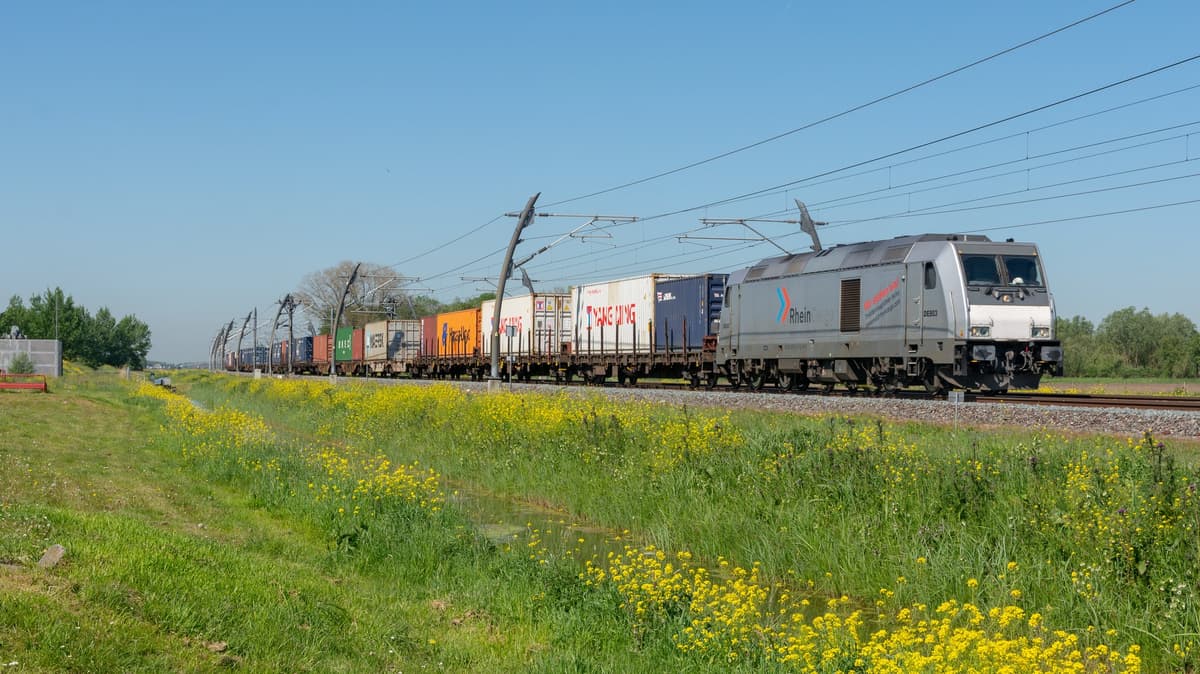
Historic Moment in Rail Freight: Challengers Are Growing Bigger than Incumbent Operators
Why It Matters
The shift signals a restructuring of European freight logistics, pressuring legacy operators to improve efficiency and opening opportunities for agile, private players to capture larger volumes and reshape pricing dynamics.
Key Takeaways
- •Private challengers hold 41% of European rail freight market (2024)
- •Incumbents fell to 42% share, losing ~2% annually
- •Foreign incumbents account for 16% of market share
- •Portugal's former state operator rebranded as Medway after MSC acquisition
- •Germany's DB Cargo losing ground in combined transport segment
Pulse Analysis
European rail freight is undergoing a decisive realignment. The IRG‑Rail data for 2024 reveals private operators now control 41% of the market, edging ever closer to the 42% share of domestic incumbents. This growth, driven by liberalized access rules, targeted investments in rolling stock, and digital freight platforms, reflects a broader trend of fragmentation that has been gathering pace since 2017. Meanwhile, foreign incumbents remain a modest 16% slice, underscoring the dominance of home‑grown competition.
For legacy carriers, the numbers are a warning sign. Incumbents have been shedding roughly two percentage points per year, a decline most visible in Germany where DB Cargo’s share in combined transport has slipped noticeably. The erosion forces traditional operators to re‑evaluate network utilization, pricing strategies, and service reliability to retain shippers. Portugal’s CP Carga, now Medway after MSC’s 2016 takeover, exemplifies how strategic acquisitions can reposition a former state monopoly into a competitive private player, accelerating market diversification.
Looking ahead, the trajectory suggests challengers could soon become the market majority, reshaping supply‑chain dynamics across Europe. Policymakers may need to balance open‑access reforms with infrastructure investment to ensure capacity keeps pace with heightened competition. Shippers stand to benefit from more service options and potentially lower rates, but they must also navigate a more complex provider landscape. Companies that can combine technological agility with robust cross‑border networks are poised to dominate the next phase of European rail freight.
Historic moment in rail freight: challengers are growing bigger than incumbent operators
Comments
Want to join the conversation?
Loading comments...