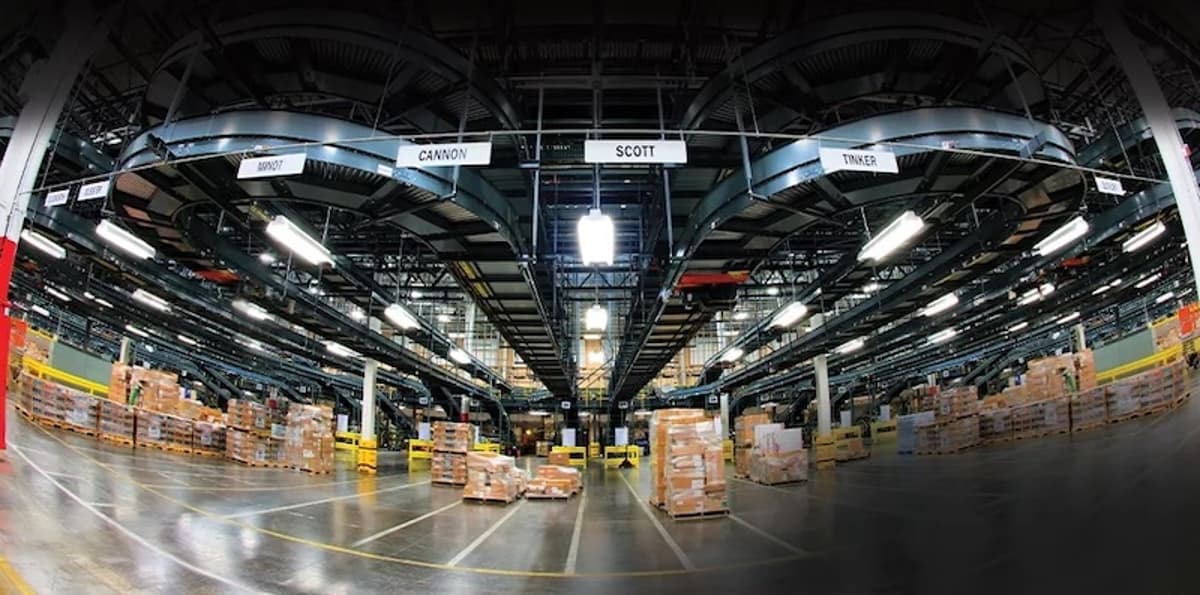
Honeywell to Sell Warehouse Automation Business Intelligrated and Transnorm as Portfolio Overhaul Continues
Companies Mentioned
Why It Matters
The divestiture sharpens Honeywell’s focus on high‑margin software and control technologies, accelerating its transition to autonomous industrial solutions. It also bolsters AIP’s position in the competitive warehouse‑automation market, potentially reshaping the sector’s competitive landscape.
Key Takeaways
- •Honeywell sells Intelligrated and Transnorm to AIP for cash.
- •Deal adds $935 M revenue business to AIP’s Trew platform.
- •Sale follows $1.4 B divestiture of Productivity Solutions to Brady.
- •Honeywell refocuses on sensing, software, and autonomous automation.
- •Market sees shift from hardware integration to software‑driven solutions.
Pulse Analysis
Honeywell’s latest divestiture is the culmination of a strategic overhaul that began with the sale of its Productivity Solutions and Services unit to Brady for $1.4 billion. By shedding the Warehouse and Workflow Solutions (WWS) business—an $935 million revenue operation—the company is pruning hardware‑intensive assets to concentrate on core competencies such as sensing, measurement, and software‑driven control systems. This realignment aligns with CEO Vimal Kapur’s vision of moving from traditional automation toward fully autonomous industrial platforms, a transition that promises higher margins and stronger recurring revenue streams.
For American Industrial Partners, acquiring WWS and merging it with its existing Trew investment creates a more comprehensive warehouse‑automation offering. The combined entity will span sortation, conveyor, palletizing, and robotics technologies, positioning AIP as a formidable challenger to established players like Dematic, Daifuku, and SSI Schaefer. The infusion of WWS’s customer base across e‑commerce, retail, and manufacturing could accelerate product development cycles and enable faster deployment of integrated solutions, a critical advantage in a market where speed and flexibility are increasingly prized.
The broader industry is witnessing a clear split between physical‑infrastructure providers and digital‑focused innovators. Large conglomerates such as Honeywell are exiting hardware‑heavy segments to avoid the capital intensity and lower margins associated with equipment manufacturing, while private equity firms and specialist software companies double down on AI, analytics, and cloud‑based control layers. Investors should watch how this structural shift influences valuation multiples, M&A activity, and the speed of adoption for autonomous warehouse technologies across supply chains.
Honeywell to sell warehouse automation business Intelligrated and Transnorm as portfolio overhaul continues
Comments
Want to join the conversation?
Loading comments...