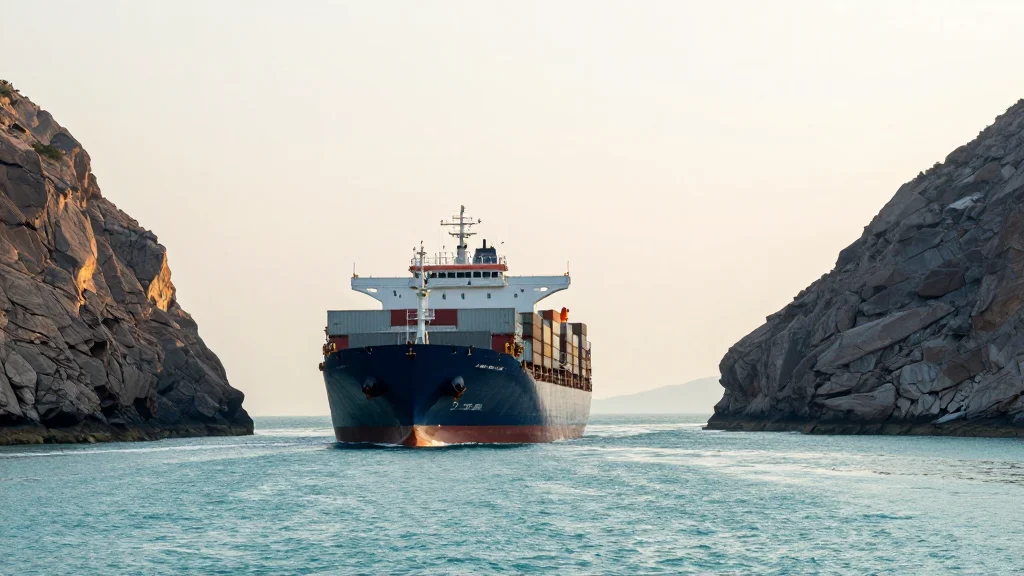
Hormuz Strait Shutdown Lifts Container Freight Rates 16% as Carriers Pass $500M Monthly Fuel Hit

Companies Mentioned
Why It Matters
The Hormuz Strait is a chokepoint for roughly 20% of global oil shipments and a critical artery for containerized trade between Asia and Europe. Its closure not only inflates freight costs but also reshapes routing decisions, prompting carriers to favor longer, fuel‑intensive detours that amplify emissions and supply‑chain volatility. Higher freight rates cascade to manufacturers and retailers, raising the price of imported goods and squeezing thin consumer margins. If the crisis endures, the sustained fuel surcharge could accelerate a shift toward alternative transport modes, such as rail overland routes through Central Asia, and spur investment in lower‑carbon fuels or even autonomous vessels. Short‑term, shippers must reassess inventory buffers and consider hedging strategies against fuel price spikes, while long‑term policy makers may need to revisit strategic reserves and maritime security frameworks to safeguard this vital trade corridor.
Key Takeaways
- •SCFI global composite rose 16% to 2,572 points, highest since Sep 2024
- •Maersk incurs $500 million extra fuel cost per month; Hapag‑Lloyd €50‑60 million per week
- •VLSFO price hit $856/tonne, up 68% from mid‑February
- •Effective fleet capacity down 19% due to Red Sea avoidance, slow steaming, and port congestion
- •Spot Shanghai‑Mediterranean rate jumped to $7,500 per FEU, a 63% weekly increase
Pulse Analysis
The Hormuz shutdown has turned a temporary fuel shock into a structural pricing inflection point for container shipping. Historically, geopolitical events that constrict a single chokepoint—such as the 2021 Suez Canal blockage—have produced short‑lived rate spikes that quickly normalized once the route cleared. This time, however, carriers are confronting a dual pressure: a sustained fuel price surge and a lingering capacity gap caused by deliberate route avoidance and slower vessel speeds. The latter reflects a strategic choice to preserve margins rather than compete on price, signaling a shift from the ultra‑low‑cost model that dominated the post‑pandemic era.
The ripple effects extend beyond freight forwarders. Import‑heavy economies in Europe and North America will see higher landed costs for everything from consumer electronics to automotive parts, potentially feeding into inflationary pressures already evident in headline CPI figures. Meanwhile, exporters in China and Southeast Asia may face reduced competitiveness unless they can absorb or pass on the higher logistics bill. In the longer run, the crisis could accelerate the industry's pivot toward greener fuels; the $856/tonne VLSFO price is already approaching the cost threshold where low‑sulphur alternatives become economically viable.
Looking ahead, the market’s trajectory will be dictated by diplomatic outcomes in the Gulf. A rapid de‑escalation that reopens Hormuz could see bunker costs retreat, but the capacity reduction—now entrenched through slower steaming and port bottlenecks—may linger, keeping rates above pre‑crisis levels for months. Shippers should therefore prioritize flexible contracts, diversify routing options, and monitor fuel‑price hedges closely as they navigate this volatile environment.
Hormuz Strait shutdown lifts container freight rates 16% as carriers pass $500M monthly fuel hit
Comments
Want to join the conversation?
Loading comments...