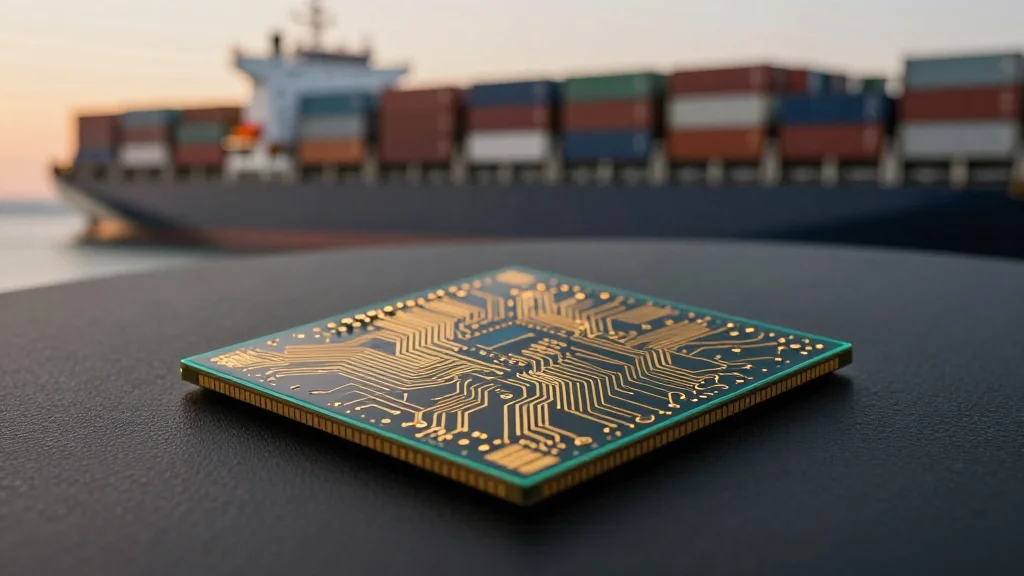
How the Iran War and AI Are Making Tech More Expensive
Why It Matters
Higher tech costs erode profit margins and could delay AI‑driven innovation across industries, reshaping investment priorities.
Key Takeaways
- •Iran conflict disrupts semiconductor supply chains
- •AI demand spikes GPU and chip pricing worldwide
- •Logistics bottlenecks add 15‑20% freight costs
- •Manufacturers shift production to lower‑cost regions
- •Higher component costs compress tech profit margins
Pulse Analysis
The Iran‑Israel conflict has rippled through global supply chains, especially for high‑tech components that rely on raw materials sourced from the Middle East and nearby regions. Shipping lanes in the Persian Gulf face heightened security checks, while sanctions limit the flow of specialized equipment needed for semiconductor fabrication. These constraints have forced manufacturers to seek alternative routes and suppliers, inflating freight rates and introducing lead‑time uncertainty that directly raises the cost base for everything from smartphones to data‑center hardware.
Concurrently, the AI boom is creating unprecedented demand for advanced processors, GPUs, and custom accelerators. Companies racing to train large language models are ordering chips at volumes that outstrip existing fab capacity, prompting foundries to prioritize AI workloads over traditional consumer products. This demand‑supply mismatch has driven spot prices for AI‑grade silicon up sharply, while also accelerating the rollout of newer, more expensive process nodes. The resulting price pressure is not limited to hardware; software vendors and cloud providers are also passing higher infrastructure costs onto end users.
For businesses, the combined effect of geopolitical turbulence and AI‑driven demand means tighter profit margins and the need for strategic adjustments. Firms are diversifying their supply bases, moving production to lower‑cost regions such as Southeast Asia, and exploring on‑shoring options to reduce exposure to distant disruptions. Additionally, many are revisiting product pricing strategies and investing in inventory buffers to protect against future cost spikes. These adaptations underscore a broader industry shift toward resilience and cost‑optimization in an era where both conflict and technological acceleration drive expense growth.
How the Iran war and AI are making tech more expensive
Comments
Want to join the conversation?
Loading comments...