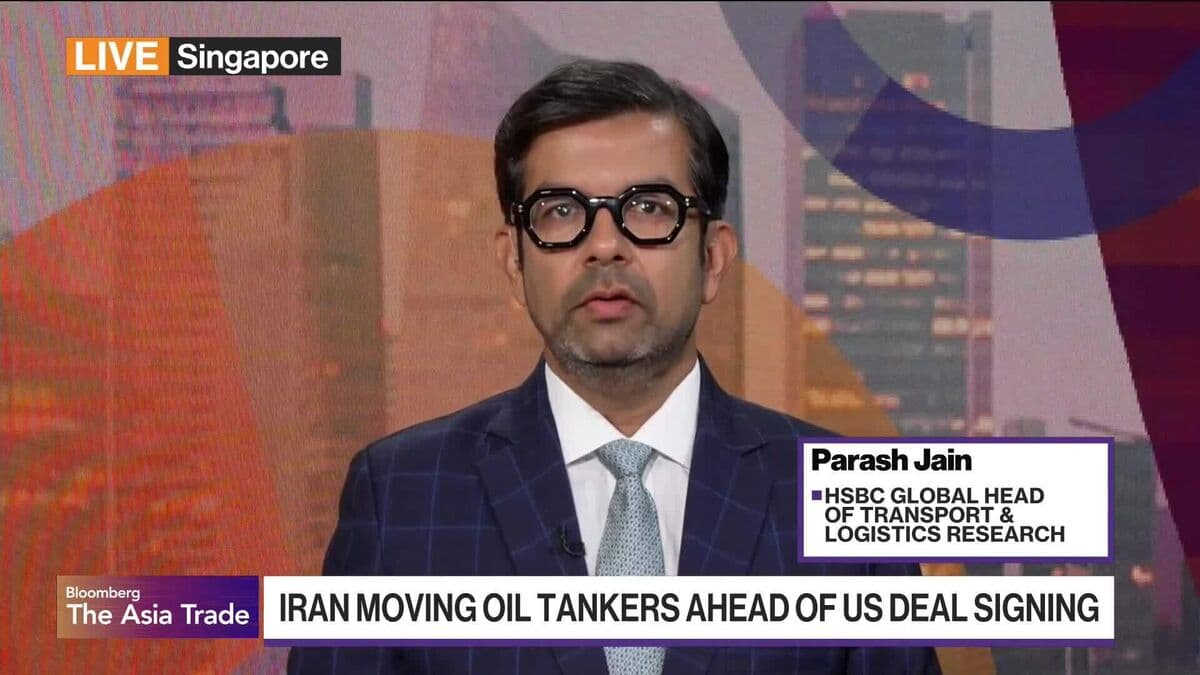
HSBC’s Jain on Hormuz Strait Reopening
Companies Mentioned


Why It Matters
Reopening the Hormuz corridor could shift global freight patterns, influencing shipping margins and airline cost structures, while lingering uncertainty sustains cautious investor sentiment.
Key Takeaways
- •De‑mining expected to take 40‑50 days, delaying vessel movements.
- •Tankers likely resume first; commercial ships await insurance normalization.
- •Container freight rates may fall as Red Sea capacity returns, 8% supply.
- •Stranded vessels may need dry‑docking, temporarily absorbing capacity.
- •Airlines could gain from lower jet fuel, but weaker carriers risk loss.
Pulse Analysis
The Strait of Hormuz has long been a chokepoint for oil and bulk cargoes, and the recent U.S.–Iran memorandum of understanding offers a tentative path to reopening. HSBC’s Parash Jain emphasizes that de‑mining operations, projected to span 40‑50 days, are the primary bottleneck. Until mines are cleared and insurance premiums revert to pre‑conflict levels, many shipping lines will hold vessels in reserve, preferring to avoid costly reroutes that could later be undone.
For the maritime sector, the immediate impact will be uneven. Tanker operators, driven by the urgency to move Iranian crude, are likely to test the corridor first, while container carriers remain cautious. Once the Red Sea corridor normalizes, an estimated 8% of container capacity—currently diverted around Africa—will flow back, adding upward pressure on freight rates that surged during the conflict. Moreover, ships stranded for months may require dry‑docking to address bio‑fouling, temporarily soaking up available tonnage and moderating the expected capacity surge.
Airlines stand to benefit from the broader de‑escalation. With Brent crude hovering near $95 per barrel, jet fuel prices are expected to settle around $125, easing a major cost burden. Stronger carriers can capitalize on renewed demand and higher load factors, while weaker airlines may struggle to compete in a down‑cycle environment. The episode also underscores a new normal: geopolitical turbulence is now a constant, prompting logistics firms to embed resilience into routing strategies, especially as climate‑linked events like a strong El Niño threaten additional bottlenecks in key waterways.
HSBC’s Jain on Hormuz Strait Reopening
Comments
Want to join the conversation?
Loading comments...