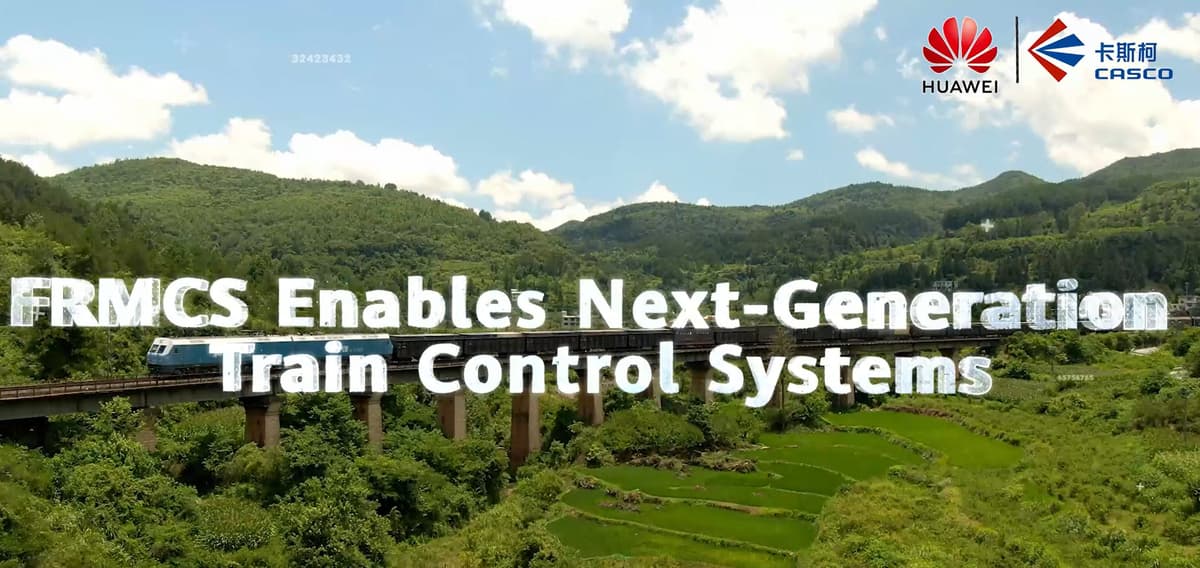
Huawei and CASCO Release the World’s First FRMCS-Based TACN System
•March 10, 2026
0
Companies Mentioned
Why It Matters
TACN demonstrates that FRMCS can unlock major capacity gains and cost efficiencies, accelerating the digital transformation of rail networks globally.
Key Takeaways
- •First FRMCS-based moving block system launched
- •60% capacity boost achieved on African railway
- •Reduces trackside equipment, cutting capital expenditures
- •Enables sub‑3‑minute headways with 99.999% reliability
- •Supports predictive O&M via 20 Mbps bandwidth
Pulse Analysis
The railway sector is confronting three persistent bottlenecks: low line efficiency, soaring upgrade costs, and tightening safety regulations. Traditional signalling relies on fixed blocks and extensive trackside hardware, which limits headway reduction and inflates capital outlay. The emergence of the Future Railway Mobile Communication System (FRMCS) promises high‑bandwidth, low‑latency, and ultra‑reliable train‑to‑ground links, laying the groundwork for moving‑block concepts that can dynamically allocate track space. By replacing legacy radio and cabling with a unified digital backbone, operators gain the flexibility needed for next‑generation services such as autonomous train control.
The joint Huawei‑CASCO solution, branded as TAC Network (TACN), translates FRMCS capabilities into a fully integrated moving‑block platform. Leveraging multi‑source fusion positioning, multimodal wireless links, and autonomous integrity monitoring, TACN shortens headways to under three minutes and lifts line capacity by roughly 60 percent, as demonstrated on an African freight corridor handling 100 million tons annually. The architecture eliminates most wayside equipment, slashing both initial construction and ongoing maintenance costs, while the 20 Mbps channel supports real‑time predictive maintenance and high‑resolution diagnostics. Redundancy across dual‑frequency networks guarantees 99.999 % availability.
Beyond immediate capacity gains, the FRMCS‑based TACN framework opens pathways to advanced rail services. High‑speed data streams enable locomotive synchronization, perimeter security, and beyond‑visual‑line‑of‑sight operations, positioning railways for fully autonomous freight corridors. Huawei’s platform‑plus‑ecosystem strategy, combined with CASCO’s integration expertise, creates a replicable model for global markets seeking sustainable, cost‑effective upgrades. As rail operators worldwide prioritize digital transformation, the success of TACN signals a shift toward software‑centric, interoperable solutions that can be scaled across both new builds and legacy networks, reshaping the economics of rail transport.
Huawei and CASCO Release the World’s First FRMCS-Based TACN System
0
Comments
Want to join the conversation?
Loading comments...