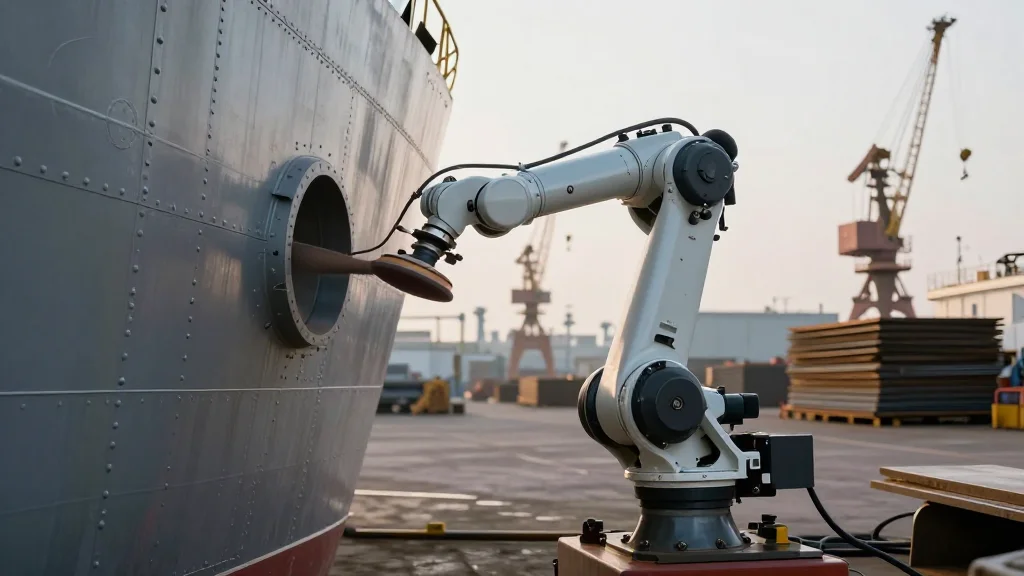
Huntington Ingalls Teams with GrayMatter Robotics to Pilot AI‑Driven Shipyard Automation

Why It Matters
The HII‑GrayMatter partnership could redefine how large‑scale defense assets are built, shifting the bottleneck from a shortage of skilled labor to a technology adoption curve. By proving that AI‑enabled robots can reliably perform high‑precision, labor‑intensive tasks, the shipbuilding sector may accelerate delivery schedules for critical Navy programs, from aircraft carriers to unmanned surface vessels. Moreover, the collaboration signals a broader trend of defense contractors turning to AI‑driven automation to secure supply‑chain resilience amid tightening talent pools. If the pilots succeed, the ripple effect could extend beyond shipyards to other heavy‑manufacturing domains—oil and gas, aerospace, and large‑scale infrastructure—where similar labor constraints exist. The initiative also positions the United States as a leader in integrating physical AI into defense production, potentially influencing allied nations’ procurement strategies and standards for future naval platforms.
Key Takeaways
- •Huntington Ingalls Industries partners with GrayMatter Robotics to pilot AI‑driven robots on shipyard floors.
- •The pilot will test autonomous sanding, grinding, coating, blasting and inspection tasks.
- •Eric Chewning (HII) and Ariyan Kabir (GrayMatter) highlighted workforce shortages and precision needs.
- •HII previously placed a $9.9 million order for AML3D’s ARCEMY X robotic 3‑D printing systems.
- •Successful demos could lead to fleet‑wide rollout, reshaping shipbuilding supply‑chain dynamics.
Pulse Analysis
HII’s decision to partner with GrayMatter reflects a strategic pivot from incremental automation to a more ambitious AI‑first manufacturing model. Historically, shipbuilding has relied on bespoke, labor‑intensive processes that are difficult to standardize. By injecting physical AI, HII aims to compress the learning curve for complex tasks, effectively turning high‑skill work into repeatable, data‑driven operations. This mirrors trends in automotive and semiconductor fabs, where AI‑guided robotics have cut cycle times by double‑digit percentages.
The partnership also serves as a litmus test for the defense industrial base’s appetite for rapid technology adoption. While the $9.9 million AML3D purchase proved HII’s willingness to spend on cutting‑edge hardware, the GrayMatter deal is a bet on software and algorithmic intelligence—components that can be updated and scaled more quickly than hardware. If the pilots demonstrate measurable gains—say, a 20% reduction in sanding time or a 15% drop in rework rates—other shipbuilders and defense contractors are likely to follow suit, accelerating a broader shift toward AI‑centric supply chains.
Looking ahead, the key risk lies in integration complexity. Shipyards are heterogeneous environments with legacy equipment, safety regulations, and a workforce accustomed to manual methods. Successful scaling will require not just technology but robust change‑management, training programs, and perhaps new standards for AI safety in physical settings. HII’s concurrent focus on workforce development and supply‑chain diversification suggests it is aware of these challenges. Should the pilots prove viable, the partnership could become a template for public‑private collaboration in modernizing America’s strategic manufacturing capabilities.
Huntington Ingalls Teams with GrayMatter Robotics to Pilot AI‑Driven Shipyard Automation
Comments
Want to join the conversation?
Loading comments...