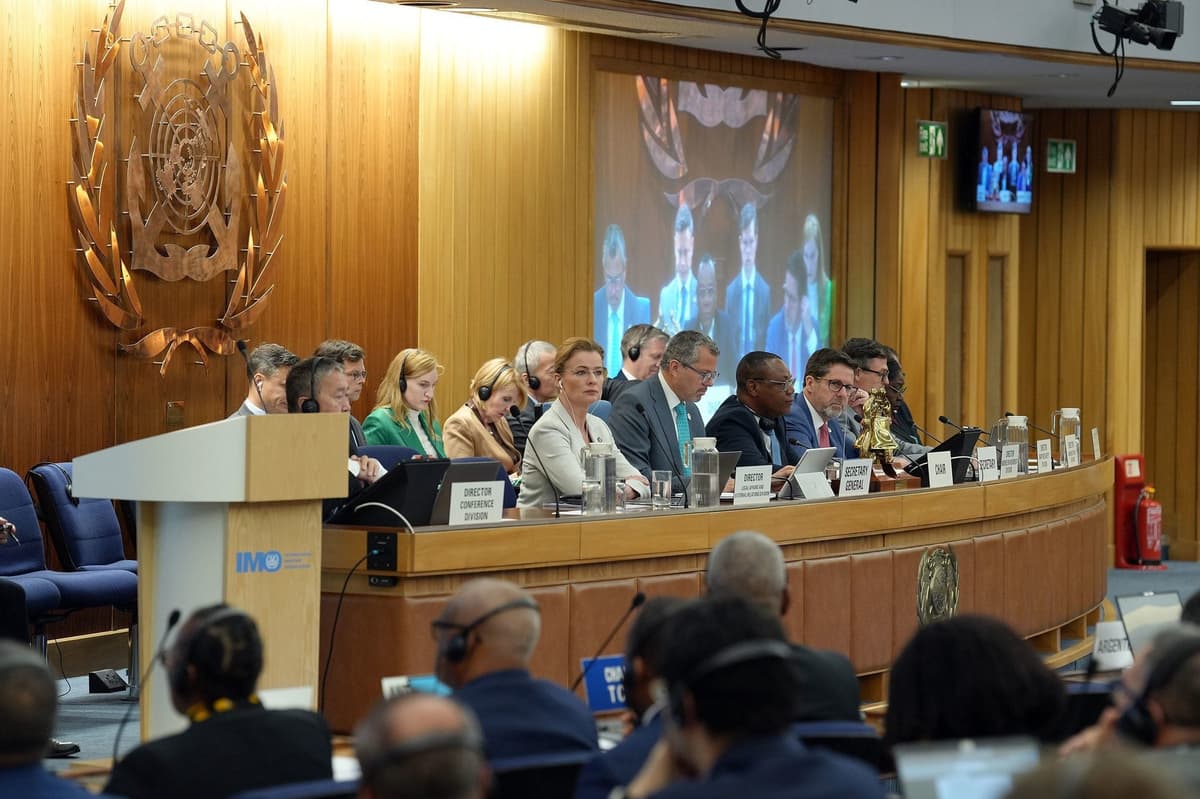
IMO Carbon Plan for Shipping Faces Growing Revolt as U.S. Courts ‘Silent Majority’
Why It Matters
If adopted, the NZF could raise freight costs and consumer prices worldwide, reshaping trade flows and challenging the competitiveness of U.S. imports. The growing opposition may force IMO to redesign its climate strategy, affecting the entire maritime industry’s path to decarbonization.
Key Takeaways
- •U.S. FMC chair urges alternatives to IMO’s Net Zero Framework.
- •NZF could affect up to 97% of global fleet with carbon fees.
- •EU backs NZF; U.S. warns of consumer price hikes.
- •Negotiations show “silent majority” of nations shifting against NZF.
Pulse Analysis
The International Maritime Organization’s Net Zero Framework has become a flashpoint in global climate policy for shipping. Designed to standardize greenhouse‑gas intensity targets and levy fees on non‑compliant vessels, the NZF enjoys strong backing from the European Union, which argues a unified market prevents a patchwork of regional rules. Yet the United States, through Federal Maritime Commission Chair Laura DiBella, is rallying a coalition of more than 20 countries to explore alternative pathways that could meet emissions goals without imposing a universal carbon tax. This diplomatic push reflects a broader U.S. strategy to safeguard domestic consumers from price spikes that could ripple through the supply chain.
Economically, the NZF’s proposed fees threaten to affect up to 97% of the global fleet, according to DiBella’s estimates. Shipping companies would likely pass compliance costs—whether from fuel upgrades, retrofits, or direct carbon charges—onto shippers, ultimately inflating the price of imported goods. For an import‑dependent economy like the United States, such increases could exacerbate inflationary pressures and erode competitive advantage. Moreover, smaller carriers and developing‑nation fleets may struggle to meet stringent standards, potentially reshaping market share and prompting a shift toward larger, well‑capitalized operators capable of absorbing or offsetting costs.
Politically, the debate underscores a shifting balance within the IMO, where a previously quiet majority of nations appears to be coalescing around the U.S. position. The FMC’s assertive role marks a departure from traditional U.S. agencies such as the Coast Guard and State Department in maritime policy. Should the NZF stall further, the U.S. may pursue remedial tools ranging from bilateral agreements to targeted subsidies for low‑carbon fuels. The outcome will influence not only the pace of maritime decarbonization but also the structure of global trade, making the next MEPC session a critical juncture for the industry.
IMO Carbon Plan for Shipping Faces Growing Revolt as U.S. Courts ‘Silent Majority’
Comments
Want to join the conversation?
Loading comments...