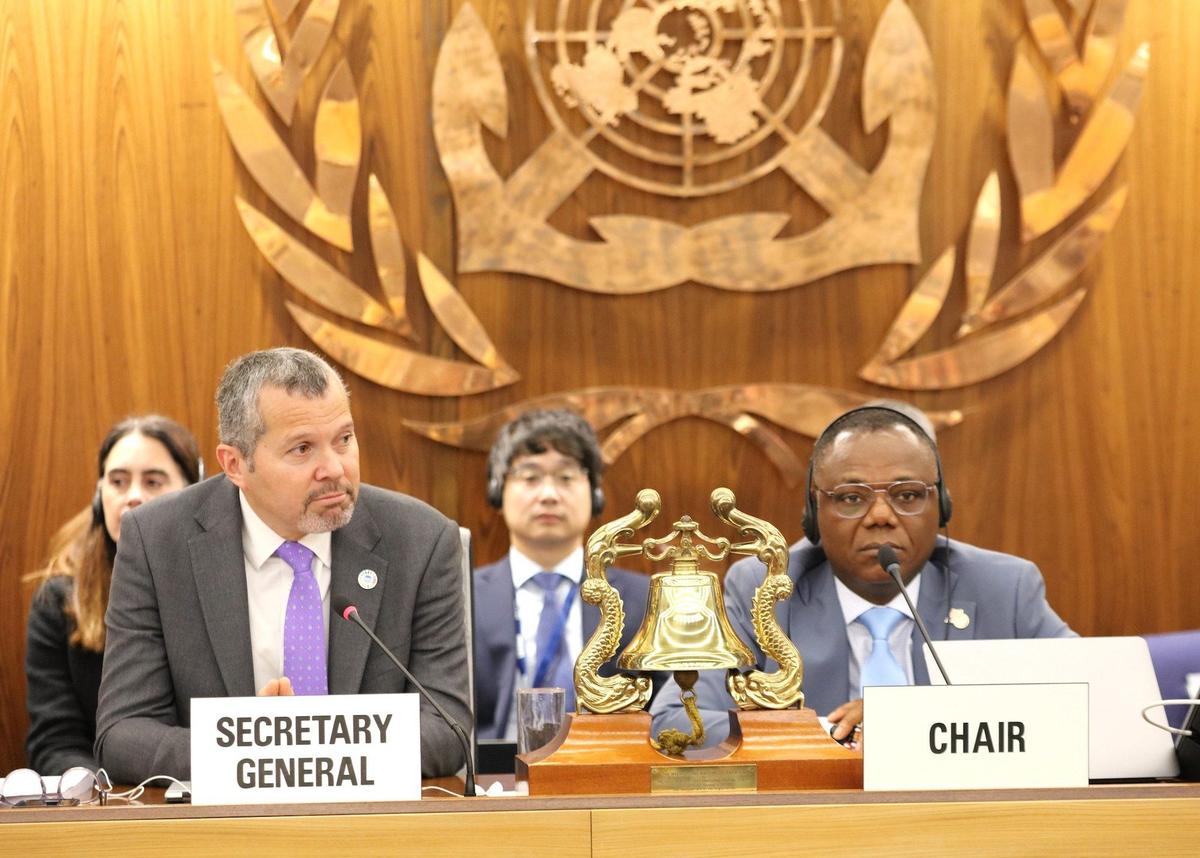
IMO’s MEPC 84 Opens as Key Test for Delayed Shipping Climate Pact
Why It Matters
MEPC 84 is a critical waypoint that could revive a stalled global carbon‑pricing deal, shaping the regulatory landscape for shipping emissions and influencing billions of dollars of fleet‑modernisation investments.
Key Takeaways
- •MEPC 84 marks first meeting after one‑year postponement of IMO Net‑Zero Framework
- •57 submissions on GHG reductions highlight complexity of shipping climate negotiations
- •Europe backs carbon‑pricing core; US and Japan push alternative approaches
- •New MARPOL Annex VI amendment could create North‑East Atlantic emission control area
- •Industry groups warn uncertainty threatens investment in low‑emission fuels
Pulse Analysis
The 84th session of the IMO’s Marine Environment Protection Committee arrives under a cloud of delay, with the Net‑Zero Framework—intended to be the world’s first global carbon‑pricing scheme for shipping—pushed back by a year after a contentious vote. MEPC 84 serves as a technical and political checkpoint, where a dedicated working group on greenhouse‑gas reductions is expected to form and 57 formal submissions will be examined. This process will test whether the IMO can rebuild consensus on carbon pricing, lifecycle fuel assessments, and the fifth IMO greenhouse‑gas study, all of which are essential for aligning the sector with the Paris Agreement.
The meeting highlights stark geopolitical divisions. European nations are rallying to protect the carbon‑pricing core of the framework, while the United States and Saudi Arabia remain opposed, and Japan along with some shipping interests propose alternative pathways. These opposing stances affect not only the regulatory outcome but also the market signals that shipowners rely on for capital‑intensive decisions, such as ordering ammonia‑ or hydrogen‑powered vessels. Industry groups like BIMCO and the International Chamber of Shipping stress that prolonged deadlock could erode confidence and delay the deployment of low‑emission fuels, jeopardizing the sector’s decarbonisation timeline.
Beyond the climate debate, MEPC 84’s broader agenda could reshape operational standards across the maritime sector. Proposed amendments to MARPOL Annex VI aim to extend the North‑East Atlantic Emission Control Area, tightening limits on nitrogen oxides, sulphur oxides, and particulate matter. Additional items on ballast water, plastic litter, and underwater noise signal the IMO’s holistic approach to marine environmental protection. The outcomes will influence compliance costs, reporting obligations, and ultimately the competitiveness of global shipping in a tightening regulatory environment.
IMO’s MEPC 84 Opens as Key Test for Delayed Shipping Climate Pact
Comments
Want to join the conversation?
Loading comments...