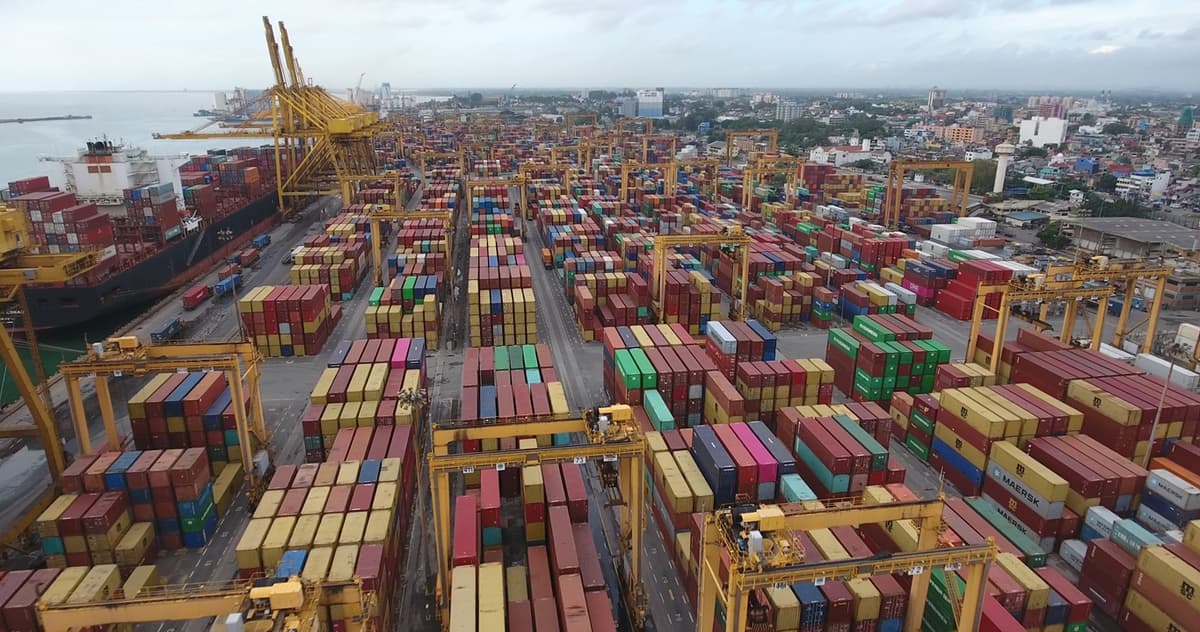
India Subcontinent Gains in Liner Middle East Conflict Restructuring
Why It Matters
Rerouting cargo through the ISC lets carriers mitigate disruption risk and preserve East‑West connectivity, reshaping trade flows and reducing reliance on the volatile Middle East corridor.
Key Takeaways
- •ISC container traffic rose 19.6% MoM Feb‑Apr 2024.
- •Capacity to Europe surged 83.3%, to Sub‑Saharan Africa 237.6%.
- •New ISC‑North America loop adds 81,000 TEU capacity.
- •Carriers treat ISC as flexible transshipment hub for East‑West corridors.
- •Dual‑hub model with Middle East and ISC likely medium‑term outcome.
Pulse Analysis
The war in the Arabian Gulf has unsettled a region that, while small, sits at the crossroads of several major maritime corridors. Unlike the Covid‑driven surge that lifted freight rates and carrier earnings, the current conflict is curbing supply without generating corresponding demand, prompting liner companies to rethink network topology. Analysts from Drewry note that the disruption is unlikely to boost profitability and may even contract the market. In response, carriers are seeking alternative pathways that can bypass the Red Sea and Hormuz chokepoints while preserving service reliability for global shippers.
MDS Transmodal’s latest figures reveal that the Indian Subcontinent (ISC) has become the focal point of this re‑routing. 6%. New service strings—an 81,000‑TEU ISC‑North America loop, a 26,000‑TEU ISC‑North America‑Latin America link, and a 41,000‑TEU ISC‑Far East‑Latin America‑Sub‑Saharan Africa route—illustrate a shift toward modular, multi‑leg itineraries. By positioning the ISC as a transshipment hub, carriers can stitch together long‑haul corridors and absorb volatility across multiple trades.
The emerging pattern suggests a medium‑term dual‑fulcrum model, where the ISC and a stabilized Middle‑East hub share traffic loads. Such a configuration enhances network optionality, spreads geopolitical risk, and offers shippers greater resilience against future disruptions. While the permanence of this shift hinges on the duration of the Gulf conflict, the operational inertia of rerouted services means a quick reversal is unlikely. Industry players that invest in flexible slot allocations and intermodal infrastructure at Indian ports stand to capture a growing share of east‑west and north‑south freight, reshaping global container shipping dynamics for years to come.
India Subcontinent gains in liner Middle East conflict restructuring
Comments
Want to join the conversation?
Loading comments...