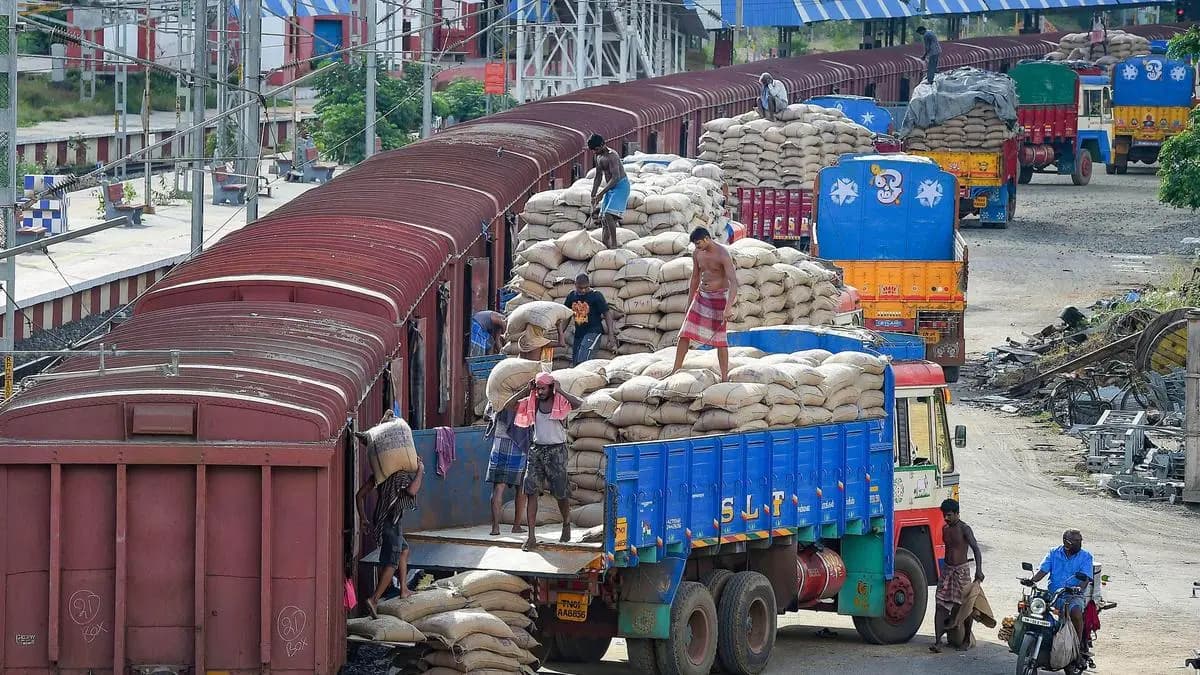
Indian Railways Freight Loading Rises to 145 Million Tonnes in May, Passenger Traffic Crosses 61 Crore
Why It Matters
The modest freight gain reinforces rail’s pivotal role in moving India’s industrial commodities, while rising passenger volumes signal sustained demand for affordable long‑distance travel. Both trends bolster the railway’s contribution to economic growth and logistics resilience.
Key Takeaways
- •Freight loading hit 145 Mt, up 1.3% YoY.
- •Iron ore, steel, fertilisers drove 4‑7% segment growth.
- •Coal volume rose ~1%, still dominates freight mix.
- •Passenger trips exceeded 61 crore, non‑suburban up 7.4%.
Pulse Analysis
India’s rail network remains the backbone of the country’s logistics ecosystem, and May’s freight numbers illustrate that resilience. Even as geopolitical tensions in West Asia ripple through global supply chains, Indian Railways managed a 1.3% increase in total tonnage, underscoring effective asset utilisation and operational monitoring. The modest uplift is significant because rail accounts for roughly 70% of domestic bulk freight, meaning any growth directly supports manufacturing, energy and agricultural sectors that rely on timely deliveries.
Commodity‑specific data reveals where the momentum is concentrated. Iron ore and steel volumes rose close to 5%, reflecting robust demand from the nation’s steel mills, while fertiliser shipments grew over 6% as agricultural cycles intensify. Coal, still the dominant freight commodity, posted a near‑steady 1% increase, highlighting continued reliance on thermal power generation despite renewable energy pushes. These trends suggest that rail freight will remain a critical conduit for core industrial inputs, offering cost‑effective, high‑capacity transport that can offset road congestion and fuel price volatility.
On the passenger side, crossing the 61 crore mark signals a healthy rebound in long‑distance travel, especially in the non‑suburban segment that grew 7.4%. The rollout of 164 Vande Bharat and 68 Amrit Bharat services, including new sleeper routes, demonstrates a strategic focus on speed, comfort and connectivity. Such premium offerings not only attract higher‑value travelers but also alleviate pressure on conventional trains during peak seasons. As India’s economy expands and urban‑rural linkages deepen, the railways’ dual growth in freight and passengers positions it as a linchpin for sustained economic momentum.
Indian Railways freight loading rises to 145 million tonnes in May, passenger traffic crosses 61 crore
Comments
Want to join the conversation?
Loading comments...