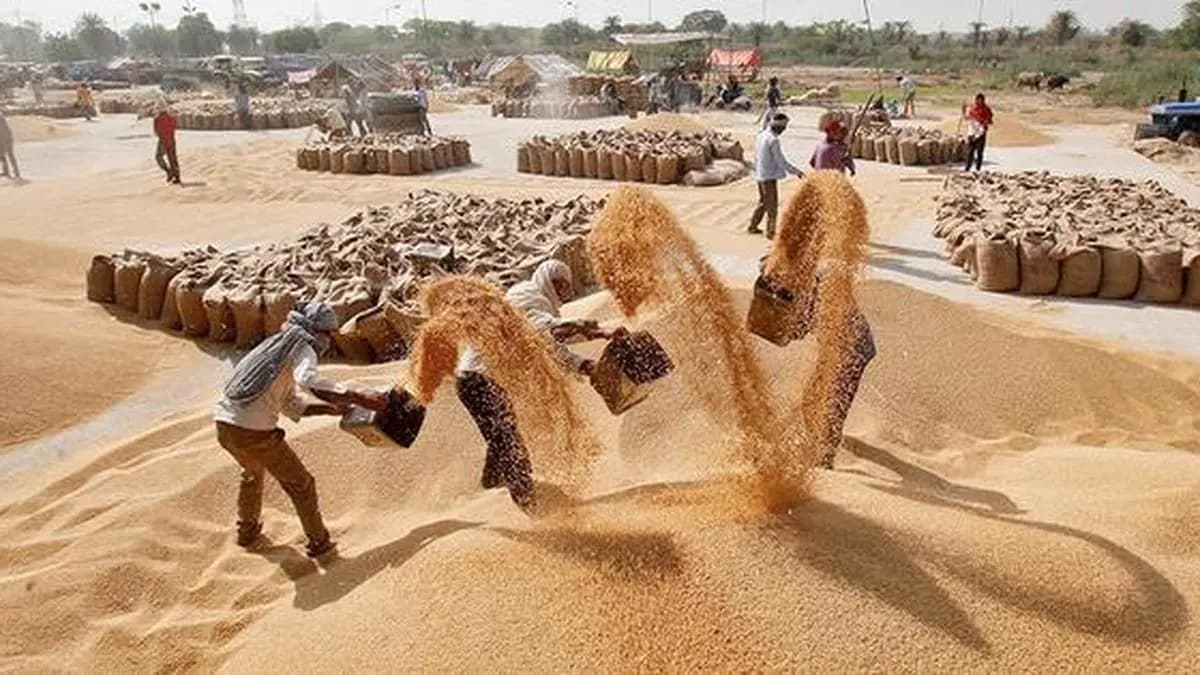
Indian Wheat Purchase Gathers Pace as M.P. Mops up 2.5 Million Tonnes
Why It Matters
The surge narrows the government’s buffer‑stock gap and stabilises domestic wheat prices, crucial for food‑security and farmer income amid climate‑induced quality issues. It also signals policy flexibility as the centre adjusts targets to meet seasonal demand.
Key Takeaways
- •Procurement rose 51% week-over-week to 44.14 lakh tonnes
- •Madhya Pradesh contributed half of May 1‑7 purchases
- •Punjab procurement up 5% despite relaxed quality standards
- •Bihar wheat purchases jumped 54% year‑on‑year
- •Government raised state targets, aiming 345 lakh tonnes seasonally
Pulse Analysis
India’s wheat procurement cycle for 2026‑27 has entered a decisive phase, with the centre buying 44.14 lakh tonnes in the week ending May 7—a 51% increase over the same period last year. This surge, driven largely by Madhya Pradesh’s aggressive purchases, is narrowing the shortfall that has lingered since the start of the season. The government’s overarching target of 345 lakh tonnes reflects a strategic push to replenish buffer stocks, safeguard against import volatility, and support the Minimum Support Price (MSP) framework that underpins farmer incomes.
Regional dynamics reveal a mixed picture. Punjab’s procurement edged up 5% despite most wheat being classified under the relaxed URS (Unrestricted) quality tier, a response to widespread lustre loss from unseasonal rains and hail. Haryana exceeded its target, while Madhya Pradesh, after a steep decline earlier in the season, rebounded with 24.55 lakh tonnes in the latest week. Bihar’s purchases surged 54% year‑on‑year, prompting the centre to raise its state‑specific targets. These adjustments aim to mitigate farmer protests and ensure timely cash flow, especially in states where quality concerns have hampered earlier buying.
The broader implications touch on food security, price stability, and policy signaling. By accelerating purchases and relaxing quality norms, the government is cushioning domestic wheat prices against potential spikes that could affect both consumers and the broader agri‑value chain. The move also underscores a willingness to adapt procurement criteria in the face of climate‑induced crop variability, a trend likely to shape future MSP calculations and buffer‑stock strategies. Stakeholders should watch how these dynamics influence export competitiveness and the fiscal health of the Food Corporation of India as the season progresses.
Indian wheat purchase gathers pace as M.P. mops up 2.5 million tonnes
Comments
Want to join the conversation?
Loading comments...