Information Management: A Step Closer to Lights Out
Why It Matters
Lights‑out automation promises to offset chronic labor shortages and boost fulfillment speed, but its feasibility hinges on integrating flexible hardware and AI software to handle real‑world SKU variability.
Key Takeaways
- •Robotic picking excels in high‑volume, single‑unit, uniformly packaged SKUs
- •EOAT variety (vacuum, pneumatic, soft grippers) expands SKU coverage
- •AI‑driven vision and motion planning boost accuracy to 99.99%
- •Berkshire Grey‑Kardex partnership enables modular, near‑full SKU handling
- •Hybrid models retain humans for returns, customization, and complex orders
Pulse Analysis
Labor scarcity and ever‑rising consumer expectations have turned lights‑out warehousing from a futuristic fantasy into a strategic imperative. Retailers and third‑party logistics providers are investing heavily in autonomous mobile robots, high‑speed pick‑to‑light systems, and AI‑enhanced vision to eliminate repetitive human tasks. By automating the most predictable, high‑volume order flows, firms can achieve consistent throughput, reduce error rates, and free skilled workers for higher‑value activities such as kitting, returns processing, and custom packaging.
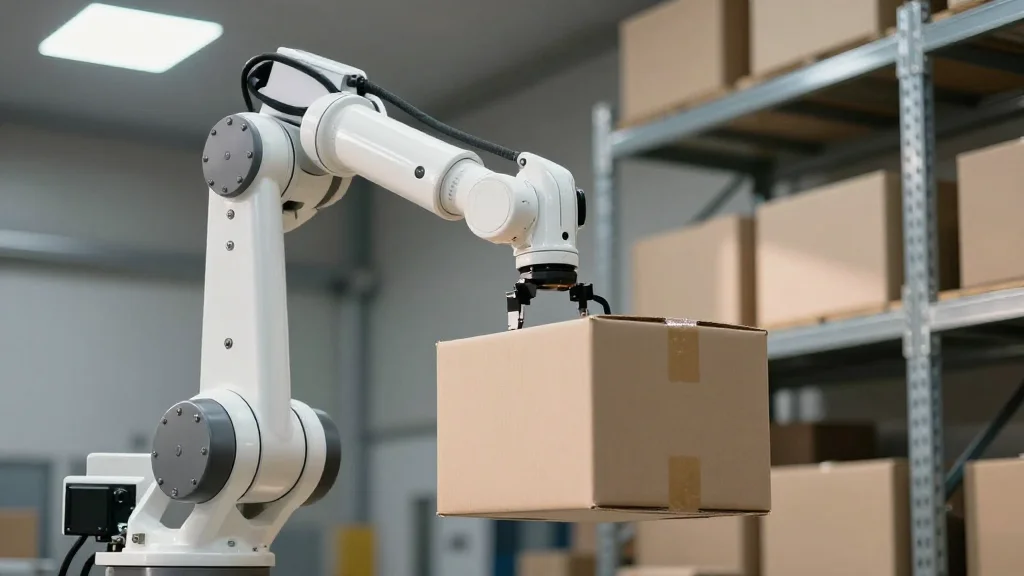
The hardware landscape is evolving rapidly. End‑of‑arm tools now include vacuum, pneumatic and soft, fingered grippers that can adapt to irregular shapes, while modular platforms like Brightpick’s Autopicker fuse robotic arms with autonomous mobile robots for seamless pick‑replenish cycles. Parallel software innovations focus on unified AI stacks that combine object recognition, motion planning and real‑time decision making. Partnerships such as Berkshire Grey with Kardex illustrate how AI layers can be baked into existing AutoStore infrastructures, delivering near‑perfect picking accuracy and expanding SKU coverage without extensive retrofits.
Despite these advances, fully autonomous warehouses remain a hybrid reality. Complex returns, bespoke configurations and highly variable SKUs still demand human judgment. However, the proportion of manual interventions is shrinking—some operators project human involvement in only four out of every 1,000 picks. This shift not only cuts labor costs but also creates new roles centered on robot supervision and upskilling. As AI continues to learn and predict without explicit instructions, the industry is poised for a convergence where flexibility and performance coexist, accelerating the path toward true lights‑out fulfillment.
Information Management: A step closer to lights out
Comments
Want to join the conversation?
Loading comments...