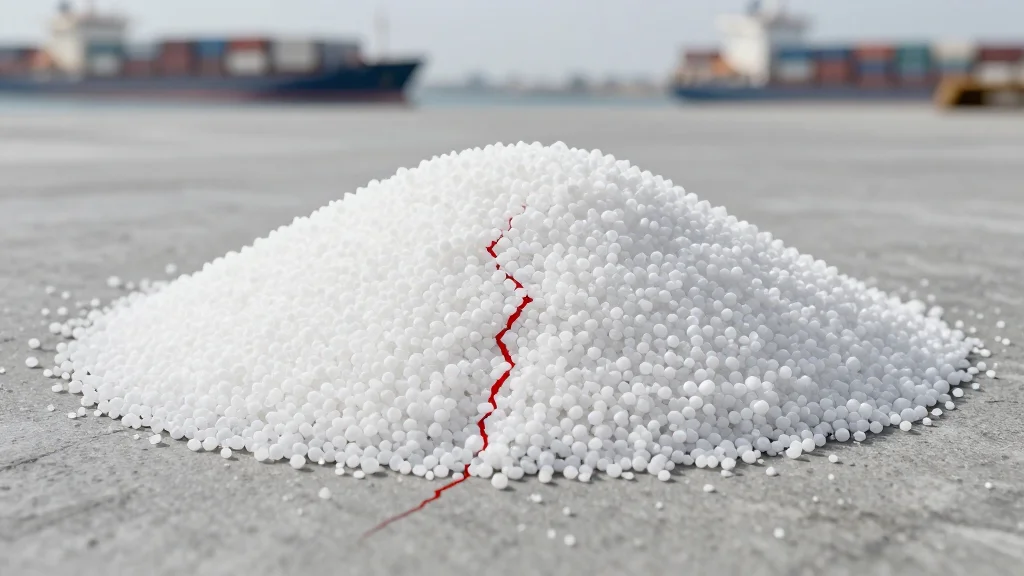
Iran-Israel Conflict Sends Chinese Plastic Prices Up 50%, Threatening Factory Margins

Why It Matters
The 50% jump in plastic prices illustrates how geopolitical flashpoints can quickly translate into raw‑material shortages and cost spikes for manufacturers far from the conflict zone. As China supplies more than a third of global manufactured goods, any sustained increase in input costs will reverberate through consumer prices worldwide. The episode also highlights the fragility of supply chains that depend on a single commodity stream—oil‑derived plastics—and may accelerate diversification toward alternative materials or regional production hubs. For policymakers, the situation underscores the strategic importance of securing stable energy and petro‑chemical supplies. A prolonged disruption in the Strait of Hormuz could compel governments to reassess strategic reserves, invest in domestic recycling and bio‑based plastics, and support affected workers through retraining programs. Companies, meanwhile, will need to embed geopolitical risk modeling into procurement decisions to avoid similar shocks in the future.
Key Takeaways
- •Plastic pellet prices in China have risen about 50% since the Iran‑Israel war began.
- •RIMOO factory manager Bryant Chen says the company is losing money on every order.
- •Trader Li Dong describes the price swing as the worst in decades, causing panic buying in Zhangmutou.
- •Closure of the Strait of Hormuz has choked oil supply, inflating costs for plastic, copper and other inputs.
- •Higher input costs risk raising global consumer prices for vacuum cleaners, vapes and other plastic‑based goods.
Pulse Analysis
The Iran‑Israel conflict has exposed a hidden vulnerability in the world’s most efficient manufacturing ecosystem. Historically, China’s cheap labor and massive scale have insulated it from short‑term commodity shocks, but the current surge in oil‑derived plastic costs shows that even a well‑stockpiled economy can feel the tremors of distant geopolitical events. The 50% price jump is not just a headline number; it translates into tighter margins for contract manufacturers, prompting a potential re‑pricing of the entire value chain.
In the longer view, firms may accelerate the shift toward circular economy solutions—recycling, bio‑based polymers and on‑site resin production—to reduce dependence on volatile oil markets. Companies that can quickly pivot to alternative materials will gain a competitive edge, while those entrenched in traditional petro‑chemical supply lines may face margin compression or be forced to relocate production. The labor dimension adds another layer: rising costs could trigger layoffs or wage freezes, eroding the social contract that has underpinned China’s manufacturing boom.
Investors should watch for signs of strategic realignment, such as increased capital spending on domestic petro‑chemical capacity, partnerships with recycling firms, or diversification of sourcing to Southeast Asia. Meanwhile, policymakers in major consuming economies may need to brace for higher retail prices on a range of plastic‑based products, a cost that could feed into inflation calculations and monetary policy decisions. The episode serves as a reminder that supply‑chain resilience now requires a geopolitical lens as much as an operational one.
Iran-Israel Conflict Sends Chinese Plastic Prices Up 50%, Threatening Factory Margins
Comments
Want to join the conversation?
Loading comments...