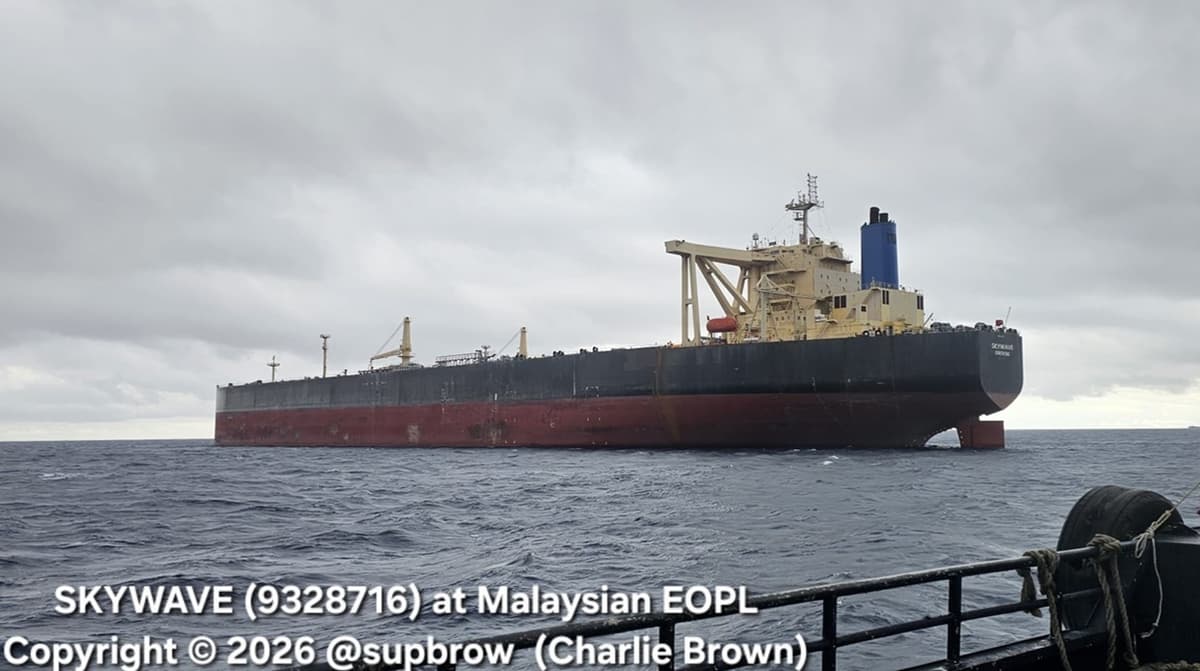
Iran-Linked VLCC Seized by US in Indian Ocean
Why It Matters
The action highlights the expanding reach of U.S. maritime enforcement of Iran sanctions, tightening supply‑chain constraints for Iranian oil and raising operational risk for vessels that rely on opaque registries and dark‑fleet tactics.
Key Takeaways
- •Skywave, 302,481 dwt, seized between Sri Lanka, Indonesia.
- •Vessel false‑flagged Botswana; ownership unknown after March 2025 sale.
- •Carrying 1.9 million barrels Iranian crude before empty transfer.
- •U.S. blockade has disabled four ships, seized three Iran‑linked tankers.
Pulse Analysis
The U.S. Navy’s reported capture of the VLCC Skywave marks a new escalation in its maritime enforcement of sanctions against Iran. Since the April 13 blockade, American forces have redirected dozens of vessels and disabled four ships, signaling a willingness to intervene far beyond the Persian Gulf. By targeting a large, 302,000‑dwt tanker in the Indian Ocean, the United States demonstrates that its interdiction capabilities now extend into key transit corridors, complicating the logistics of any vessel attempting to move sanctioned oil.
For Iran, the loss of Skywave – which had already off‑loaded 1.9 million barrels of crude to a dark‑fleet tanker – underscores the vulnerability of its clandestine export network. The vessel’s false‑flag registration in Botswana and opaque ownership illustrate how Iranian oil shippers rely on shell companies and non‑traditional registries to evade detection. Each seizure erodes the confidence of charterers and insurers, prompting a shift toward more transparent flag states or, alternatively, accelerating the use of even more covert methods that could further destabilize the market.
The broader market feels the ripple effects through tighter tanker supply and heightened risk premiums. Analysts have already noted a modest uptick in time‑charter rates for VLCCs as operators factor in potential delays and the cost of rerouting around high‑risk zones. Moreover, the incident may prompt policymakers to reassess the efficacy of existing sanctions regimes and consider additional diplomatic or economic levers. As the geopolitical landscape evolves, stakeholders—from oil traders to maritime financiers—must monitor enforcement actions like Skywave’s seizure to gauge future price volatility and supply chain resilience.
Iran-linked VLCC seized by US in Indian Ocean
Comments
Want to join the conversation?
Loading comments...