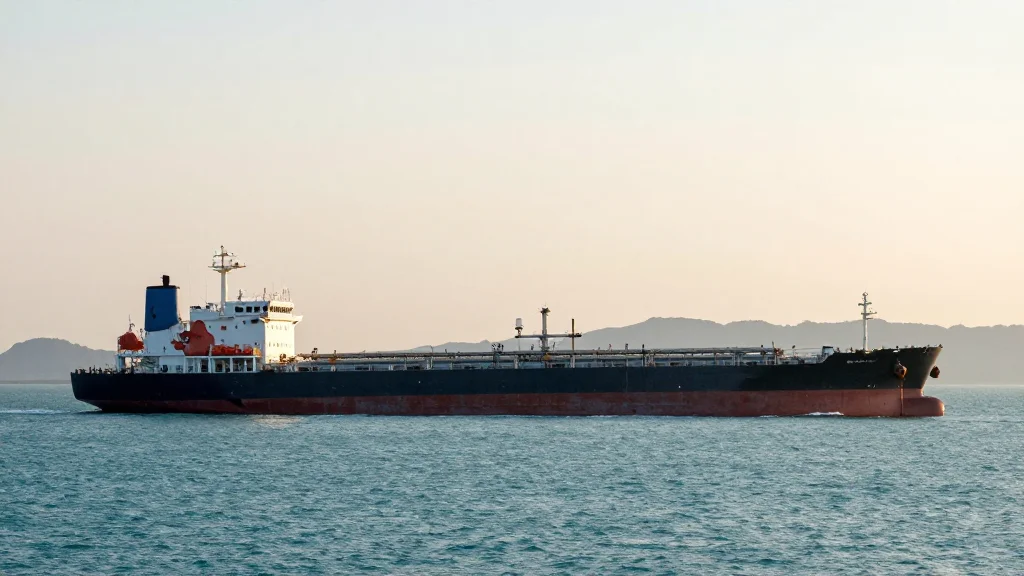
Iraq Exported 10 Million Barrels Of Oil Through Strait Of Hormuz In April
Companies Mentioned
Why It Matters
The sharp export decline underscores how the Iran‑Israel conflict disrupts global oil flows, prompting Iraq to diversify routes and accelerate capacity upgrades to safeguard revenue and market stability.
Key Takeaways
- •Iraq shipped 10 M barrels via Hormuz in April, down sharply.
- •Production stands at 1.4 M barrels per day.
- •Kirkuk‑Ceyhan pipeline flow resumed; target 500 k barrels daily.
- •Talks with Turkey, Chevron, ExxonMobil aim to expand capacity.
- •Iraq seeks OPEC dialogue to reach 5 M barrels per day.
Pulse Analysis
The closure of the Strait of Hormuz amid the Iran‑Israel war has forced Iraq to confront an unprecedented bottleneck in its export chain. With tanker insurance costs soaring, only a fraction of the usual 93 million‑barrel monthly volume could clear the chokepoint, pushing the country to rely on alternative corridors. This disruption not only tightens global supply but also inflates Brent and WTI benchmarks, highlighting the geopolitical sensitivity of Middle‑East oil routes.
In response, Baghdad has revived the Kirkuk‑Ceyhan pipeline, which now moves roughly 200,000 barrels a day with a roadmap to 500,000. The renewed flow eases dependence on Hormuz and opens a commercial gateway through Turkey’s Mediterranean port. Simultaneously, Iraq is courting U.S. oil giants—Chevron, ExxonMobil, Halliburton—to inject capital and technology into both upstream drilling and downstream processing. A prospective cooperation pact with Ankara promises joint upstream projects, signaling a strategic pivot toward diversified export infrastructure.
Looking ahead, Iraq’s oil minister has signaled a push to engage OPEC on raising the nation’s production ceiling to 5 million barrels per day. Achieving that target would dramatically boost fiscal inflows and reinforce Iraq’s role as a stabilizing force within the cartel. By staying inside OPEC and OPEC+, Iraq positions itself to influence quota adjustments, helping to temper price volatility that has surged since the Hormuz shutdown. The combined effect of pipeline expansion, foreign investment, and OPEC dialogue could restore Iraq’s export momentum and mitigate the broader market shock caused by regional conflict.
Iraq Exported 10 Million Barrels Of Oil Through Strait Of Hormuz In April
Comments
Want to join the conversation?
Loading comments...