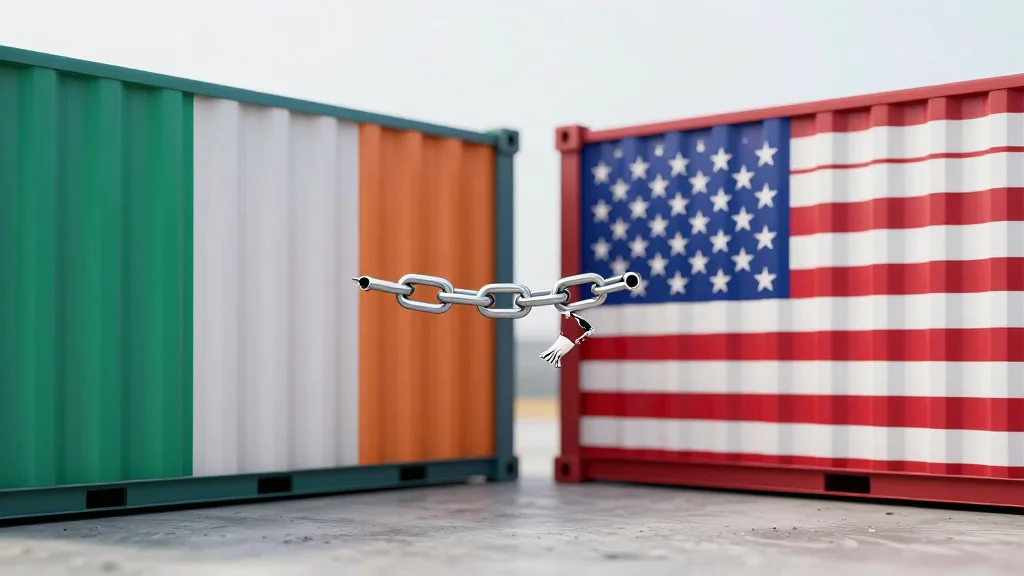
Irish Exports to US Plunge 82%, Losing $23bn Amid Tariff Dispute

Why It Matters
The 82% plunge in Irish‑US trade illustrates how tariff escalations can instantly disrupt supply chains, forcing firms to abandon inventory strategies and seek new markets. For Ireland, a nation whose export economy is heavily weighted toward high‑value pharma and chemicals, the loss of $23 bn in a single month threatens employment, R&D investment, and fiscal revenues. On a broader scale, the episode signals to European exporters that reliance on the US market carries heightened geopolitical risk, prompting a reassessment of diversification and resilience strategies across the continent. For supply‑chain managers, the rapid unwind of stockpiles underscores the importance of flexible logistics, real‑time trade data, and contingency planning. Companies that can pivot quickly to alternative routes or customers will mitigate revenue shocks, while those entrenched in a single market may face prolonged downturns. Policymakers, too, must balance protectionist measures with the downstream effects on trade partners and domestic supply‑chain stability.
Key Takeaways
- •Irish goods exports to the US fell 82% in March, from €25.5 bn ($27.8 bn) to €4.5 bn ($4.9 bn).
- •Total Irish export value dropped 51% to €18.3 bn ($19.9 bn) in the same month.
- •Pharmaceutical shipments plunged €16.5 bn to €7 bn ($7.6 bn); organic chemicals fell €3.4 bn to €1.4 bn ($1.5 bn).
- •The decline follows a 2025 stockpiling wave aimed at avoiding US tariffs, now being unwound.
- •EU exporters are seeking alternative markets as US tariff pressure reshapes supply‑chain dynamics.
Pulse Analysis
The Irish export collapse is a textbook case of how policy‑driven shocks can cascade through global supply chains. Historically, Ireland has leveraged its EU membership and favorable tax regime to become a hub for pharma and high‑tech manufacturing, with the US as its premier market. The abrupt tariff escalation has forced a rapid de‑stocking, exposing the fragility of just‑in‑time inventory models that were built around predictable trade rules.
In the medium term, we can expect a two‑track response. First, Irish firms will accelerate diversification, targeting growth in Asian and Middle Eastern markets where demand for pharma and specialty chemicals remains robust. This shift will entail higher freight costs, longer lead times, and the need for new regulatory approvals, eroding some of the cost advantage that made the US market attractive. Second, the Irish government is likely to intensify lobbying efforts in Washington, seeking tariff relief or exemptions for high‑value sectors. Success will hinge on broader US‑EU trade negotiations, which are currently stalled.
For the wider European supply‑chain ecosystem, the Irish episode serves as a warning. Companies must embed geopolitical risk assessments into their sourcing strategies, develop multi‑regional inventory buffers, and invest in digital trade‑monitoring tools. Those that act now can turn a disruptive shock into an opportunity to build more resilient, diversified networks, while laggards risk prolonged revenue erosion and competitive disadvantage.
Irish Exports to US Plunge 82%, Losing $23bn Amid Tariff Dispute
Comments
Want to join the conversation?
Loading comments...