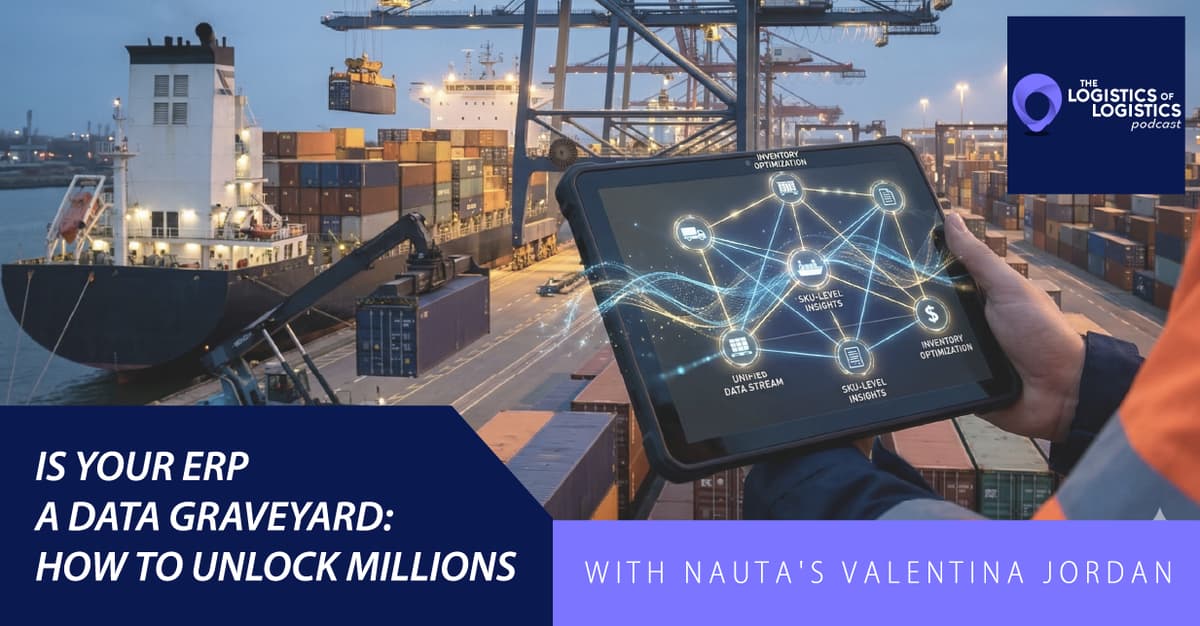
Is Your ERP a Data Graveyard: How to Unlock Millions with Nauta’s Valentina Jordan
Key Takeaways
- •Fragmented data wastes 75% of shippers' time
- •Nauta creates AI-driven single source of truth
- •Predictive analytics saved a client $1.2M quarterly
- •Detention fees reduced up to 80% with automation
- •SKU-level visibility enables proactive inventory routing
Pulse Analysis
Supply‑chain managers are increasingly hamstrung by data that lives in silos—emails, PDFs, and legacy ERP systems that rarely talk to each other. This fragmentation forces teams to spend the majority of their day reconciling spreadsheets rather than making strategic moves. The industry’s shift toward AI‑native solutions reflects a broader recognition that clean, structured data is no longer a luxury but a prerequisite for competitive advantage. Platforms that can aggregate disparate data streams into a unified, real‑time layer enable firms to move from reactive firefighting to proactive decision‑making.
Nauta positions itself at the intersection of data engineering and logistics intelligence. By acting as an intelligent membrane over existing systems, it ingests unstructured inputs and normalizes them into a live data lake that feeds predictive models. The result is SKU‑level insight that can forecast stockouts weeks in advance, reroute high‑demand items before they reach ports, and automate exception handling. Early adopters in food, beverage and retail have quantified these benefits: one client avoided $1.2 million in penalties and lost sales in a single quarter, while another slashed container detention costs by up to 80%. Such outcomes illustrate how AI‑driven data consolidation translates directly into bottom‑line impact.
The broader market implication is clear: as global trade volumes grow and consumer expectations tighten, companies that invest in a standardized data infrastructure will outpace competitors stuck with legacy “data graveyards.” Nauta’s SOC 2 Type II certification adds a layer of trust, making it attractive to multinational brands seeking both compliance and efficiency. By providing the "rails" for autonomous supply‑chain operations, the platform not only reduces operational waste but also creates a scalable foundation for future innovations such as digital twins and real‑time demand sensing. Enterprises that adopt this approach are poised to capture incremental revenue while mitigating risk in an increasingly volatile logistics landscape.
Is Your ERP a Data Graveyard: How to Unlock Millions with Nauta’s Valentina Jordan
Comments
Want to join the conversation?