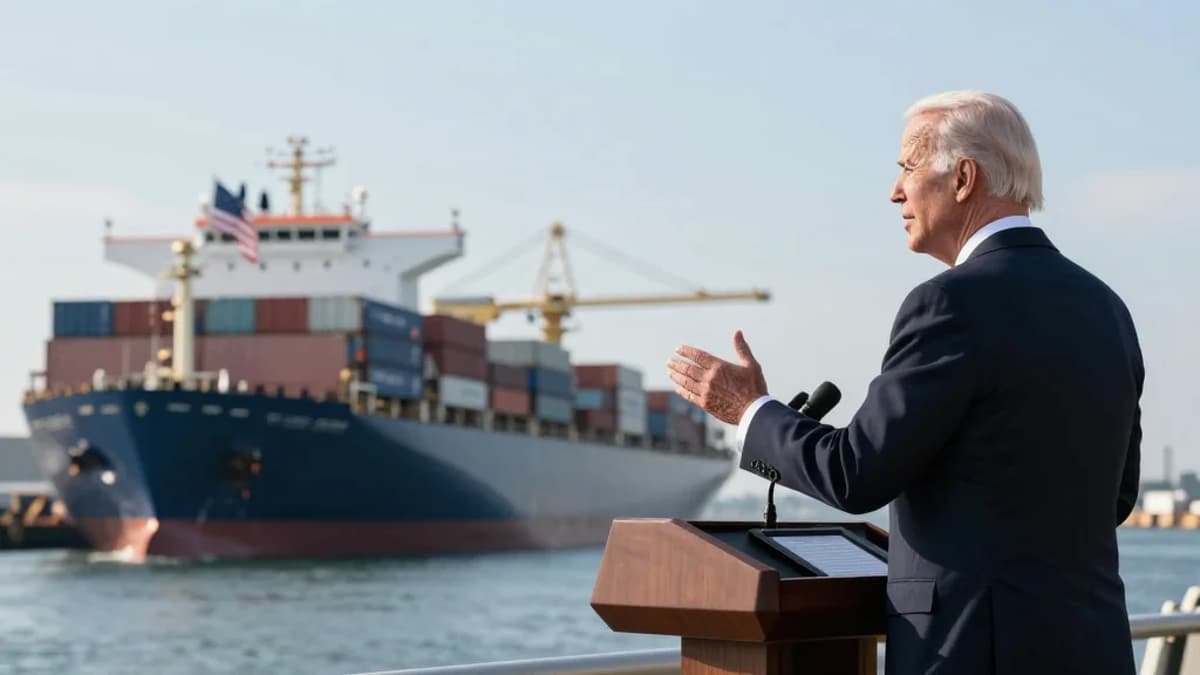
Kelly: U.S. Maritime ‘Critical’ to National, Economic Security
•March 9, 2026
0
Why It Matters
A stronger U.S. maritime sector safeguards supply‑chain resilience and counters China’s strategic advantage, directly affecting national security and economic competitiveness.
Key Takeaways
- •Over 80% of US imports travel by sea
- •US‑flag vessels under 100, <1% built domestically
- •China controls 62% of global shipyard order book
- •SHIPS Act proposes funding, strategy, and Chinese crane divestment
- •Bipartisan backing could enable legislation within 2025
Pulse Analysis
The SHIPS for America Act arrives at a moment when the United States faces a stark maritime gap. While 80 percent of imported goods rely on ocean transport, the domestic fleet has dwindled to fewer than a hundred U.S.-flag vessels, and American shipyards capture less than one percent of global orders. This imbalance not only inflates logistics costs but also exposes critical supply chains to geopolitical risk. By codifying a national maritime strategy, the bill seeks to reverse decades of neglect, channel federal funding into modern shipyards, and establish a pipeline for skilled maritime workers.
China’s aggressive investment in shipbuilding and port infrastructure underscores the urgency of the U.S. response. With more than 5,500 Chinese vessels plying international routes and a 62 percent share of the global shipyard order book, Beijing has effectively set the rules of the sea. The SHIPS Act addresses this competitive disparity by proposing targeted subsidies for U.S. ship construction, incentives for retrofitting ports, and a mandate to phase out Chinese‑built ship‑to‑shore cranes that pose security concerns. These measures aim to create a level playing field, protect critical infrastructure, and reduce dependence on foreign‑controlled assets.
Beyond security, the legislation promises broader economic dividends. Revitalizing domestic shipyards could generate thousands of high‑skill jobs, stimulate regional manufacturing clusters, and reinforce the United States’ position as the world’s largest economy. Moreover, a coordinated, whole‑of‑government approach—linking the Navy, Coast Guard, Maritime Administration, and private sector—offers a more resilient framework for future challenges, from climate‑driven disruptions to geopolitical tensions. If enacted, the SHIPS Act could mark the first substantive step in a half‑century to restore America’s maritime heritage and ensure its supply chains remain robust.
Kelly: U.S. maritime ‘critical’ to national, economic security
0
Comments
Want to join the conversation?
Loading comments...