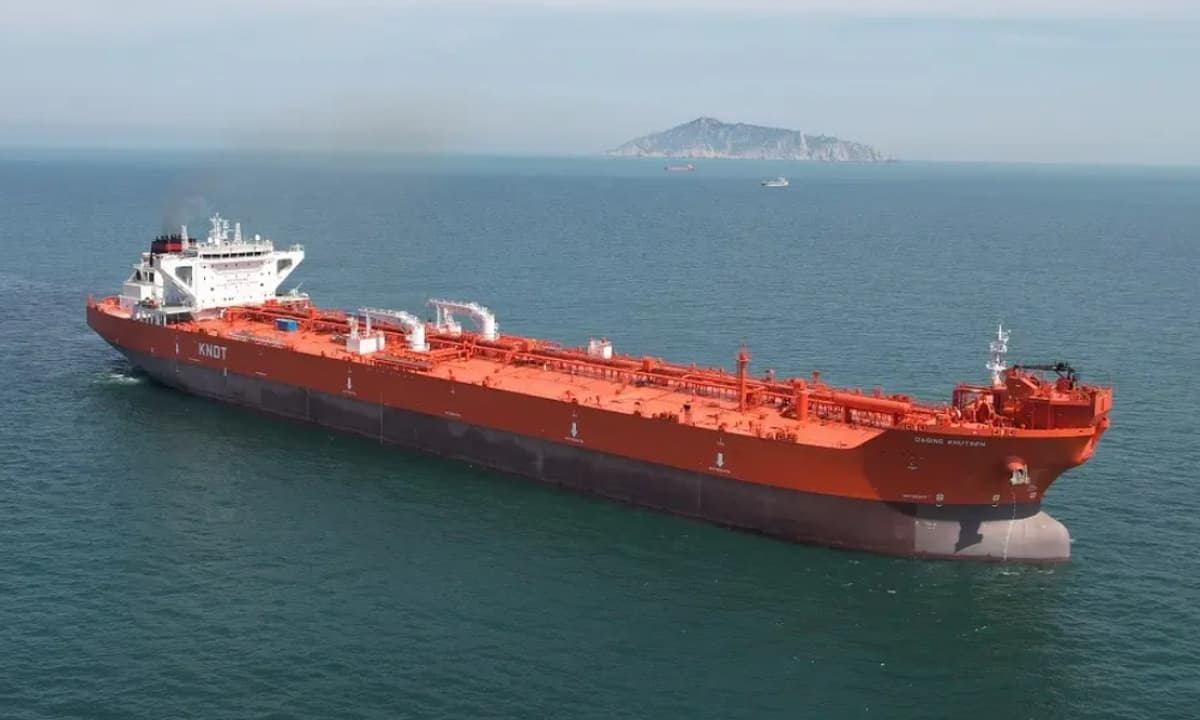
KNOT Returns to COSCO Zhoushan for Another Shuttle Tanker
•March 10, 2026
0
Why It Matters
The order reinforces KNOT’s growth trajectory and highlights China’s expanding role in high‑spec offshore vessel construction, impacting charter rates and investor exposure.
Key Takeaways
- •KNOT orders 154,000 dwt shuttle tanker from COSCO Zhoushan
- •Contract brings total KNOT‑COSCO vessels to fourteen
- •Vessel will be 279 m, DP2, bow‑loading, DNV class
- •Series deliveries scheduled between 2026 and 2028
- •Fleet approaches 40 shuttle tankers; KNOT holds 30% stake
Pulse Analysis
The global demand for offshore oil transport remains robust, driven by sustained production in deep‑water basins and the need for flexible supply chains. Shuttle tankers, which ferry crude from offshore platforms to onshore terminals, are a critical link in this logistics chain. Norway’s Knutsen NYK Offshore Tankers (KNOT) has emerged as the industry’s leading independent operator, managing a fleet that is approaching forty vessels. By leveraging Chinese shipyards, KNOT taps into cost‑effective construction capacity while maintaining high technical standards. This strategic sourcing also diversifies KNOT’s supply chain, reducing reliance on European yards.
The latest contract adds a 154,000‑dwt, 279‑metre shuttle tanker to KNOT’s order book, to be built at COSCO Shipping Heavy Industry in Zhoushan. Equipped with a DP2 dynamic positioning system, bow‑loading capability and DNV classification, the vessel meets the stringent operational requirements of harsh offshore environments. This order brings the cumulative tally of KNOT‑COSCO builds to fourteen, underscoring a long‑standing partnership that has already delivered multiple units. Although delivery dates remain undisclosed, the series is slated for entry into service between 2026 and 2028.
Expanding the fleet positions KNOT to capture rising charter rates as offshore production rebounds post‑pandemic. The 30 % equity stake KNOT retains in KNOT Offshore Partners aligns its financial interests with investors, offering exposure to a growing asset class without full ownership risk. Moreover, the reliance on Chinese yards reflects broader industry trends toward cost‑efficient shipbuilding without compromising safety standards. Analysts anticipate that the additional capacity will enhance KNOT’s market share and support long‑term revenue stability. The move may also influence financing terms, as lenders view newer, efficiently built vessels as lower‑risk collateral.
KNOT returns to COSCO Zhoushan for another shuttle tanker
0
Comments
Want to join the conversation?
Loading comments...