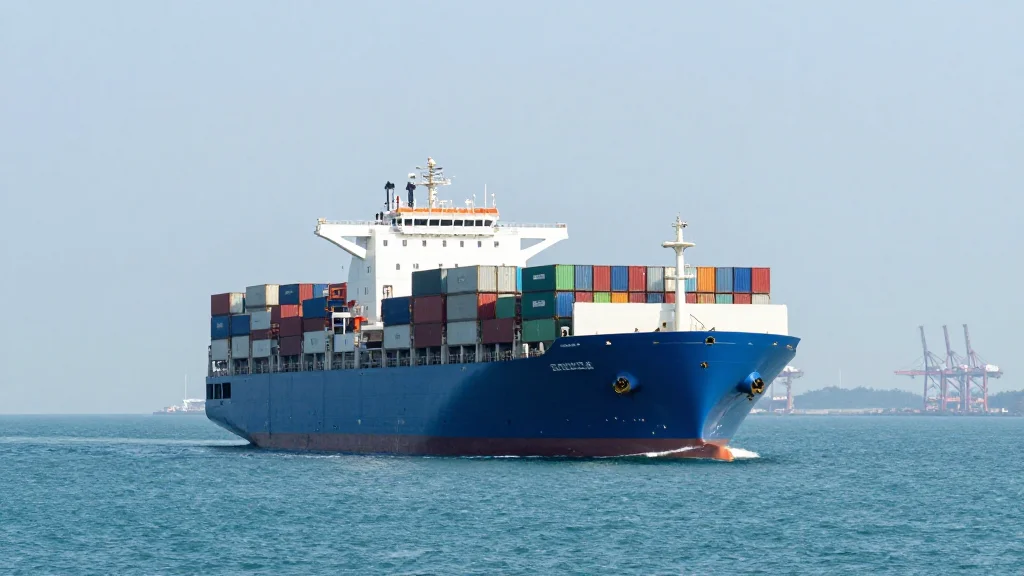
Maersk Joins Race to Target Burgeoning China-India Trade with Capacity Boost
Why It Matters
The capacity boost positions Maersk to capture rising cargo volumes between China and India, a high‑growth market, and heightens competition among global carriers vying for the lucrative lane.
Key Takeaways
- •Maersk revives FI2 intra‑Asia service after 2020 suspension
- •Six 3,400‑4,500 TEU vessels will run weekly from June
- •Route links Shanghai, Ningbo, Nansha, Tanjung Pelepas, India, Pakistan
- •FI2 complements revamped FI3, expanding overall Asia network
- •Capacity increase targets surging China‑India trade demand
Pulse Analysis
The bilateral trade corridor between China and India has accelerated dramatically in the past two years, driven by electronics, pharmaceuticals, and consumer goods. According to the International Trade Centre, cargo volumes on this route grew by roughly 18% in 2025, outpacing global container traffic. Shipping lines are scrambling to secure slots, and carriers that can offer reliable weekly sailings are gaining a strategic edge. Maersk’s decision to relaunch its FI2 service reflects a calculated move to lock in market share before rivals expand capacity.
The revived FI2 service will deploy six vessels ranging from 3,400 to 4,500 TEU, providing a weekly rotation that calls at Shanghai, Ningbo, Nansha, Tanjung Pelepas, Nhava Sheva, Pipavav, and Port Qasim. By re‑introducing the route in early June, Maersk not only restores a pre‑pandemic connection but also creates synergy with the newly restructured FI3 service, which now focuses on higher‑capacity loops. The combined network offers shippers more flexibility, reduced dwell times, and a consistent schedule that can accommodate the surge in e‑commerce and automotive parts shipments.
Maersk’s capacity boost intensifies competition with rivals such as MSC, CMA CGM, and Hapag‑Lloyd, all of which have announced similar expansions in the Indo‑Pacific. The added slots are likely to temper freight‑rate volatility that has plagued the lane since the pandemic’s supply‑chain disruptions. Moreover, the service supports regional logistics hubs, encouraging inland distribution investments in India’s western ports. As China‑India trade continues to expand, carriers that can deliver dependable, high‑frequency services will shape the pricing dynamics and set the benchmark for future network planning.
Maersk joins race to target burgeoning China-India trade with capacity boost
Comments
Want to join the conversation?
Loading comments...