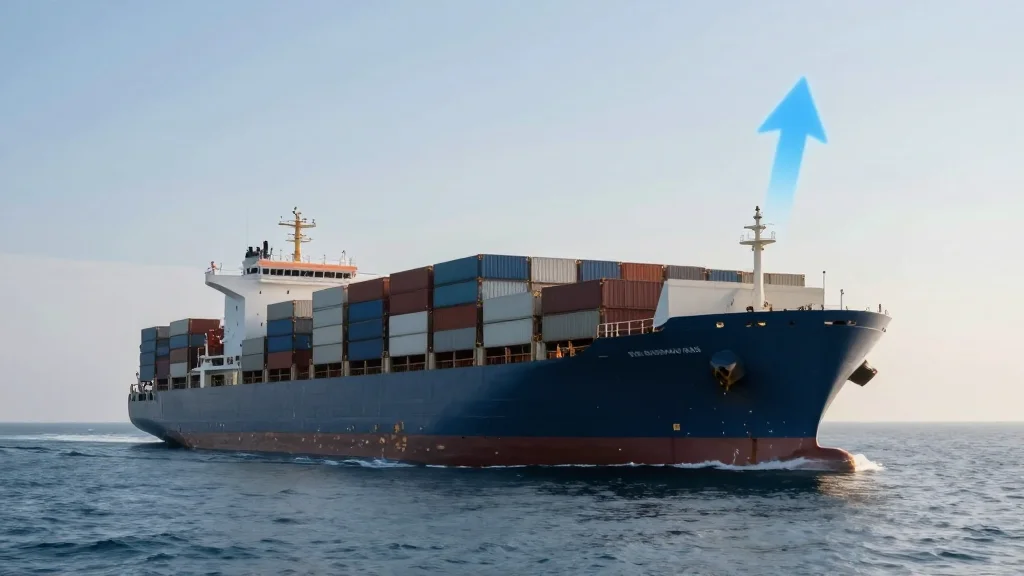
Maersk to Shift $500 Million Monthly Iran War Oil Surge to Shippers

Companies Mentioned
Why It Matters
The decision to shift $500 million in monthly fuel costs to customers underscores the vulnerability of global supply chains to geopolitical events. By translating a war‑driven oil price shock into higher freight charges, Maersk is effectively passing macro‑economic risk down the logistics chain, which could tighten cash flow for manufacturers and retailers worldwide. The move also sets a precedent for other carriers, potentially leading to a new pricing paradigm where fuel‑related volatility is baked into contract terms rather than absorbed by operators. For the broader supply‑chain ecosystem, the development signals that cost‑pass‑through mechanisms will become a more prominent tool for managing risk. Companies that rely heavily on ocean freight may need to revisit budgeting, hedging strategies, and even sourcing decisions to mitigate the impact of sudden rate hikes tied to external shocks.
Key Takeaways
- •Maersk will transfer the $500 million monthly oil cost increase from the Iran war to its customers.
- •First‑quarter EBITDA stood at $1.75 billion, highlighting the financial pressure from higher fuel expenses.
- •Spot container rates have already risen 8‑10 % year‑to‑date, and Maersk’s adjustment could add $200‑$300 per TEU.
- •Competitors MSC and CMA CGM are expected to follow with similar surcharge structures.
- •Rate revisions are anticipated within the next two weeks, with further updates at the August earnings call.
Pulse Analysis
Maersk’s explicit cost‑pass‑through marks a strategic pivot from absorbing fuel volatility to institutionalizing it in customer contracts. Historically, carriers have used fuel surcharges as a flexible tool, but the scale of the current shock—driven by a regional conflict—has forced a more transparent approach. By announcing the pass‑through publicly, Maersk reduces uncertainty for investors while shifting price risk to shippers, who now must factor geopolitical volatility into their cost models.
The move could accelerate consolidation in the container market as smaller players, lacking the pricing power of Maersk, may struggle to implement comparable surcharges without losing volume. Larger shippers with diversified transport portfolios might respond by increasing their reliance on alternative modes, such as rail or air, especially for high‑margin goods. This modal shift could reshape trade lanes, with potential knock‑on effects on port congestion and hinterland logistics.
In the longer term, the episode highlights the need for more robust fuel‑price hedging mechanisms within supply‑chain finance. Companies that have already integrated commodity‑linked financing or dynamic pricing contracts will be better positioned to absorb such shocks. As the industry grapples with the dual challenges of geopolitical instability and the transition to greener fuels, the balance between cost transparency and competitive pricing will become a defining factor for carrier‑shipper relationships.
Maersk to Shift $500 Million Monthly Iran War Oil Surge to Shippers
Comments
Want to join the conversation?
Loading comments...