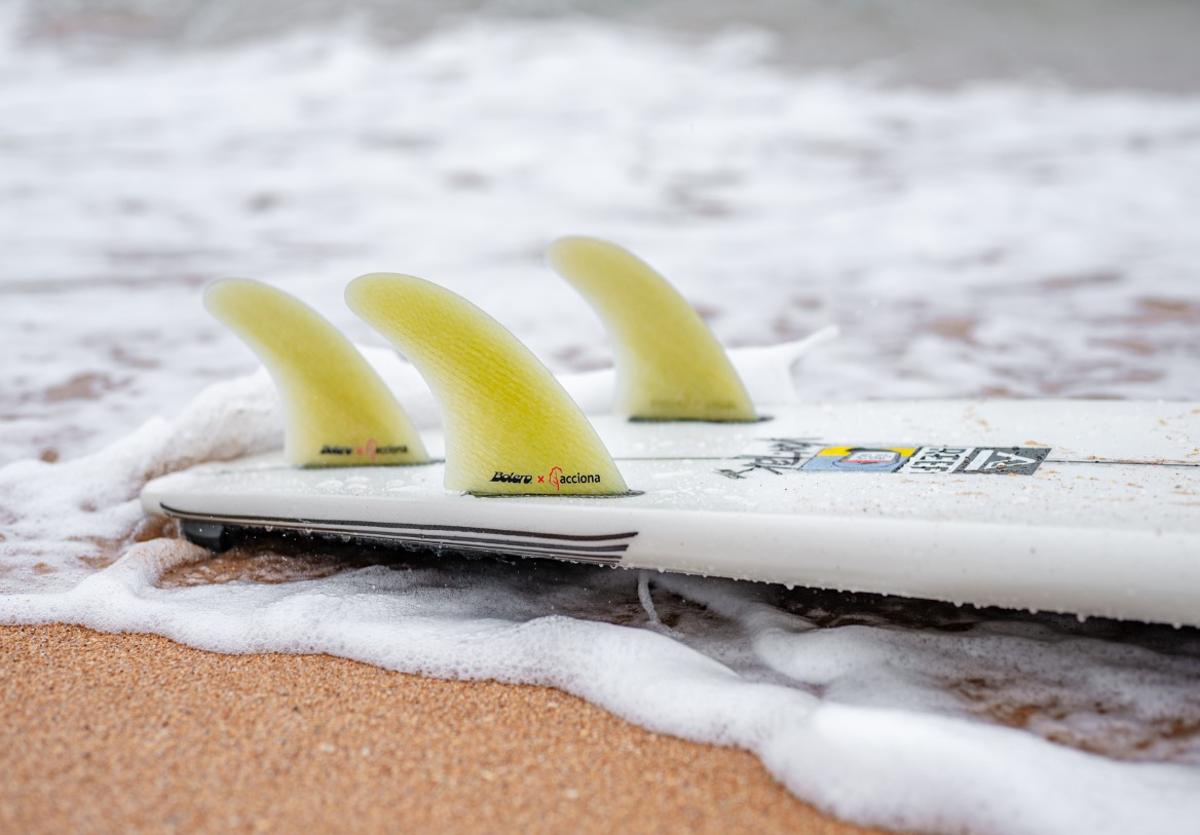
Manufacturing First: Surfboard Fins Made From Recycled Wind Turbine Blades Launch in Australia
•March 9, 2026
0
Why It Matters
It proves that end‑of‑life renewable assets can generate profitable, high‑value consumer goods, accelerating circular‑economy adoption in Australia’s manufacturing sector. The launch also reduces reliance on traditional fin manufacturing, cutting material costs and emissions.
Key Takeaways
- •First commercial surf fins from recycled turbine blades
- •ACCIONA's Turbine Made initiative repurposes decommissioned blades
- •Bolero Surf brings production back to Australia
- •Recycled fiberglass offers high strength, stiffness for performance
- •Project showcases circular economy potential in renewable sector
Pulse Analysis
Circular‑economy thinking is reshaping how renewable‑energy infrastructure is managed after its service life ends. Wind‑turbine blades, traditionally a disposal challenge due to their composite construction, now present a source of high‑grade fiberglass. By extracting and reprocessing this material, companies like ACCIONA are turning a waste stream into a feedstock for new products, demonstrating that sustainability can be embedded directly into supply chains rather than treated as an after‑thought.
The surf‑fin market, though niche, demands precise performance characteristics—stiffness, durability, and lightweight construction. Recycled turbine fiberglass meets these criteria, offering a material that is both super‑strong and inherently resistant to fatigue. Bolero Surf leverages these attributes to produce fins that rival conventional carbon‑fiber options while avoiding the energy‑intensive processes typically associated with new composite manufacturing. Moreover, sourcing the material locally cuts transportation emissions and supports Australian‑based production, aligning product design with both performance and environmental goals.
Beyond surfing, the successful commercialization of turbine‑derived components signals broader opportunities for Australian manufacturers. It validates a business model where end‑of‑life renewable assets become raw material for diverse industries, from automotive to consumer goods. This approach can stimulate new supply‑chain ecosystems, create skilled jobs, and reduce reliance on virgin composites. As more firms adopt similar circular strategies, Australia positions itself as a leader in turning clean‑energy waste into economic value, accelerating the transition toward a fully circular manufacturing economy.
Manufacturing first: Surfboard fins made from recycled wind turbine blades launch in Australia
0
Comments
Want to join the conversation?
Loading comments...