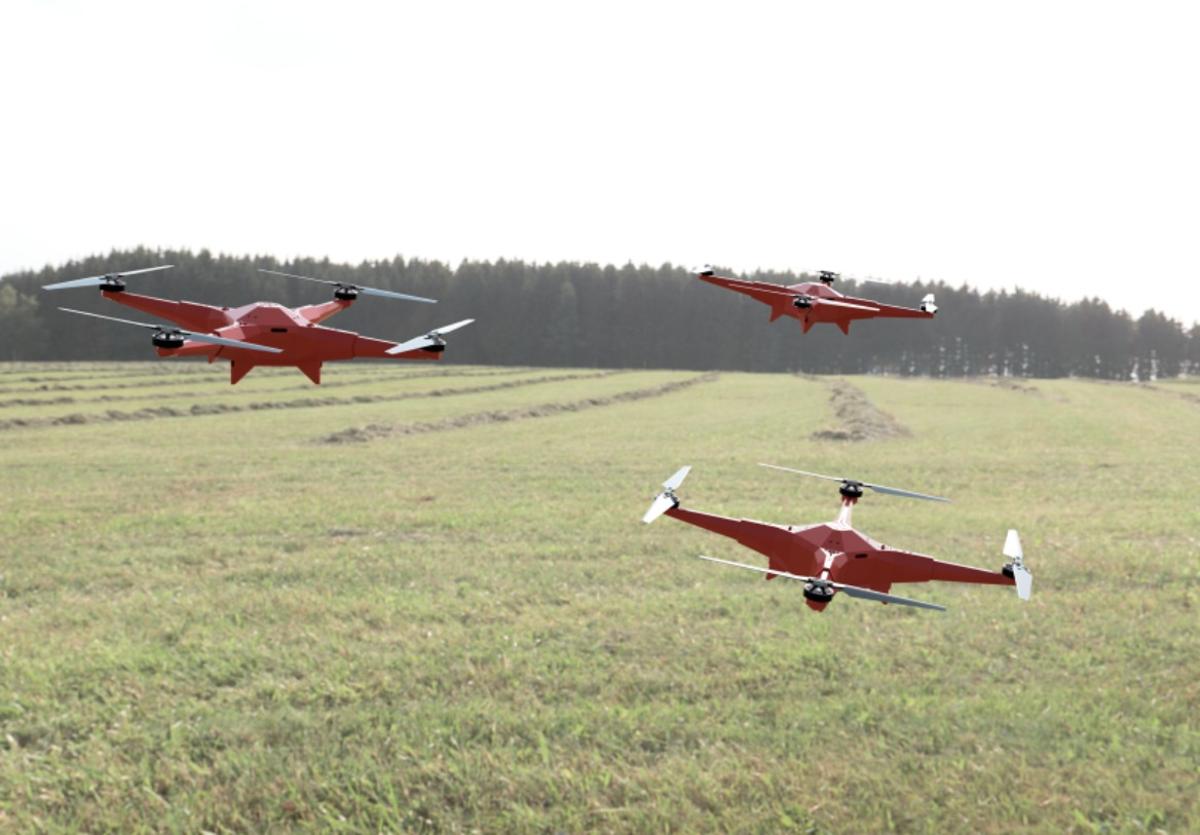
Manufacturing Scales up as Canberra Firm Expands Target Drone Production
Why It Matters
The BQ750 meets rising demand for realistic counter‑UAS training, strengthening Australia’s defence‑tech export potential and giving operators more sophisticated threat simulation tools.
Key Takeaways
- •Boresight launches BQ750, larger target drone for counter‑UAS training
- •BQ750 can fly alongside up to nine other drones simultaneously
- •Company sold 6,000 drones worldwide in five years
- •CASA permits Boresight to operate 20 target drones at once
- •Boresight developing fixed‑wing and swarm‑capable drone variants
Pulse Analysis
The global counter‑unmanned aerial system (C‑UAS) market is accelerating as militaries and critical infrastructure operators grapple with an expanding swarm of commercial drones. Realistic target drones are essential for training operators to detect, track and neutralise these threats, yet many existing solutions lack the fidelity to mimic larger, more capable adversary platforms. Boresight’s introduction of the BQ750 addresses this gap, offering a higher‑performance surrogate that can replicate a broader spectrum of drone behaviours, thereby enhancing the realism of red‑team exercises and system validation.
The BQ750 builds on the proven BQ400 architecture but adds a larger airframe, extended endurance and a higher payload capacity, enabling the emulation of medium‑size threat drones. Integrated with Boresight’s proprietary Ground Control Station, the platform supports simultaneous operation of up to ten drones and hot‑swappable control, streamlining complex scenario orchestration. This capability, combined with CASA’s clearance to run twenty target drones concurrently in Australian airspace, positions Boresight to deliver multi‑vector training that mirrors real‑world engagements, reducing the learning curve for C‑UAS operators.
Beyond immediate training benefits, the BQ750 signals a strategic shift for Australian defence manufacturing toward higher‑value, export‑ready products. With 6,000 units sold across four continents, Boresight has demonstrated a scalable business model that leverages affordable, repeatable threat‑replication systems. The firm’s roadmap—including fixed‑wing and swarm‑capable variants—suggests an ambition to dominate the niche of realistic drone threat generators, a segment likely to see heightened investment as nations modernise their air‑defence curricula. This trajectory could bolster Australia’s position in the global defence supply chain and drive further innovation in autonomous aerial technologies.
Manufacturing scales up as Canberra firm expands target drone production
Comments
Want to join the conversation?
Loading comments...