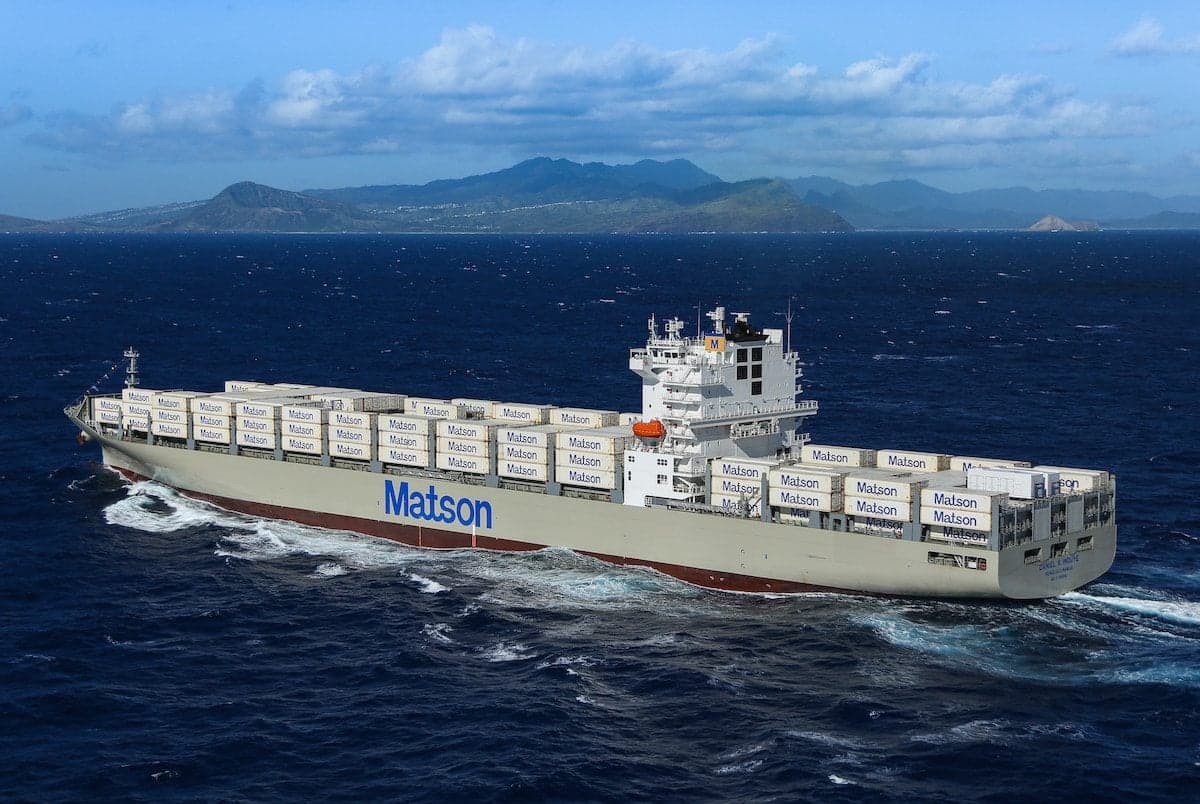
Matson’s Fleet Expansion Moves Into Full Production at Hanwha Philly Shipyard
Companies Mentioned
Why It Matters
The new LNG‑dual‑fuel vessels modernize Matson’s Pacific service with faster, lower‑emission capacity, and the build reinforces U.S. domestic shipbuilding under the Jones Act, a strategic priority for national logistics resilience.
Key Takeaways
- •Hanwha Philly Shipyard starts hull assembly on Matson’s second LNG containership.
- •Third vessel steel cutting marks final ship in $1 billion Aloha Class program.
- •New 854‑ft, 3,600‑TEU ships target 2027‑28 delivery for Hawaii and CLX routes.
- •LNG dual‑fuel design advances Matson’s greenhouse‑gas reduction objectives.
- •Yard’s growth underscores rising U.S. Jones Act shipbuilding after Korean acquisition.
Pulse Analysis
Matson’s Aloha Class renewal reflects a broader shift in maritime logistics toward larger, faster vessels that can meet premium Pacific demand while curbing emissions. By opting for LNG dual‑fuel propulsion and advanced hull efficiency, Matson positions its fleet to achieve service speeds above 23 knots, a critical factor for time‑sensitive cargo between Hawaii, the U.S. mainland, and Asian markets. The $1 billion investment not only replaces three aging ships but also aligns with the carrier’s greenhouse‑gas reduction targets, signaling that sustainability is becoming a core competitive lever in ocean freight.
The involvement of Hanwha Philly Shipyard underscores a resurgence of U.S. commercial shipbuilding, driven by the Jones Act’s domestic construction requirements. Since its acquisition by South Korea’s Hanwha Group, the Philadelphia yard has delivered roughly half of all large ocean‑going Jones Act vessels built in the United States since 2000, reviving a sector that had drifted toward repair work and government contracts. This Korean investment injects capital, expertise, and a pipeline of high‑value projects, reinforcing policy goals to rebuild maritime capacity and reduce reliance on foreign shipyards.
Industry observers see the Matson program as a bellwether for future fleet upgrades across the Pacific trade corridor. As carriers grapple with stricter environmental regulations and volatile fuel markets, LNG‑capable ships offer a transitional path toward decarbonization without sacrificing speed or cargo volume. The upcoming deliveries in 2027‑28 will likely set new performance benchmarks, prompting competitors to evaluate similar renewals. Moreover, the successful partnership between a U.S. carrier and a revitalized domestic shipyard may encourage further private‑sector investment, accelerating the modernization of America’s merchant marine fleet.
Matson’s Fleet Expansion Moves Into Full Production at Hanwha Philly Shipyard
Comments
Want to join the conversation?
Loading comments...