Metal AM Simulation After the First Wave
Why It Matters
Accurate, scalable simulation turns metal AM from an experimental cost center into a predictable, profit‑driving manufacturing process, directly affecting ROI and time‑to‑market for high‑value parts.
Key Takeaways
- •Early AM simulations failed on simple coupons, not complex parts
- •Modern parts require 10–100× faster, accurate solvers like PanX
- •Evaluation should use real production geometries and throughput metrics
- •Integration with OEM workflows is now a primary selection criterion
- •Simulation must support design, qualification, and process optimization
Pulse Analysis
The first wave of metal additive‑manufacturing simulation, conducted roughly between 2016 and 2020, was built around modest test pieces—coupons, brackets, and basic manifolds. Those early studies highlighted fundamental gaps: solvers struggled with mesh density, runtimes were prohibitive, and predictive accuracy often fell short of engineering tolerances. As a result, many organizations defaulted to trial‑and‑error, treating simulation as a luxury rather than a core capability. This historical context explains why a sizeable portion of the industry still cites "we already evaluated simulation" as a barrier to adoption.
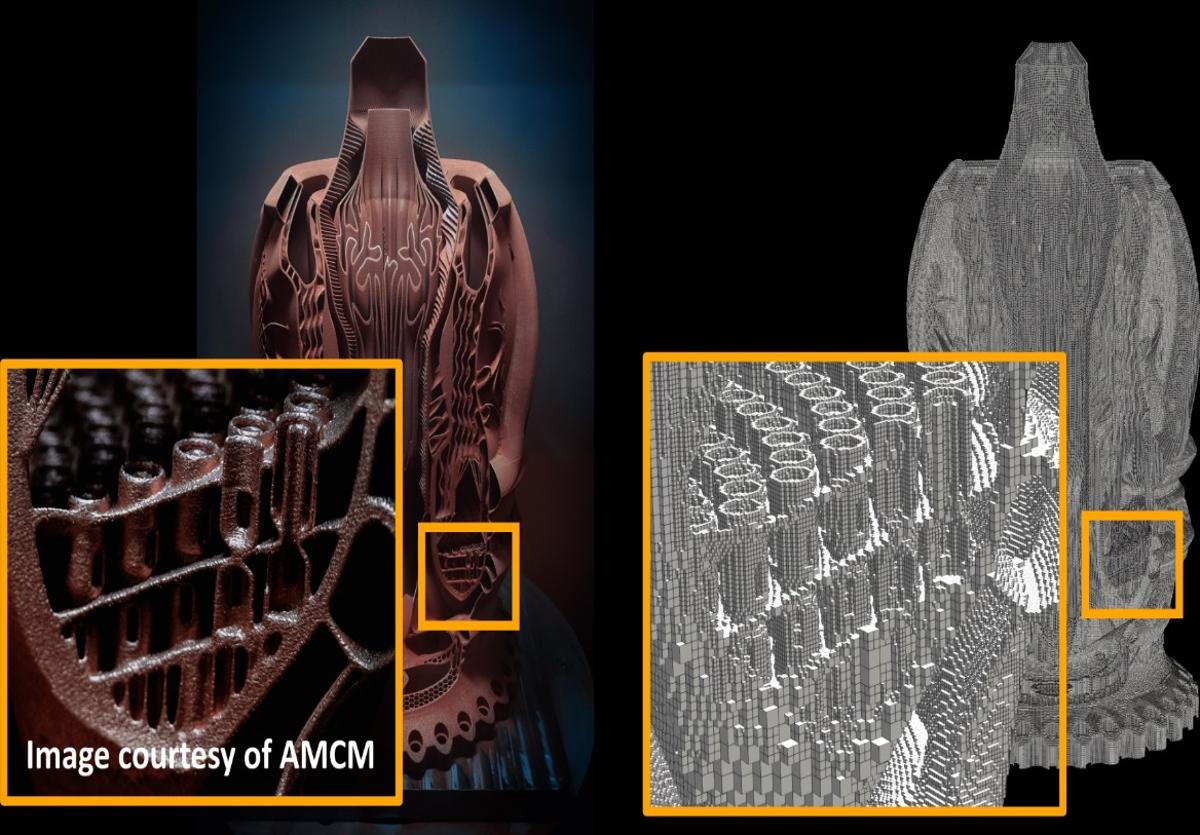
Today’s AM landscape has shifted dramatically. High‑value aerospace and energy sectors now demand parts that are orders of magnitude larger and more intricate, such as rocket engine components, dense heat exchangers, and part‑scale DED repairs. These geometries generate mesh counts that overwhelm legacy solvers, causing crashes or multi‑day runtimes. PanX, a next‑generation solver, claims 10‑100× speed improvements while delivering higher fidelity in temperature, stress, and distortion predictions. By enabling rapid iteration across hundreds of design variants, it directly addresses the economic pressures of six‑figure print costs, reducing scrap, increasing machine uptime, and shortening qualification cycles.
The article proposes a refreshed evaluation methodology: test with actual production parts, assess weekly throughput rather than single‑run time, link simulation outcomes to qualification metrics and cost savings, and scrutinise the tool’s integration roadmap with OEM software ecosystems. This holistic approach reframes simulation from a peripheral analysis tool to an embedded infrastructure element that drives design decisions, process optimization, and ultimately, profitability. Companies that adopt such a framework are positioned to scale metal AM from isolated successes to reliable, large‑scale production, reshaping the competitive dynamics of advanced manufacturing.
Metal AM simulation after the first wave
Comments
Want to join the conversation?
Loading comments...