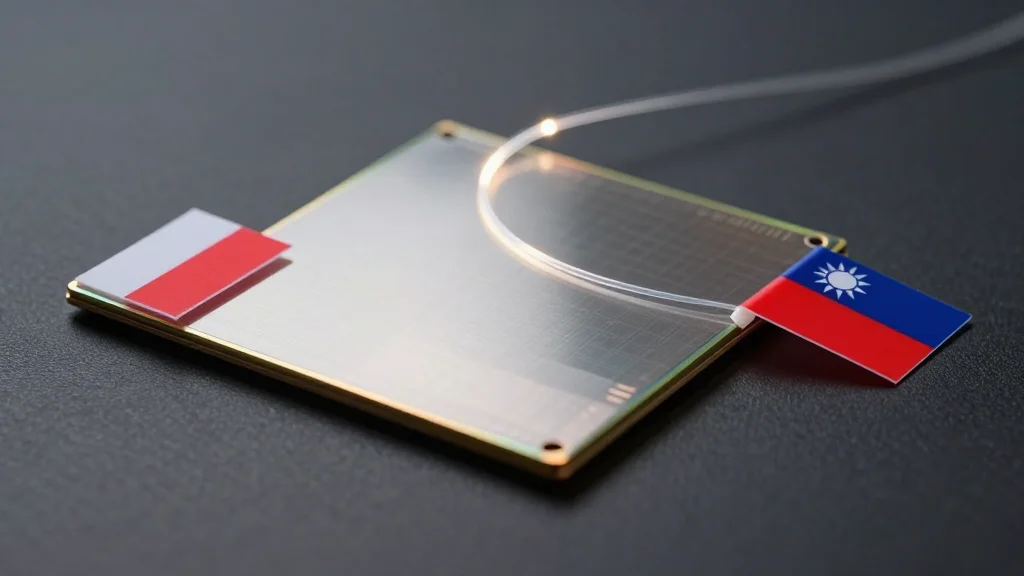
MICROIP Teams with Poland to Forge Resilient Edge‑AI and ASIC Supply Chain

Why It Matters
The MICROIP‑Poland partnership addresses a critical vulnerability in the global semiconductor ecosystem: the concentration of advanced ASIC design and fabrication in a handful of regions. By establishing a European hub that couples local software expertise with Taiwanese manufacturing, the alliance reduces dependency on single‑source suppliers and shortens time‑to‑market for edge‑AI solutions, a segment projected to grow at double‑digit rates through 2030. For European manufacturers, the deal offers a pragmatic pathway to adopt cutting‑edge AI chips without the prohibitive costs of building full‑scale fabs. It also aligns with EU policy goals of strategic autonomy in critical technologies, potentially unlocking public funding and regulatory support for further cross‑border collaborations.
Key Takeaways
- •MICROIP announced a strategic partnership with Poland to build a resilient edge‑AI and ASIC supply chain.
- •The collaboration leverages MICROIP's CATS and AIVO platforms to shorten ASIC R&D‑to‑production cycles.
- •Poland identified as a core innovation partner for Taiwan's security and semiconductor industries.
- •Partnership aims to reduce reliance on fragmented end‑user demand and high‑cost general‑purpose chips.
- •Pilot projects and developer workshops slated for Q4 2026 to foster talent and joint IP creation.
Pulse Analysis
MICROIP’s move reflects a broader industry trend of decoupling design from fabrication to mitigate geopolitical risk. By anchoring design services in Europe while retaining access to Taiwan’s mature fabs, the company creates a hybrid supply chain that can adapt to shifting trade policies and export controls. Historically, European chip initiatives have struggled with scale; this partnership sidesteps the need for massive capital expenditures by focusing on low‑volume, high‑value ASICs that serve niche AIoT markets.
From a competitive standpoint, MICROIP positions itself against larger EDA and ASIC providers like Synopsys and Arm, which traditionally dominate the high‑volume segment. Its no‑code AI platform and rapid‑turnaround CATS service cater to startups and mid‑size firms that lack deep in‑house hardware expertise. If the Poland hub can deliver on its promise of faster cycles and lower costs, it could catalyze a wave of European AIoT startups, reshaping the regional innovation landscape.
Looking forward, the success of this model will hinge on the depth of technology transfer and the ability to retain talent within Poland. The EU’s upcoming Semiconductor Act and related funding mechanisms could provide the necessary financial scaffolding, but sustained collaboration between academia, industry, and government will be essential. Should MICROIP achieve its milestones, the partnership could become a template for other regions seeking to build resilient, talent‑driven semiconductor ecosystems.
MICROIP Teams with Poland to Forge Resilient Edge‑AI and ASIC Supply Chain
Comments
Want to join the conversation?
Loading comments...