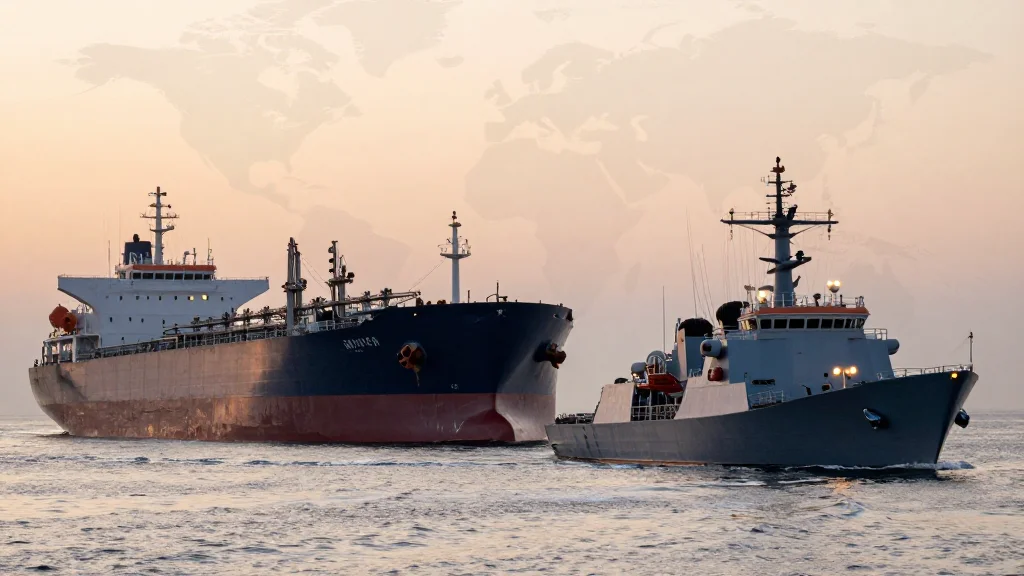
Middle East Blockades Ripple Through Global Supply Chains, Boosting Green Hydrogen Interest

Companies Mentioned
Why It Matters
The Hormuz blockades illustrate how geopolitical flashpoints can instantly destabilise global supply chains, driving up commodity prices and forcing firms to rethink sourcing strategies. By compressing the cost gap between grey and green hydrogen, the conflict is also fast‑tracking a cleaner energy transition that could reduce Asia’s dependence on volatile fossil‑fuel imports and enhance supply‑chain resilience. For investors and policymakers, the episode underscores the need for diversified logistics routes, strategic stockpiling, and accelerated investment in alternative energy infrastructure. Failure to adapt could leave critical industries exposed to future disruptions, while early adopters of green hydrogen stand to gain a competitive edge in a tightening market.
Key Takeaways
- •Iran seized two commercial vessels in the Strait of Hormuz, tightening a chokepoint for ~20% of global oil/LNG shipments
- •Oil prices rose above $100/barrel, pushing LNG spot prices up 80‑143% in Asia
- •Charith Konda warned the war‑driven price surge narrows the gap between grey and green hydrogen
- •Green‑hydrogen cost parity could be reached by 2030 if high fossil‑fuel prices persist
- •Freight rates for Asia‑Europe routes jumped 15% and war‑risk insurance premiums rose up to 30%
Pulse Analysis
The Hormuz episode is a textbook case of supply‑chain fragility under geopolitical stress. Historically, similar chokepoints—such as the Suez Canal during the 2021 Ever Given incident—have prompted firms to diversify routes and increase inventory buffers. This time, however, the disruption is compounded by an energy shock that is reshaping the economics of clean‑fuel adoption.
In the short term, manufacturers are likely to absorb higher logistics costs through price adjustments or by shifting production closer to end markets. Over the medium term, the sustained price premium on oil and gas creates a financial incentive for green‑hydrogen projects that were previously deemed uneconomic. Companies that secure renewable power and electrolyser capacity now can lock in lower long‑term energy costs, hedging against future price volatility.
Strategically, the episode may accelerate a broader re‑balancing of the semiconductor supply chain as well. With AI‑driven automation becoming a cornerstone of logistics, any delay in chip deliveries due to shipping constraints could cascade into slower adoption of supply‑chain digitisation tools. Firms that have already diversified their chip sourcing—either through secondary foundries or by stockpiling critical components—will be better positioned to maintain operational continuity.
Overall, the Hormuz blockade is a catalyst that is forcing a dual response: immediate risk mitigation through logistics adjustments and a longer‑term pivot toward greener, more resilient energy inputs. Companies that act on both fronts will likely emerge with a competitive advantage in a post‑conflict supply‑chain landscape.
Middle East Blockades Ripple Through Global Supply Chains, Boosting Green Hydrogen Interest
Comments
Want to join the conversation?
Loading comments...