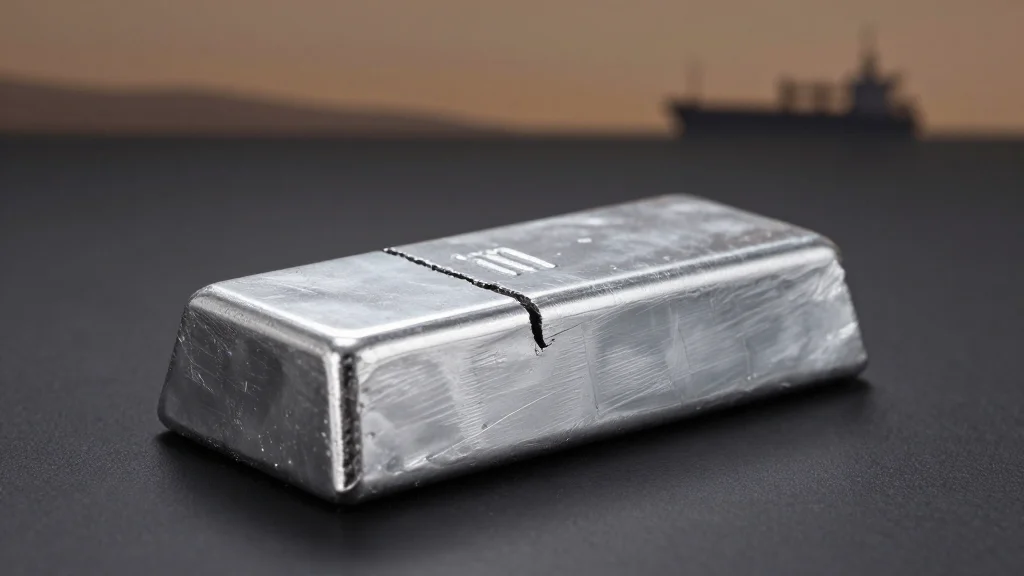
Middle East Conflict Triggers Aluminium Supply Concerns
Companies Mentioned
Why It Matters
The shortage threatens to raise costs for transport, construction and packaging sectors, while heightened price volatility could impact investors and manufacturers reliant on aluminium.
Key Takeaways
- •Middle East supplies 7 mt aluminium, 9% global output
- •Mercuria forecasts at least 2 mt shortfall by year‑end
- •US imports 22% of 3.4 mt aluminium from region
- •Aluminium price hit $3,672/t, highest in four years
- •Low US/EU stock makes market vulnerable to supply shock
Pulse Analysis
The aluminium sector, a backbone of transport, construction and packaging, is suddenly confronting a geopolitical supply shock. The ongoing US‑Israeli confrontation with Iran has disrupted the flow of both primary aluminium and its feedstock alumina through the Strait of Hormuz, a chokepoint for Gulf‑based smelters that together produce roughly seven million tonnes annually—about nine percent of world output. Analysts at Mercuria label the event a ‘black‑swan’, noting that no comparable base‑metal disruption has occurred since 2000. The immediate consequence is a looming shortfall that could tighten an already constrained market.
Price signals on the London Metal Exchange already reflect the tension, with aluminium futures climbing to $3,672 per tonne on 16 April, the highest level in four years. Mercuria projects a minimum deficit of two million tonnes by year‑end, a figure that may be conservative if alumina shipments remain blocked. Global inventories sit at roughly 1.5 million tonnes of visible stock and just over three million tonnes when non‑visible holdings are included, leaving little buffer for sudden demand spikes. The United States, which sourced 22 percent of its 3.4 mt import volume from the region, and Europe, with an 18.5 percent exposure, are especially exposed.
Downstream manufacturers should anticipate higher input costs and explore alternative sourcing or recycling strategies. China, the world’s largest producer, remains capped at 45 mt annually, limiting its ability to offset the gap, while dormant capacity in the US and Europe is insufficient for rapid scale‑up. Investors may see increased volatility in aluminium‑related equities and commodity funds, prompting a reassessment of risk models. In the longer term, the episode underscores the strategic importance of diversifying supply routes and building resilient stockpiles to mitigate future geopolitical disruptions.
Middle East conflict triggers aluminium supply concerns
Comments
Want to join the conversation?
Loading comments...