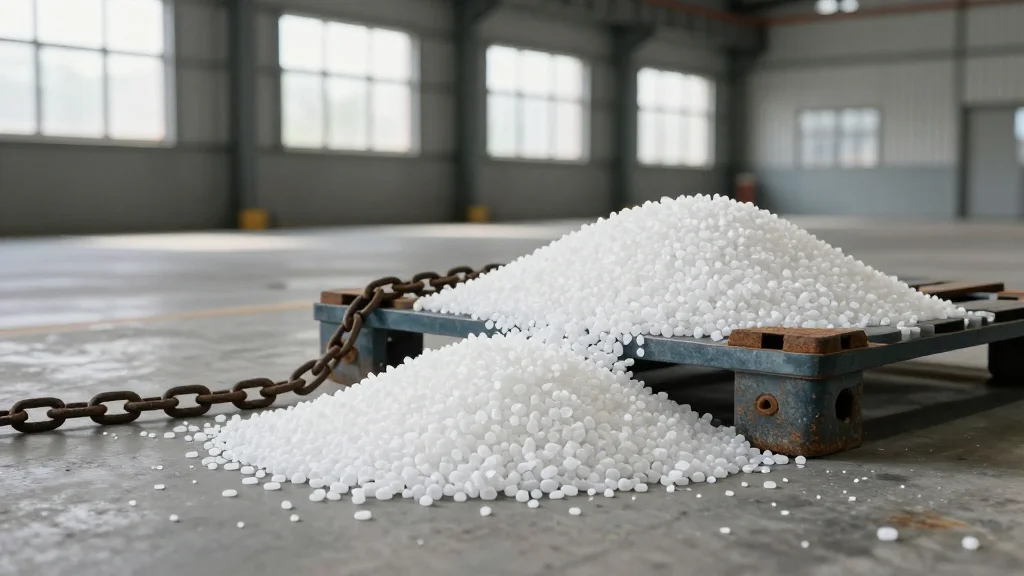
Mideast Conflict Sends Chinese Plastic Prices 50% Higher, Slowing Key Manufacturing Hubs

Why It Matters
The 50% jump in plastic resin prices threatens to erode profit margins for a swath of Chinese manufacturers that supply critical components to global tech, automotive and consumer‑goods firms. As raw‑material costs rise, manufacturers may pass price hikes onto downstream customers, inflating retail prices for everything from vacuum cleaners to electric‑vehicle batteries. The disruption also highlights the fragility of supply chains that rely heavily on a single geographic region for petro‑chemical inputs, prompting firms to reconsider sourcing strategies and inventory buffers. If the Iran‑Israel conflict persists, the resulting volatility in oil‑derived commodities could force a re‑evaluation of supply‑chain risk models across industries. Companies may accelerate investments in alternative materials, regional diversification, or on‑shoring of key components, reshaping the competitive landscape of global manufacturing and trade.
Key Takeaways
- •Plastic resin prices in China have risen roughly 50% since the Iran‑Israel war began.
- •Bryant Chen, manager at RIMOO, says the company is losing money on all orders due to higher material costs.
- •Trader Li Dong describes the price swing as the most extreme in decades, with a recent 10‑20% dip after a peak.
- •The surge is linked to US‑Israeli strikes on Iran and the closure of the Strait of Hormuz, choking oil supply to Asia.
- •Higher raw‑material costs risk slowing Guangdong’s seasonal production peak and raising global consumer prices.
Pulse Analysis
The current plastic price shock is a textbook case of how geopolitical risk can cascade through supply chains that appear insulated on the surface. China’s energy security strategy—heavy reserves and a push toward renewables—has shielded it from direct fuel shortages, yet the country remains vulnerable to upstream disruptions in oil‑derived feedstocks. The 50% price surge dwarfs the pandemic‑era bottlenecks, suggesting that future supply‑chain resilience will need to account for geopolitical volatility as a core variable, not an afterthought.
Historically, manufacturers have mitigated raw‑material risk through long‑term contracts and diversified sourcing. However, the speed and magnitude of the current price swing have outpaced traditional hedging mechanisms, forcing firms to either absorb losses or pass costs downstream. This dynamic could accelerate a shift toward alternative polymers, especially bio‑based plastics, as firms seek to decouple from oil price volatility. In the short term, we may see a wave of inventory hoarding, as evidenced by the traffic jams in Zhangmutou, which could exacerbate logistics bottlenecks and inflate freight rates.
Long‑term, the episode may catalyze a strategic re‑balancing of global manufacturing footprints. Companies heavily reliant on Chinese plastic components might diversify to Southeast Asia, where feedstock exposure is lower, or invest in domestic production capabilities. The ripple effect could also influence policy, prompting governments to incentivize domestic petro‑chemical capacity or accelerate recycling initiatives. In sum, the Mideast conflict has exposed a hidden fault line in the world’s supply chain architecture, and the response will shape the competitive dynamics of manufacturing for years to come.
Mideast Conflict Sends Chinese Plastic Prices 50% Higher, Slowing Key Manufacturing Hubs
Comments
Want to join the conversation?
Loading comments...